Page 5 of 5
There are currently 30 member reviews
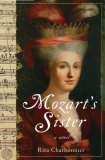
for Mozart's Sister
-
Susan (Memphis MO)
Not for language aficianados
I had trouble getting over (what I took to be) translation issues. Much of the language felt stilted, and I often found myself stuck on a particular word or phrase, wondering what on earth the original might have been. This did not improve the already uneven flow of the narrative. I also found the plot too melodramatic, and several of the characters too unidimensional for my taste. In its favor, there were some descriptive passages and scenes that were really lovely, and I enjoyed learning more about the historical era of the book.
-
Betsey (Austin TX)
Poetic with lush, musical imagery but at times too melodramtaic
The story of Nannerl Mozart, Wolfgang's sister, is told in a combination of epistolary and narrative form. It is an historical fiction of a woman with an independent mind and spirit attempting to fit in with the 18th century expectations of womanhood--the story of an anachronistic prodigy that must subvert her musical talent to those of her brother's. The epistolary parts are more lyrical, poetic, and nuanced. They were more immediately felt and fresh sounding than the overwrought narrative, which repeatedly advises us that Nannerl's chauvinistic father was very controlling and that she must sacrifice her musical ambition to promote and help fund Wolfgang's career. The tale is melodramatic, dearly earnest, with many exclamatory sentences and too much emotional repetitiveness. I would have preferred that the author flesh out more of the characters in Nannerl's life and give them more independent vitality than wield them as vehicles of Nannerl's plight. The story lacks emotional tension because emotions are overbaked. When the author does modulate her prose and gives more grace to her narrative (in Nannerl's letters), I feel more fully engaged in the story. Overall, it was moderately enjoyable, but the fervid doggedness feels intermittently stale and devotional.



 (1).gif)