-
See Our Best Book
Club Books of 2026!
Summary | Excerpt | Reviews | Beyond the book | Read-Alikes | Genres & Themes | Author Bio
 Book Reviewed by:
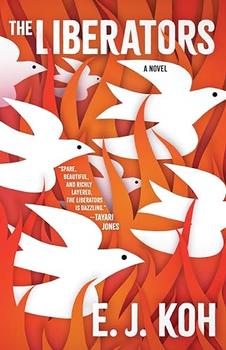
Extraordinarily beautiful and deeply moving, The Liberators is an elegantly wrought family saga of memory, trauma, and empathy, and a stunning testament to the consequences and fortunes of inheritance.
At the height of the military dictatorship in South Korea, Insuk and Sungho are arranged to be married. The couple soon moves to San Jose, California, with an infant and Sungho's overbearing mother-in-law. Adrift in a new country, Insuk grieves the loss of her past and her divided homeland, finding herself drawn into an illicit relationship that sets into motion a dramatic saga and echoes for generations to come.
From the Gwangju Massacre to the 1988 Olympics, flashbacks to Korean repatriation after Japanese surrender, and the Sewol ferry accident, E. J. Koh's exquisitely drawn portraits and symphonic testimony from guards, prisoners, perpetrators, and liberators spans continents and four generations of two Korean families forever changed by fateful past decisions made in love and war.
Yohan
Daejeon, 1980
By an early age, I could read and write in six languages. I found a tool—an ink brush, a twig, or my stub finger—and used it to draw a character on parchment, dirt, or air. When one line touched another, my heart reached my fingertips to impart meaning. At five, it was for pleasure that I left words all over town: on a tree, I carved tree; in the river, I spelled river in pebbles; on my mother's dress, I inked dress. At some point, my mother set me down and didn't pick me up again. On my mother's grave, I wrote grave. I was just a boy at the end of Japanese colonial rule. I wrote my words as if I couldn't live without them, as if I were made of nothing but words. I classed rock, plant, animal, man, and God. I observed a patch of weeds and then myself in the mirror to see the differences between plant and man. Between them was a middle point, or animal. I asked what stood between man and God, but the grave said nothing. I watched the country divided up ...
American responsibility for a split Korea (both for the initial fissure and its enduring existence) casts a long shadow across the novel. In just over 200 pages, EJ Koh covers a remarkable amount of 20th century Korean history, with enough detail to offer vital context for the characters' homesickness for a homeland that has become unrecognizable, that has been irreparably broken by political gamesmanship and imperialism. Koh's writing has a natural elegance. She can set a scene with poetic acumen; the dry cleaning business Sungho opens is "in a building where green bottle flies as smooth as sea glass swarmed." She cleverly and aptly captures a character's essence with minimal description...continued
Full Review
 (680 words)
(Reviewed by Lisa Butts).
 Crystal Hana Kim, author of The Stone Home and If You Leave Me
An elegiac, ferocious, and deeply stirring novel. E. J. Koh melds image and story together precisely, holding up to light the history and making of Korea. I loved The Liberators not only for what it shows us about our world, but moreso, ourselves. Jimin Han, author of The Apology
E. J. Koh brings her elegant poet's hand to this intimate and expansive mythic novel of four generations of a family suffering sudden absences and war, seeking love and connection, weighted with the complexities of no easy answers. I didn't want this book to end. Joseph Han, author of Nuclear Family
The beauty, intensity, and breadth of E. J. Koh's work continues to transcend to new levels. Her language is transformative, making history more alive than we can feel and understand alone. Here is a chorus of lives and a song of peace. With The Liberators, Koh cements her place as one of the greatest Korean American writers of our time. Matthew Salesses, author of The Sense of Wonder
E. J. Koh brings a poet's eye and sensibility to this remarkable novel. Here you will find characters and sentences that will leave you gasping for more. The Liberators captures grief and paranoia and a legacy of colonialism and violence with beauty and measure and grace. Paul Lisicky, author of Later: My Life at the Edge of the World
E. J. Koh's The Liberators is a sublime achievement for its deft political and emotional intelligence, its fine-tuned grasp of how a divided country divides lives through the generations. As in all great works of art, it uses the earthbound to transport us to a realm that feels like it's been unperceived until now. As readers, we enter a theater of raw perception. A tree falls out of nowhere, a boar walks into a room unannounced, shadows shatter across a ceiling. Illumination can happen at any turn, reminding us that there's always more world than we've had the capacity to see. Tayari Jones, author of An American Marriage
Spare, beautiful and richly layered, The Liberators is dazzling.
Crystal Hana Kim, author of The Stone Home and If You Leave Me
An elegiac, ferocious, and deeply stirring novel. E. J. Koh melds image and story together precisely, holding up to light the history and making of Korea. I loved The Liberators not only for what it shows us about our world, but moreso, ourselves. Jimin Han, author of The Apology
E. J. Koh brings her elegant poet's hand to this intimate and expansive mythic novel of four generations of a family suffering sudden absences and war, seeking love and connection, weighted with the complexities of no easy answers. I didn't want this book to end. Joseph Han, author of Nuclear Family
The beauty, intensity, and breadth of E. J. Koh's work continues to transcend to new levels. Her language is transformative, making history more alive than we can feel and understand alone. Here is a chorus of lives and a song of peace. With The Liberators, Koh cements her place as one of the greatest Korean American writers of our time. Matthew Salesses, author of The Sense of Wonder
E. J. Koh brings a poet's eye and sensibility to this remarkable novel. Here you will find characters and sentences that will leave you gasping for more. The Liberators captures grief and paranoia and a legacy of colonialism and violence with beauty and measure and grace. Paul Lisicky, author of Later: My Life at the Edge of the World
E. J. Koh's The Liberators is a sublime achievement for its deft political and emotional intelligence, its fine-tuned grasp of how a divided country divides lives through the generations. As in all great works of art, it uses the earthbound to transport us to a realm that feels like it's been unperceived until now. As readers, we enter a theater of raw perception. A tree falls out of nowhere, a boar walks into a room unannounced, shadows shatter across a ceiling. Illumination can happen at any turn, reminding us that there's always more world than we've had the capacity to see. Tayari Jones, author of An American Marriage
Spare, beautiful and richly layered, The Liberators is dazzling.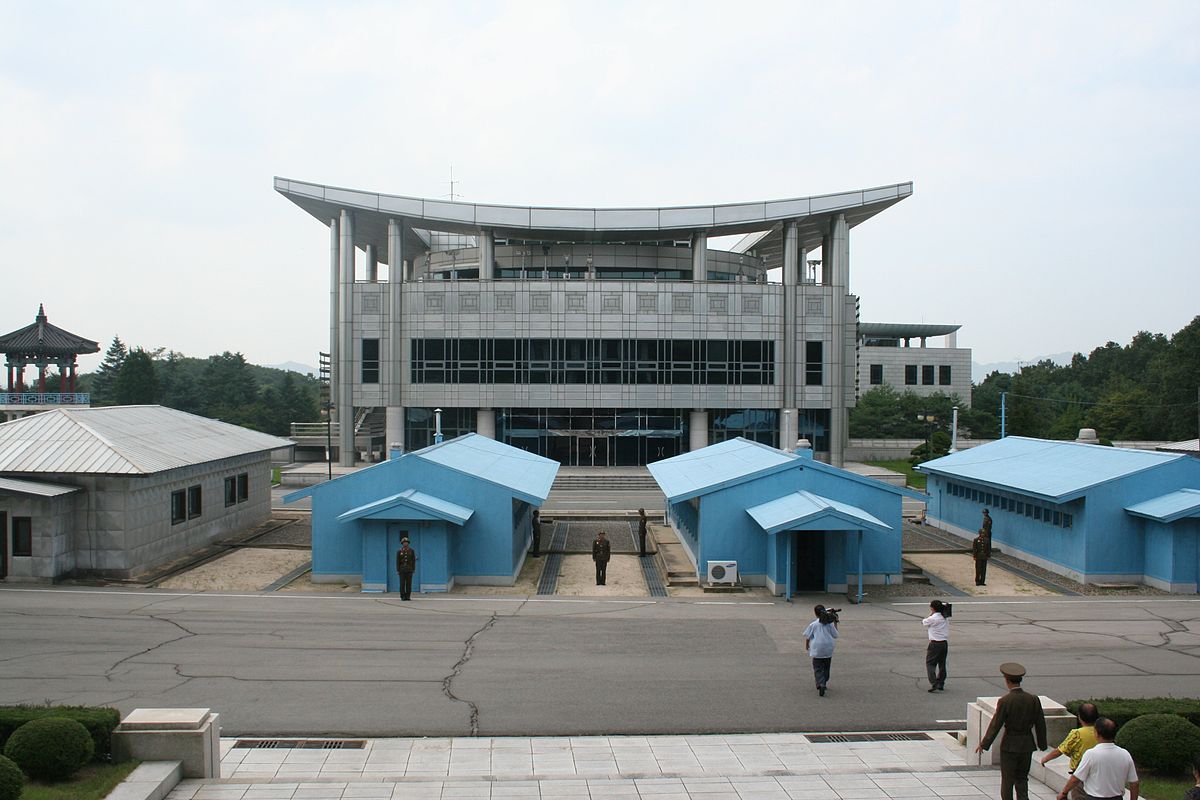 In EJ Koh's The Liberators, Insuk's friend Robert is an activist passionately in favor of the reunification of North and South Korea. Korea was occupied by Japan from the early 20th century through 1948; when the Japanese surrendered at the end of World War II, Korea was split along the 38th parallel by the United States. The northern region was occupied by the Soviet Union, and the southern by the US. This was meant to be a temporary solution to instability but the split has continued through the present day, cemented in part by the Korean War. Efforts toward and talk of reunification have been a regular part of Korean diplomacy ever since.
In 1972, North and South Korea issued the July 4 South-North Communiqué, which presented...
If you liked The Liberators, try these:

by Wiz Wharton
Published 2025
Set between the last years of the "Chinese Windrush" in 1966 and Hong Kong's Handover to China in 1997, a mysterious inheritance sees a young woman from London uncovering buried secrets in her late mother's homeland in this captivating, wry debut about family, identity, and the price of belonging.
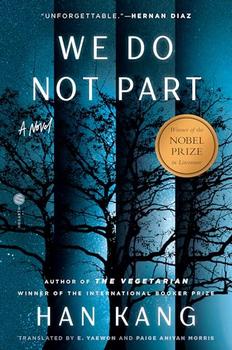
by Han Kang
Published 2025
Han Kang's most revelatory book since The Vegetarian, We Do Not Part tells the story of a friendship between two women while powerfully reckoning with a hidden chapter of Korean history.
The Sister's Curse
by Nicola Solvinic
The Lost Story of Eva Fuentes
by Chanel Cleeton
The Vanishing Place
by Zoë Rankin
 (1).gif)
Men are more moral than they think...
Click Here to find out who said this, as well as discovering other famous literary quotes!

Can you name the title?
Test your book knowledge with our daily trivia challenge!