-
Your next favorite book
is waiting.
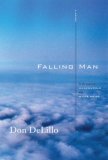
There is September 11 and then there are the days after, and finally the years.
Falling Man is a magnificent, essential novel about the event that defines turn-of-the-century America. It begins in the smoke and ash of the burning towers and tracks the aftermath of this global tremor in the intimate lives of a few people.
First there is Keith, walking out of the rubble into a life that he'd always imagined belonged to everyone but him. Then Lianne, his estranged wife, memory-haunted, trying to reconcile two versions of the same shadowy man. And their small son Justin, standing at the window, scanning the sky for more planes.
These are lives choreographed by loss, grief and the enormous force of history.
"Starred Review. The writing has the intricacy and purpose of a wiring diagram. The mores of the after-the-event are represented with no cuteness—save, perhaps, the falling man performance artist." - PW.
" In the past, DeLillo has been a notably chilly writer, clinical rather than compassionate toward his characters, more interested in what he wants them to stand for than who they are. Here he's obviously trying to invest them with more human qualities, and he gets points for the effort, but he can't pull it off. The only emotions in this novel come from outside, from pictures on television, and that's not good enough." - The Washington Post.
"Starred Review. [I]t's a testament to DeLillo's brilliant command of language that readers will feel once again, whether they want to or not, as scared and as sad as they felt that day." - Booklist.
"If Underworld took its cues from the kinetic cinema of Eisenstein, Falling Man, up until its remarkable final sequence, is all oblique silences and enigmatic close-ups reminiscent of the domestic anomie of the New Wave. In DeLillo’s hands, this is not at all limiting or prosaic. There’s a method to the Resnais-like fogginess. The cumulative effect is devastating, as DeLillo in exquisite increments lowers the reader into an inexorable rendezvous with raw terror." - The New York Times.
This information about Falling Man was first featured
in "The BookBrowse Review" - BookBrowse's membership magazine, and in our weekly "Publishing This Week" newsletter. Publication information is for the USA, and (unless stated otherwise) represents the first print edition. The reviews are necessarily limited to those that were available to us ahead of publication. If you are the publisher or author and feel that they do not properly reflect the range of media opinion now available, send us a message with the mainstream reviews that you would like to see added.
Any "Author Information" displayed below reflects the author's biography at the time this particular book was published.
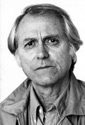
Don DeLillo is the author of seventeen novels, including Falling Man, Libra and White Noise, and three plays. He has won the National Book Award, the PEN/Faulkner Award for Fiction and the Jerusalem Prize. In 2006, Underworld was named one of the three best novels of the last twenty-five years by The New York Times Book Review, and in 2000 it won the William Dean Howells Medal of the American Academy of Arts and Letters for the most distinguished work of fiction of the past five years. DeLillo also won the Library of Congress Prize for American Fiction in 2013.
Name Pronunciation
Don DeLillo: D'Lih Lo
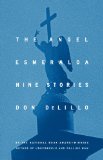


If you liked Falling Man, try these:
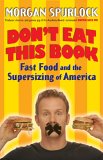
by Morgan Spurlock
Published 2006
Can man live on fast food alone? Spurlock tried to do just that for a month during which he gained twenty-five pounds, his blood pressure skyrocketed, and his libido all but disappeared. In this groundbreaking, hilarious book, Spurlock debuts a wry investigative voice that will appeal to anyone interested in the health of our country, our children...
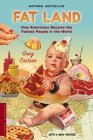
by Greg Critser
Published 2004
Critser's portrait of Fat America including forays into the diabetes ward of a major children's hospital make Fat Land a chilling but eloquent portrait of the cost in human lives - many of them very young lives - of America's obesity epidemic.

by Eric Schlosser
Published 2002
A groundbreaking work of investigation and cultural history that may change the way America thinks about the way it eats.


 (1).gif)
Common sense is genius dressed in its working clothes.
Click Here to find out who said this, as well as discovering other famous literary quotes!

Can you name the title?
Test your book knowledge with our daily trivia challenge!
Your guide toexceptional books
BookBrowse seeks out and recommends the best in contemporary fiction and nonfiction—books that not only engage and entertain but also deepen our understanding of ourselves and the world around us.