-
See Our Best Book
Club Books of 2026!
Summary | Excerpt | Reviews | Beyond the book | Read-Alikes | Genres & Themes | Author Bio
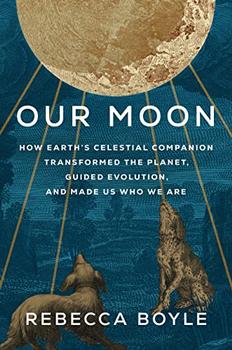
How Earth's Celestial Companion Transformed the Planet, Guided Evolution, and Made Us Who We Are
by Rebecca Boyle Book Reviewed by:
Our Moon invites us to reexamine our relationship with our closest cosmic companion.
Many of us know that the Moon pulls on our oceans, driving the tides, but did you know that it smells like gunpowder? Or that it was essential to the development of science and religion? Acclaimed journalist Rebecca Boyle takes readers on a dazzling tour to reveal the intimate role that our 4.51-billion-year-old companion has played in our biological and cultural evolution.
Our Moon's gravity stabilized Earth's orbit—and its climate. It drew nutrients to the surface of the primordial ocean, where they fostered the evolution of complex life. The Moon continues to influence animal migration and reproduction, plants' movements, and, possibly, the flow of the very blood in our veins.
While the Sun helped prehistoric hunters and gatherers mark daily time, early civilizations used the phases of the Moon to count months and years, allowing them to plan farther ahead. Mesopotamian priests recorded the Moon's position in order to make predictions, and, in the process, created the earliest known empirical, scientific observations. In Our Moon, Boyle introduces us to ancient astronomers and major figures of the scientific revolution, including Johannes Kepler and his influential lunar science fiction.
Our relationship to the Moon changed when Apollo astronauts landed on it in 1969, and it's about to change again. As governments and billionaires aim to turn a profit from its resources, Rebecca Boyle shows us that the Moon belongs to everybody, and nobody at all.
Chapter One
A World Apart
The Moon is different.
It is like nowhere on Earth, which is a watery bubble improbably bursting with life in a universe of emptiness. The Moon is barren and has been throughout the four-and-a-half-billion-year eternity of its companionship with this planet. The Moon is silent. It plays host to no cricket chorus, coyote calls, or night wind sailing through pines. It is dry, at least on the outside. There are no waves lapping on shores, no soft rains, no snow. It is a crater-pocked wasteland that smells of doused firecrackers. The Moon is scorching hot during its long day, and freezing cold during its long night.
The lunar landscape is grayscale, but flecked with shades of tan, chocolate, beach sand, chalk, gold, spicy-mustard ochre, and, in the words of Apollo 11 astronaut Michael Collins, a "cheery rose" hue.
Sunlight on the airless Moon plays tricks on human eyesight, warping a moonwalker's sense of crater depths and hillside angles, making tiny slopes look ...
In Our Moon, author Rebecca Boyle explains how Earth's closest neighbor is essential to our history. Reliable and mythical, epic in size and significance, the Moon has been profoundly influential since the beginning. According to Boyle's extensive research, we would not be here without it. It is a well-suited first book for journalist Boyle, who's a regular contributor to Atlas Obscura and has a personal obsession with the Moon. Who better to examine the Moon's importance than a mega fan? Boyle shares her childlike wonder with relish...continued
Full Review
 (659 words)
(Reviewed by Christine Runyon).
 Chris Hadfield, astronaut, bestselling author of The Apollo Murders and The Defector
I learned more about the Moon by reading this book than I have in a lifetime of study. Replete with fascinating insights into the Moon's origins and history, but more than that, what it has meant to us, the people of Earth, Our Moon is a must-read for anyone who has looked up at the Moon in wonder. Ed Yong, author of An Immense World
Our Moon is a riveting feat of science writing, which recasts that most familiar of celestial objects into something eerily extraordinary, pivotal to our history, and awesome in the original sense of the word. I learned so much. Sarah Scoles, author of Making Contact
A vivid and moving exploration of [the Moon's] impact, showing how influential the pockmarked orb is and always has been. Boyle traces the Moon's civilizational importance from the beginning of terrestrial life to modern human society, revealing not just the scientific knowledge of that history but how humans made those discoveries, and why they matter.
Chris Hadfield, astronaut, bestselling author of The Apollo Murders and The Defector
I learned more about the Moon by reading this book than I have in a lifetime of study. Replete with fascinating insights into the Moon's origins and history, but more than that, what it has meant to us, the people of Earth, Our Moon is a must-read for anyone who has looked up at the Moon in wonder. Ed Yong, author of An Immense World
Our Moon is a riveting feat of science writing, which recasts that most familiar of celestial objects into something eerily extraordinary, pivotal to our history, and awesome in the original sense of the word. I learned so much. Sarah Scoles, author of Making Contact
A vivid and moving exploration of [the Moon's] impact, showing how influential the pockmarked orb is and always has been. Boyle traces the Moon's civilizational importance from the beginning of terrestrial life to modern human society, revealing not just the scientific knowledge of that history but how humans made those discoveries, and why they matter.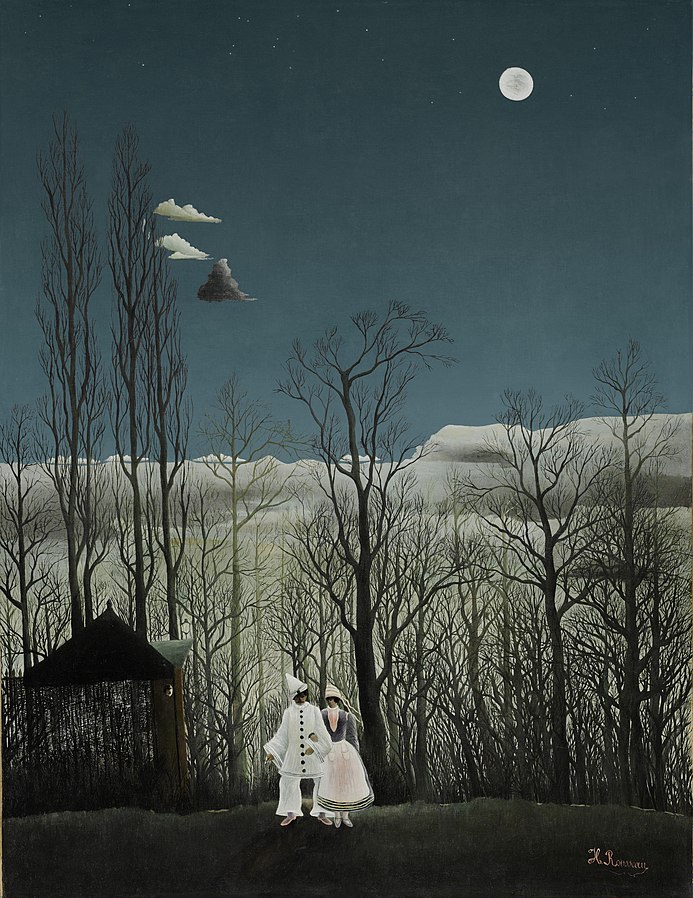 When you look at the Moon, what do you see? Since ancient times, the Moon has ignited our imaginations, as Rebecca Boyle demonstrates in her history of Earth's relationship to its closest neighbor. In mythologies and legends, it has been seen as a canvas depicting a rabbit and a jovial man's features, among other things. It has been with us since the beginning, so of course we crafted its likeness as soon as we were able. Through the ages, human art related to the Moon has helped us understand our celestial companion as well as each other.
An early example is the Nebra Sky Disk, circa 1800-1600 BCE. A stunning piece of copper and bronze with an image depicting the Moon, sun, and "Seven Sisters" constellation, it "displays the world's ...
If you liked Our Moon, try these:

by Lisa Kaltenegger
Published 2025
Riveting and timely, a look at the research that is transforming our understanding of the cosmos in the quest to discover whether we are alone.
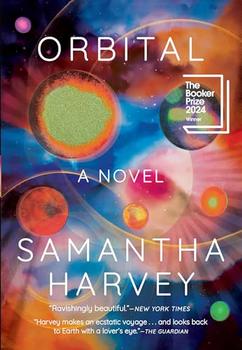
by Samantha Harvey
Published 2024
A slender novel of epic power, Orbital deftly snapshots one day in the lives of six women and men hurtling through space - not towards the moon or the vast unknown, but around our planet.
The Sister's Curse
by Nicola Solvinic
The Lost Story of Eva Fuentes
by Chanel Cleeton
The Vanishing Place
by Zoë Rankin
 (1).gif)
A book may be compared to your neighbor...
Click Here to find out who said this, as well as discovering other famous literary quotes!

Can you name the title?
Test your book knowledge with our daily trivia challenge!