-
See Our Best Book
Club Books of 2026!

How Rogue Archaeologists Are Recreating the Sights, Sounds, Smells, and Tastes of Lost Civilizations
by Sam Kean
From the New York Times bestselling author of The Disappearing Spoon, an archaeological romp through the entire history of humankind—from tropical Polynesian islands to forbidding arctic ice floes, and everywhere in between.
Whether it's the mighty pyramids of Egypt or the majestic temples of Mexico, we have a good idea of what the past looked like. But what about our other senses: The tang of Roman fish sauce and the springy crust of Egyptian sourdough? The boom of medieval cannons and the clash of Viking swords? The frenzied plays of an Aztec ballgame...and the chilling reality that the losers might also lose their lives?
History often neglects the tastes, textures, sounds, and smells that were an intimate part of our ancestors' lives, but a new generation of researchers is resurrecting those hidden details, pioneering an exciting new discipline called experimental archaeology. These are scientists gone rogue: They make human mummies. They investigate the unsolved murders of ancient bog bodies. They carve primitive spears and go hunting, then knap their own obsidian blades to skin the game. They build perilous boats and plunge out onto the open sea—all in the name of experiencing history as it was, with all its dangers, disappointments, and unexpected delights.
Beloved author Sam Kean joins these experimental archaeologists on their adventures across the globe, from the Andes to the South Seas. He fires medieval catapults, tries his hand at ancient surgery and tattooing, builds Roman-style roads—and, in novelistic interludes, spins gripping tales about the lives of our ancestors with vivid imagination and his signature meticulous research.
Lively, offbeat, and filled with stunning revelations about our past, Dinner with King Tut sheds light on days long gone and the intrepid experts resurrecting them today, with startling, lifelike detail and more than a few laughs along the way.
"[V]ery hard to put down. A fast-paced, vividly written tale that brings lost civilizations into sharp focus." —Kirkus Reviews (starred review)
"[A] charming romp through the world of experimental archaeology...This idiosyncratic and impressively researched account takes readers to the fringes of knowledge production, revealing along the way that there is as much art as there is science to the study of history. It's a delight." —Publishers Weekly
This information about Dinner with King Tut was first featured
in "The BookBrowse Review" - BookBrowse's membership magazine, and in our weekly "Publishing This Week" newsletter. Publication information is for the USA, and (unless stated otherwise) represents the first print edition. The reviews are necessarily limited to those that were available to us ahead of publication. If you are the publisher or author and feel that they do not properly reflect the range of media opinion now available, send us a message with the mainstream reviews that you would like to see added.
Any "Author Information" displayed below reflects the author's biography at the time this particular book was published.
Sam Kean is the New York Times bestselling author of The Bastard Brigade, Caesar's Last Breath (the Guardian's Science Book of the Year), The Tale of the Dueling Neurosurgeons, The Violinist's Thumb, and The Disappearing Spoon. He is also a two-time finalist for the PEN / E. O. Wilson Literary Science Writing Award. His work has appeared in The Best American Science and Nature Writing, The New Yorker, The Atlantic, and the New York Times Magazine, among other publications, and he has been featured on NPR's Radiolab, All Things Considered, Science Friday, and Fresh Air. His podcast, The Disappearing Spoon, debuted at #1 on the iTunes science charts. Kean lives in Washington, DC.
The Sister's Curse
by Nicola Solvinic
The Lost Story of Eva Fuentes
by Chanel Cleeton
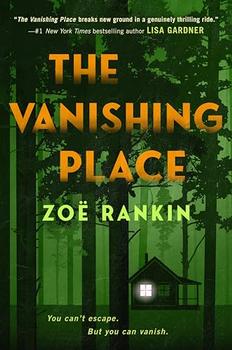
The Vanishing Place
by Zoë Rankin
 (1).gif)
Common sense is genius dressed in its working clothes.
Click Here to find out who said this, as well as discovering other famous literary quotes!

Can you name the title?
Test your book knowledge with our daily trivia challenge!
Your guide toexceptional books
BookBrowse seeks out and recommends the best in contemporary fiction and nonfiction—books that not only engage and entertain but also deepen our understanding of ourselves and the world around us.