
-
See Our Best Book
Club Books of 2026!
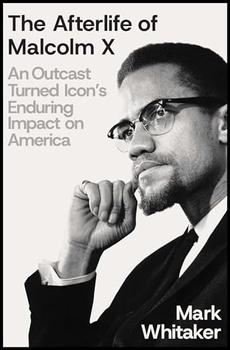
An Outcast Turned Icon's Enduring Impact on America
by Mark Whitaker Book Reviewed by:
Published to coincide with the hundredth anniversary of his birth, the first major study of Malcolm X's influence in the sixty years since his assassination, exploring his enduring impact on culture, politics, and civil rights.
Malcolm X has become as much of an American icon as Abraham Lincoln, John F. Kennedy, or Martin Luther King. But when he was murdered in 1965, he was still seen as a dangerous outsider. White America found him alienating, mainstream African Americans found him divisive, and even his admirers found him bravely radical. Although Ossie Davis famously eulogized Malcolm X as "our own Black shining prince," he never received the mainstream acceptance toward which he seemed to be striving in his final year. It is more in death than his life that Malcolm's influence has blossomed and come to leave a deep imprint on the cultural landscape of America.
With impeccable research and original reporting, Mark Whitaker tells the story of Malcolm X's far-reaching posthumous legacy. It stretches from founders of the Black Power Movement such as Stokely Carmichael and Huey Newton to hip-hop pioneers such as Public Enemy and Tupac Shakur. Leaders of the Black Arts and Free Jazz movements from Amiri Baraka to Maya Angelou, August Wilson, and John Coltrane credited their political awakening to Malcolm, as did some of the most influential athletes of our time, from Muhammad Ali to Kareem Abdul-Jabbar and beyond. Spike's movie biopic and the Black Lives Matter movement reintroduced Malcolm to subsequent generations. Across the political spectrum, he has been cited as a formative influence by both Barack Obama—who venerated Malcolm's "unadorned insistence on respect"—and Clarence Thomas, who was drawn to Malcolm's messages of self-improvement and economic self-help.
In compelling new detail, Whitaker also retraces the long road to exoneration for two men wrongfully convicted of Malcolm's murder, making The Afterlife of Malcolm X essential reading for anyone interested in true crime, American politics, culture, and history.
The drama of Malcolm's life and death is fascinating. Whitaker has pulled together a rich, expansive tapestry of the characters and relationships involved. But The Afterlife of Malcolm X also traces the influence Malcolm had on people who were not directly involved in his life and death, and indeed, some who never even knew him, extending his tapestry further and further out, through decades and generations. By the time he gets to our present movement, featuring an Afrofuturistic opera about Malcolm X and the life and death of his most recent biographer, things feel stretched a bit thin. But Whitaker does, admittedly, pull the reader along the decades smoothly, and many sections are incredibly compelling and even moving, like the chapter about Malcolm's friendship with Muhammad Ali and its ugly end after Malcolm broke with the NOI. Page by page, Whitaker builds a larger story about Malcolm's impact on American culture and politics, and about his evolving, multifaceted legacy...continued
Full Review
 (1132 words)
(Reviewed by Chloe Pfeiffer).
 David Levering Lewis, Pulitzer-prize winning author of W.E.B. Du Bois
Whitaker's deeply researched and astonishingly revelatory biography, explains Malcolm's eloquent endurance: 'he grabbed on to my frustrations and turned them into logic.' Whitaker's biography is true to its protagonist. Henry Louis Gates Jr., New York Times bestselling author of The Black Church
Whitaker traces the vast streaks of light left by 'our black shining prince' across space and time since the shock of his cruel and brutal murder at the Audubon Ballroom in New York in February 1965. The lives Malcolm X has touched, generation to generation, from Eldridge Cleaver to Amiri Baraka, Kareem Abdul-Jabbar to Spike Lee, Public Enemy to Black Lives Matter, make for an impressive and wide-ranging cultural history. At the same time, Whitaker reveals the stories of reporters and filmmakers who have dedicated themselves to finding justice not only for Malcolm but for those who did and did not take his life. His legacy lives on. Jonathan Eig, author of the Pulitzer Prize-winning King
Malcolm X still haunts and inspires this nation — in ways we often fail to understand. Now, finally, Mark Whitaker puts together the missing puzzle pieces to present a full and mesmerizing picture of the man's life and legacy. The Afterlife of Malcolm X is an indispensable work that sheds new light on American society and of its most compelling figures.
David Levering Lewis, Pulitzer-prize winning author of W.E.B. Du Bois
Whitaker's deeply researched and astonishingly revelatory biography, explains Malcolm's eloquent endurance: 'he grabbed on to my frustrations and turned them into logic.' Whitaker's biography is true to its protagonist. Henry Louis Gates Jr., New York Times bestselling author of The Black Church
Whitaker traces the vast streaks of light left by 'our black shining prince' across space and time since the shock of his cruel and brutal murder at the Audubon Ballroom in New York in February 1965. The lives Malcolm X has touched, generation to generation, from Eldridge Cleaver to Amiri Baraka, Kareem Abdul-Jabbar to Spike Lee, Public Enemy to Black Lives Matter, make for an impressive and wide-ranging cultural history. At the same time, Whitaker reveals the stories of reporters and filmmakers who have dedicated themselves to finding justice not only for Malcolm but for those who did and did not take his life. His legacy lives on. Jonathan Eig, author of the Pulitzer Prize-winning King
Malcolm X still haunts and inspires this nation — in ways we often fail to understand. Now, finally, Mark Whitaker puts together the missing puzzle pieces to present a full and mesmerizing picture of the man's life and legacy. The Afterlife of Malcolm X is an indispensable work that sheds new light on American society and of its most compelling figures.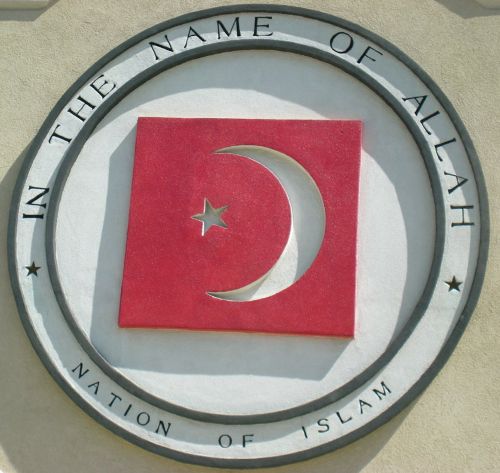 Malcolm X rose to public prominence as one of the faces of the Nation of Islam, which is a Black nationalist and religious movement and organization. The Nation of Islam was founded in 1930 by Wallace D. Fard Muhammad, although he was soon succeeded by Elijah Muhammad, who grew the small group into an influential nationwide movement—influential enough to be deemed a threat to domestic security by the FBI, who gathered counterintelligence on the group and undertook actions to destabilize it. Muhammad promoted Black self-sufficiency, self-reliance, and separatism—challenging the message of the civil rights movement, which called for integration with whites and peaceful protest.
Malcolm X discovered Elijah Muhammad's ...
If you liked The Afterlife of Malcolm X, try these:
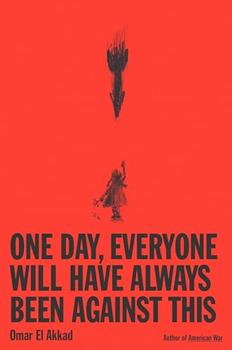
One Day, Everyone Will Have Always Been Against This
by Omar El Akkad
Published 2025
From award-winning novelist and journalist Omar El Akkad comes a powerful reckoning with what it means to live in a West that betrays its fundamental values.

by Timothy Egan
Published 2024
A historical thriller by the Pulitzer and National Book Award-winning author that tells the riveting story of the Klan's rise to power in the 1920s, the cunning con man who drove that rise, and the woman who stopped them.

The Sister's Curse
by Nicola Solvinic

The Lost Story of Eva Fuentes
by Chanel Cleeton

The Vanishing Place
by Zoë Rankin
 (1).gif)
Choose an author as you would a friend
Click Here to find out who said this, as well as discovering other famous literary quotes!

Can you name the title?
Test your book knowledge with our daily trivia challenge!