-
See Our Best Book
Club Books of 2026!
Summary | Excerpt | Reading Guide | Discuss | Reviews | Read-Alikes | Genres & Themes | Author Bio
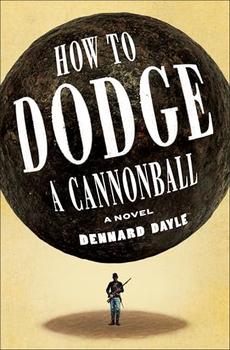
A Novel
by Dennard DayleA cutting, revealing caricature of the American Civil War, told through the eyes of a white teenager who joins an all-Black regiment of soldiers, for fans of Colson Whitehead and James McBride.
Razor-sharp and hilarious, How to Dodge a Cannonball tells the story of Anders, a white teenager who volunteers to be a Union Army flag-twirler to escape his abusive mother. In desperate acts of self-preservation, he defects―twice―before joining a Black regiment at Gettysburg, claiming to be an octoroon. In his new and entirely incredulous unit, Anders becomes entangled with questionable military men and an arms dealer working for both sides. But more importantly he bonds with the other soldiers, finding friendship and a family he desperately needs. After deploying to New York City to suppress the draft riots and to Nevada to suppress Native Americans, Anders begins to see the war through the eyes of his newfound brothers.
Dayle's satire spares no one, whether he's writing about Anders's naivete and unexpected love interest, the quirks of Confederate and Union soldiers, those out to make a quick buck off the tragedy of war, or the theater of war itself (literal theater , as the novel includes a one-act play the troop obsesses over while they wait for action).
Uproariously funny and revelatory, How to Dodge a Cannonball is an inimitable take on which America is worth fighting for.
0.5 GLEASON'S NOTES
"This is the struggle for everything. Freedom. Dignity. The American Future. I'm proud to give whatever Columbia requires."
—Tobias Gleason, To Arms for Liberty (1861)
"I don't know what's happening. But I know that when the last sword is sheathed, it will have been worthwhile."
—Tobias Gleason, One Man's War Journal (1863)
"They died for nothing. Dead men aren't free: they're trapped in wood and dirt forever. The living have even less. A white burial in a clean cemetery is kinder than Black life."
—Tobias Gleason, The Pyre of Hope (1863)
1 ANDERS TURNS SEVEN
"Good morning, niggers!" announced Anders, waving through the schoolhouse window. Cheer shone through his voice, emanating the joy of being alive and American, in that order. The bulk of the assembled students ignored him, but two waved back. Anders mentally marked them as his friends.
His mother thought he'd gone swimming, which had been true fifteen minutes ago. Anders found the water hard to enjoy: ...
What are you reading this week? And what did you think of last week’s books? (10-02-2025)
I'm just about to finish The Forgetting by Hannah Beckerman. The story is told through two characters: Anna and Stella. Anna chapters are in first person and Stella's in second person which I thought an interesting choice. A bit past the halfway point a lightbulb went off, and I think I see what'...
-Connie_K
 Gary Shteyngart, New York Times bestselling author of Our Country Friends and Super Sad True Love Story
Dennard Dayle's second book certifies his talent. I can't think of a wittier, more hilarious or more relevant young writer. How to Dodge a Cannonball is the great Civil War novel I didn't know I needed, but now it is never leaving my shelf. Jessi Jezewska Stevens, author of The Visitors and The Exhibition of Persephone Qq
This is the Civil War send-up the American canon has been waiting for, and which today's America, still unsure which version of itself it wants to become, so sorely needs. Dayle is one of our sharpest, funniest, and most unrelenting writers. Jessi Jezewska Stevens, author of The Visitors and The Exhibition of Persephone Qq
This is the Civil War send-up the American canon has been waiting for, and which today's America, still unsure which version of itself it wants to become, so sorely needs. Dayle is one of our sharpest, funniest, and most unrelenting writers.
Gary Shteyngart, New York Times bestselling author of Our Country Friends and Super Sad True Love Story
Dennard Dayle's second book certifies his talent. I can't think of a wittier, more hilarious or more relevant young writer. How to Dodge a Cannonball is the great Civil War novel I didn't know I needed, but now it is never leaving my shelf. Jessi Jezewska Stevens, author of The Visitors and The Exhibition of Persephone Qq
This is the Civil War send-up the American canon has been waiting for, and which today's America, still unsure which version of itself it wants to become, so sorely needs. Dayle is one of our sharpest, funniest, and most unrelenting writers. Jessi Jezewska Stevens, author of The Visitors and The Exhibition of Persephone Qq
This is the Civil War send-up the American canon has been waiting for, and which today's America, still unsure which version of itself it wants to become, so sorely needs. Dayle is one of our sharpest, funniest, and most unrelenting writers.
If you liked How to Dodge a Cannonball, try these:

by Percival Everett
Published 2024
A brilliant, action-packed reimagining of Adventures of Huckleberry Finn, both harrowing and ferociously funny, told from the enslaved Jim's point of view. From the "literary icon" (Oprah Daily) and Pulitzer Prize Finalist whose novel Erasure is the basis for Cord Jefferson's critically acclaimed film American Fiction.

by James McBride
Published 2018
Exciting new fiction from James McBride, the first since his National Book Award–winning novel The Good Lord Bird.
The Sister's Curse
by Nicola Solvinic
The Lost Story of Eva Fuentes
by Chanel Cleeton
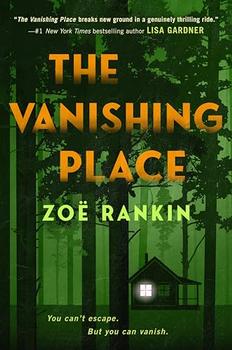
The Vanishing Place
by Zoë Rankin
 (1).gif)
Information is the currency of democracy
Click Here to find out who said this, as well as discovering other famous literary quotes!

Can you name the title?
Test your book knowledge with our daily trivia challenge!