-
See Our Best Book
Club Books of 2026!
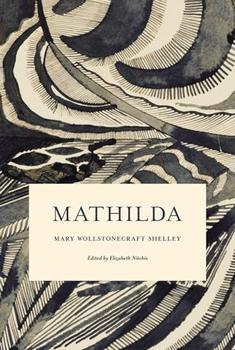
by Mary Wollstonecraft Shelley
"If pain can purify the heart, mine will be pure: if remorse may expiate guilt, I shall be guiltless."
From the author of Frankenstein comes a tale as chilling as it is heartbreaking, a story of forbidden love, relentless grief, and the enduring scars of solitude. Mathilda (sometimes written Matilda) recounts the tragic life of a young woman abandoned at birth and estranged from society, only to be haunted by her father's return and the dark shadow of his forbidden obsession. Through her confessional narrative, Mathilda reveals the depths of her pain and the inescapable weight of her past, seeking redemption in the desolate beauty of her surroundings. Yet solace remains elusive, and her story unfolds as a meditation on isolation, loss, and the destructive power of unspoken truths.
With its sweeping gothic landscapes and raw emotional intensity, Mary Wollstonecraft Shelley paints a poignant portrait of grief and longing that transcends time. Written in 1819 during one of the darkest periods of her life, Mathilda was suppressed for its dark and controversial themes, remaining unpublished until 1959, more than a century after Shelley's death. Today, it stands as one of her most daring and personal works, a fearless exploration of the soul's darkest recesses and the boundaries of the human spirit.
Media reviews not yet available.
This information about Mathilda was first featured
in "The BookBrowse Review" - BookBrowse's membership magazine, and in our weekly "Publishing This Week" newsletter. Publication information is for the USA, and (unless stated otherwise) represents the first print edition. The reviews are necessarily limited to those that were available to us ahead of publication. If you are the publisher or author and feel that they do not properly reflect the range of media opinion now available, send us a message with the mainstream reviews that you would like to see added.
Any "Author Information" displayed below reflects the author's biography at the time this particular book was published.
Mary Wollstonecraft Shelley (1797–1851) was a novelist and essayist whose work defined the gothic tradition and laid the foundations for modern science fiction. Best known for her groundbreaking novel Frankenstein; or, The Modern Prometheus (1818), Shelley explored themes of ambition, isolation, and the human condition with an originality that continues to resonate. Marked by haunting introspection and bold imagination, her legacy endures as a testament to her profound understanding of human nature and willingness to confront its darkest depths.
The Sister's Curse
by Nicola Solvinic

The Lost Story of Eva Fuentes
by Chanel Cleeton

The Vanishing Place
by Zoë Rankin
 (1).gif)
Nearly all men can stand adversity, but if you want to test a man's character, give him power.
Click Here to find out who said this, as well as discovering other famous literary quotes!

Can you name the title?
Test your book knowledge with our daily trivia challenge!
Your guide toexceptional books
BookBrowse seeks out and recommends the best in contemporary fiction and nonfiction—books that not only engage and entertain but also deepen our understanding of ourselves and the world around us.