-
See Our Best Book
Club Books of 2026!
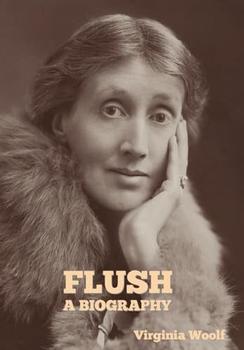
A Biography
by Virginia Woolf
Flush: A Biography, an imaginative biography of Elizabeth Barrett Browning's cocker spaniel, is a cross-genre blend of fiction and nonfiction by Virginia Woolf published in 1933.
Written after the completion of her emotionally draining The Waves, the work returned Woolf to the imaginative consideration of English history that she had begun in Orlando: A Biography, and to which she would return in Between the Acts.
Commonly read as a modernist consideration of city life seen through the eyes of a dog, Flush serves as a harsh criticism of the supposedly unnatural ways of living in the city. The figure of Elizabeth Barrett Browning in the text is often read as an analogue for other female intellectuals, like Woolf herself, who suffered from illness, feigned or real, as a part of their status as female writers. Most insightful and experimental are Woolf's emotional and philosophical views verbalised in Flush's thoughts. As he spends more time with Barrett Browning, Flush becomes emotionally and spiritually connected to the poet and both begin to understand each other despite their language barriers. For Flush smell is poetry, but for Barrett Browning, poetry is impossible without words. In Flush Woolf examines the barriers that exist between woman and animal created by language yet overcome through symbolic actions.
The book, due to its subject matter, has often been considered one of her less serious artistic endeavours; however, she uses her distinctive stream of consciousness style to experiment with a non-human perspective. In places the novella plays with realism by allowing Flush an improbable amount of perception for a canine (Flush seems to grasp some idea of social class in humans, a concept recurrently criticized in the story as he becomes more "democratic" later in life), and can "talk" to other dogs on the street. At other times the reader is forced to interpret events from the dog's limited knowledge (Flush sees her owner agitated over markings on a paper and cannot understand that she is in love).
For material, Woolf drew primarily on Barrett Browning's two poems on dogs ("To Flush, My Dog" and "Flush or Faunus") and on the published correspondence of the poet and her husband, Robert Browning. From this material, Woolf creates a biography that works on three levels. It is overtly a biography of a dog's life. Since this dog is of interest primarily for its owner, the work is also an impressionistic biography of Elizabeth Barrett during the most dramatic years of her life. At this level, Flush mostly recapitulates the romantic legend of Barrett Browning's life: early confinement by a mysterious illness and a doting but tyrannical father; a passionate romance with an equally talented poet; an elopement that permanently estranges the father, but which allows Barrett Browning to find happiness and health in Italy. On a third level, the book gives Woolf an opportunity to return to some of her most frequent topics: the glory and misery of London; the Victorian mindset; class differences; and the ways in which women oppressed by "fathers and tyrants" may find freedom.
Woolf ostensibly uses the life of a dog as pointed social criticism, ranging across topics from feminism and environmentalism to class conflict. (wikipedia.org)
Media reviews not yet available.
This information about Flush was first featured
in "The BookBrowse Review" - BookBrowse's membership magazine, and in our weekly "Publishing This Week" newsletter. Publication information is for the USA, and (unless stated otherwise) represents the first print edition. The reviews are necessarily limited to those that were available to us ahead of publication. If you are the publisher or author and feel that they do not properly reflect the range of media opinion now available, send us a message with the mainstream reviews that you would like to see added.
Any "Author Information" displayed below reflects the author's biography at the time this particular book was published.
Virginia Woolf is now recognized as a major twentieth-century author, a great novelist and essayist and a key figure in literary history as a feminist and a modernist. Born in 1882, she was the daughter of the editor and critic Leslie Stephen, and suffered a traumatic adolescence after the deaths of her mother, in 1895, and her step-sister Stella, in 1897, leaving her subject to breakdowns for the rest of her life. Her father died in 1904 and two years later her favourite brother Thoby died suddenly of typhoid.
The Sister's Curse
by Nicola Solvinic
The Lost Story of Eva Fuentes
by Chanel Cleeton
The Vanishing Place
by Zoë Rankin
 (1).gif)
The only real blind person at Christmas-time is he who has not Christmas in his heart.
Click Here to find out who said this, as well as discovering other famous literary quotes!

Can you name the title?
Test your book knowledge with our daily trivia challenge!
Your guide toexceptional books
BookBrowse seeks out and recommends the best in contemporary fiction and nonfiction—books that not only engage and entertain but also deepen our understanding of ourselves and the world around us.