-
Your next favorite book
is waiting.
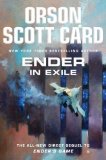
At the close of Ender's Game, Andrew Wiggin – called Ender by everyone – is told that he can no longer live on Earth, and he realizes that this is the truth. He has become far more than just a boy who won a game: he is the Savior of Earth, a hero, a military genius whose allegiance is sought by every nation of the newly shattered Earth Hegemony. He is offered the choice of living in isolation on Eros, at one of the Hegemony’s training facilities, but instead the twelve-year-old chooses to leave his home world and begin the long relativistic journey out to the colonies. With him went his sister Valentine, and the core of the artificial intelligence that would become Jane.
The story of those years has never been told… until now.
"Fans will find this offering illuminating, and it's also accessible to thoughtful readers new to the series." - Publishers Weekly.
"Series fans will enjoy this thoughtful take on the life of a young man who has already accomplished his destiny." - Library Journal.
This information about Ender in Exile was first featured
in "The BookBrowse Review" - BookBrowse's membership magazine, and in our weekly "Publishing This Week" newsletter. Publication information is for the USA, and (unless stated otherwise) represents the first print edition. The reviews are necessarily limited to those that were available to us ahead of publication. If you are the publisher or author and feel that they do not properly reflect the range of media opinion now available, send us a message with the mainstream reviews that you would like to see added.
Any "Author Information" displayed below reflects the author's biography at the time this particular book was published.

Nobody had ever won the Hugo and Nebula awards for best novel two years in a row until Orson Scott Card received them for Ender's Game and its sequel, Speaker for the Dead, in 1986 and 1987. The third novel in the series, Xenocide, was published in 1991, and the fourth and seemingly final volume, Children of the Mind, was published in August 1996. Now a new novel in the Ender's series, titled Ender's Shadow, was published in August 1999 from TOR -- but it's not a sequel. Instead, it returns to the events of Ender's Game and views them from the point of view of another character, a street urchin named Bean. As with Rashomon or The Alexandria Quartet, Card discovers a new story in the midst of the old, when seeing it through other eyes. A sequel to Ender's Shadow will be published...
... Full Biography
Link to Orson Scott Card's Website
Name Pronunciation
Orson Scott Card: or-sun (named after his grandfather, Card says that Orson is a relatively popular name among Mormons and derives from the Indo-European word for bear)

If you liked Ender in Exile, try these:
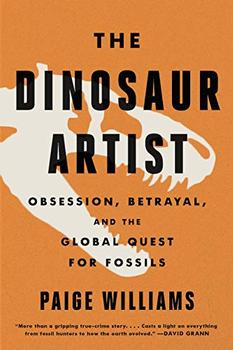
by Paige Williams
Published 2019
New Yorker magazine staff writer Paige Williams explores the riveting and perilous world of fossil collectors in this true tale of one Florida man's attempt to sell a dinosaur skeleton from Mongolia.
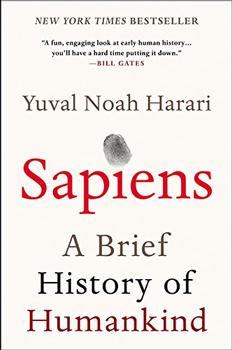
by Yuval Noah Harari
Published 2018
A groundbreaking narrative of humanity's creation and evolution that explores the ways in which biology and history have defined us and enhanced our understanding of what it means to be "human."
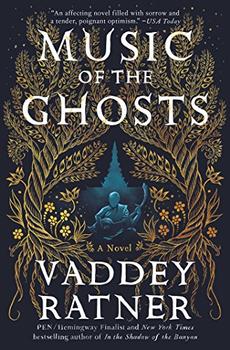
by Vaddey Ratner
Published 2018
This "novel of extraordinary humanity" (Madeleine Thien, author of Do Not Say We Have Nothing) from New York Times bestselling author Vaddey Ratner reveals "the endless ways that families can be forged and broken hearts held" (Chicago Tribune) as a young woman begins an odyssey to discover the truth about her missing father.
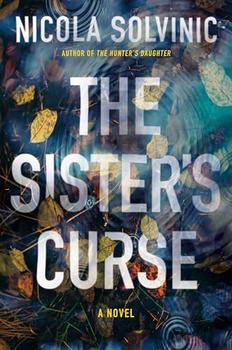


 (1).gif)
He who opens a door, closes a prison
Click Here to find out who said this, as well as discovering other famous literary quotes!

Can you name the title?
Test your book knowledge with our daily trivia challenge!
Your guide toexceptional books
BookBrowse seeks out and recommends the best in contemporary fiction and nonfiction—books that not only engage and entertain but also deepen our understanding of ourselves and the world around us.