
-
Your next favorite book
is waiting.
Summary | Excerpt | Reviews | Beyond the Book | Readalikes | Genres & Themes | Author Bio
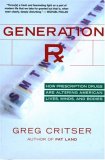
How Prescription Drugs Are Altering American Lives, Minds, and Bodies
by Greg Critser Book Reviewed by:
To derail the new bill, Williams and
Lerner turned to an
unexpected source, a man named Gerry
Mossinghoff. Tall, owlish, and
charming in an old-school sort of way,
Mossinghoff was the U.S.
commissioner of patents and trademarks.
As such, he was committed to
traditional patent law, and barely an
official phrase passed his lips without
Mossinghoff uttering something about "classic, hornbook patent law,"
referring to the nineteenth-century case
books that informed his views. He
was also a textbook Reaganite, inclined
to look unfavorably at regulatory or
legislative limits on patent life. He
had helped the president establish and
populate a new, conservative patent
court. Just who "requested" that he get
involved and testify before Congress on
the pro–brand name side is unclear,
and there were recriminations all
around. It was an unusual position for a
paid
public servant to be in.
But it was too late. Bill Haddad had
made sure that the legislation
would not get sabotaged by going
directly to the congressman most likely to
do so: Senator Orrin Hatch of Utah.
Socially and fiscally conservative, Hatch
was a supporter of pharma, but he had a
pronounced populist streak as well.
He had a yearning to transcend his
narrow reputation as a conservative
firebrand. To exploit that, Haddad hired
Hatch's longtime chief of staff, who
had just gone into private practice as a
lobbyist, to convince his old boss to
come onboard. Here was a great
opportunity to expand and broaden his
image, and, as Hatch was told, "generics
seemed to be the right thing to do"
to boot. Hatch agreed. The Waxman bill
became Hatch-Waxman — the order
of the names reflecting not effort but
clout — and was signed that fall.
The reaction in big pharma's executive
suites was startlingly clear
and everywhere evident. There was now a
new reality in the business, and
that new reality was fear — fear of not
exploiting drugs fast enough and hard
enough before generic competition eroded
profits. And there was only one
way to do that: get more new drugs
approved faster and find new ways to
milk them once they were approved.
To help ease the political way, the
brand-name companies hired a
new PMA president. His name was Gerry
Mossinghoff. As Roche's Irv Lerner
said, "He had all the tickets we could
possibly want."
Copyright © 2005 by Greg Critser. Reprinted by permission of Houghton Mifflin Company.



 (1).gif)
When a true genius appears in the world, you may know him by this sign...
Click Here to find out who said this, as well as discovering other famous literary quotes!

Can you name the title?
Test your book knowledge with our daily trivia challenge!
Your guide toexceptional books
BookBrowse seeks out and recommends the best in contemporary fiction and nonfiction—books that not only engage and entertain but also deepen our understanding of ourselves and the world around us.