-
Your next favorite book
is waiting.
Summary | Excerpt | Reading Guide | Reviews | Beyond the Book | Readalikes | Genres & Themes | Author Bio
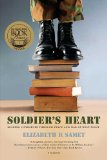
Reading Literature Through Peace and War at West Point
by Elizabeth D. Samet Book Reviewed by:
These works of imaginative literature can be read in relief against works of
nonfiction such as Thucydides’
The History of the Peloponnesian War
and the writings of Plutarch (available in
Penguin and Oxford Classics editions and in a two-volume Modern Library
edition). Ulysses S. Grant’s
Personal Memoirs, a book that
changed the way I think about soldiers and war, is available in several
versions; I recommend Penguin Classics or Library of America. The latter
also publishes the very different
Memoirs of General W. T. Sherman.
Theodore Roosevelt’s The
Rough Riders is an energetic
account of war as grand adventure (Modern Library War). I am not alone in
thinking Edmund Blunden’s
Undertones of War (Penguin Modern
Classics) the subtlest memoir to emerge out of World War I. Barbara Harshav’s
translation of Memoirs of a
Warsaw Ghetto Fighter, by Simha
Rotem [Kazik] (Yale), made a powerful impact on the plebes with whom I read it.
The rich meditations of Antoine de Saint-Exupéry on war and many other themes
can be found in Wartime Writings,
1939–1944 (Harcourt) and in a collection of his books,
Airman’s Odyssey
(Harcourt). War memoirs are illuminating in sometimes surprising ways,
especially perhaps when they blur the line between fact and fiction, as is the
case with Robert Graves’s Good-bye
to All That (Anchor); T. E. Lawrence’s
Seven Pillars of Wisdom
(Penguin Modern Classics); and Siegfried
Sassoon’s Memoirs of an
Infantry Officer (Faber and
Faber).
Alfred Hitchcock once declared that the “chase” was “the final expression of the
motion picture medium,” but sometimes it seems as if there is no subject more
cinematic than war. The war film is our modern epic. My students refer
frequently to Braveheart
(1995, dir. Mel Gibson),
Saving Private Ryan
(1998, dir. Steven Spielberg),
Black Hawk Down
(2001, dir. Ridley Scott),
Jarhead
(2005, dir. Sam Mendes), and the older but
still powerful Apocalypse
Now (1979, dir. Francis Ford Coppola). The films that shaped
the way I thought about soldiers and war growing up included
Sergeant York (1941,
dir. Howard Hawks), Desperate
Journey (1942, dir. Raoul Walsh),
Wake Island
(1942, dir. John Farrow),
Guadalcanal Diary
(1943, dir. Lewis Seiler),
Five Graves to Cairo
(1943, dir. Billy Wilder),
They Were Expendable
(1945, dir. John Ford), To Hell and
Back (1955, dir. Jesse Hibbs),
Run Silent,
Run Deep
(1958, dir. Robert Wise), and
Patton
(1970, dir. Franklin J. Schaffner). A trio of
films from 1964, which I didn’t encounter until much later, combine Cold War
hysteria with a still pertinent commentary on the civil-military relation:
Dr. Strangelove
(dir. Stanley Kubrick), Fail-Safe
(dir. Sidney Lumet), and
Seven Days in May (dir. John
Frankenheimer). Grand
Illusion (1937, dir. Jean Renoir)
remains for me the most powerful cinematic study of war.
Max, the former Army captain who is now in film school, insists that the
horror film Jacob’s Ladder
(1990, dir. Adrian Lyne) is “the
most realistic war movie ever made.” His other favorites—the films he grew up
on—include Little Caesar
(1931, dir. Mervyn LeRoy),
The Public Enemy
(1931, dir. William A. Wellman),
The Roaring Twenties
(1939, dir. Raoul Walsh),
Casablanca
(1942, dir. Michael Curtiz), and
Cool Hand Luke
(1967, dir. Stuart Rosenberg). Among
the films old and new that seem to have had an especially powerful impact on Max
and other students are
Metropolis (1927, dir. Fritz
Lang), His Girl Friday
(1940, dir. Howard Hawks),
The Lady Eve
(1941, dir. Preston Sturges),
The Maltese Falcon
(1941, dir. John Huston),
Citizen Kane
(1941, dir. Orson Welles),
Double Indemnity
(1944, dir. Billy Wilder),
Notorious
(1946, dir. Alfred Hitchcock),
The Treasure of the Sierra Madre
(1948, dir. John Huston),
Sunset Boulevard
(1950, dir. Billy Wilder),
Night and Fog
(1955, dir. Alain Resnais),
North by Northwest
(1959, dir. Alfred Hitchcock),
À bout de souffle
[Breathless]
(1960, dir. Jean-Luc Godard),
Yojimbo (1961, dir. Akira
Kurosawa), Hud
(1963, dir. Martin Ritt),
The Battle of Algiers
(1966, dir. Gillo Pontecorvo),
The Conversation
(1974, dir. Francis Ford Coppola),
The Player
(1992, dir. Robert Altman), and
Prisoner of Paradise
(2002, dir. Malcolm Clarke and Stuart
Sender).
Excerpted from Soldier's Heart by Elizabeth D. Samet. Copyright © 2007 by Elizabeth D. Samet. Published in October 2007 by Farrar, Straus and Giroux, LLC. All rights reserved.
 (1).gif)
Polite conversation is rarely either.
Click Here to find out who said this, as well as discovering other famous literary quotes!

Can you name the title?
Test your book knowledge with our daily trivia challenge!
Your guide toexceptional books
BookBrowse seeks out and recommends the best in contemporary fiction and nonfiction—books that not only engage and entertain but also deepen our understanding of ourselves and the world around us.