
-
Your next favorite book
is waiting.
Summary | Excerpt | Reviews | Beyond the Book | Readalikes | Genres & Themes | Author Bio
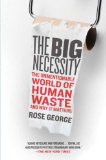
The Unmentionable World of Human Waste and Why It Matters
by Rose George Book Reviewed by:
Before biogas, most villagers had used a hole in the backyard as a latrine. In Da Li, as in countless other villages, things began to change when the city came back to the country. Youngsters who had gone to the city got used to different standards. "They were coming home and complaining about the mao kun," says Zhou. "They didn't want to use it anymore." They demanded better facilities for their visits home, making fertile ground for the Shaanxi Mothers to make their biogas case. The women of Da Li proved to be powerful allies. The reason why becomes obvious when Zhou leads me to his house and into the kitchen, past the cartful of apples in the driveway. Here, his wife gives me a demonstration of how she used to live and breathe. She kneels in front of her cast-iron oven, pretending to feed it with kindling and rice stalks, and mimes how she used to cough and how her eyes would water. The ovens are still used to bake bread, but otherwise the two-ring biogas burner is enough for three meals a day in summer and two in winter.
Biogas is not perfect. As the tragedy of Peng showed, digesters can fail because of mechanics and human error. Also, there is little agreement on how safe the slurry actually is. Opinions vary as to whether a four-week digestion process, for example, kills all pathogens. Ascaris eggs, which grow into long and revolting worms, are exceptionally hardy. (They are also still unvanquished, though humanity has been dealing with them forever: ascaris have been detected in fossilized Peruvian dung dating from 2277 B.C.) Swedish academic Mathias Gustavsson, a fan of biogas—he refers to it as a "solution in search of its problem"—writes that "there is no such thing as a total removal of all parasites due to an anaerobic process."
But a biogas digester has to be better than a bucket. And it has enormous potential: In the French city of Lille, ten city buses now run on biogas taken from the city's sewage works, and city officials claim the biogas buses are carbon neutral and less polluting (biogas gives off fewer particles).
In Da Li, they're not bothered about buses. In a courtyard behind a carved wooden door, a woman sits weaving as if she's been doing it for centuries. In fact, she only got the loom a year ago. A gas made from something we all flush away without thought has given her cheaper bills, a cleaner environment, and something she's never had before, called free time.
Excerpted from The Big Necessity by Rose George. Copyright © 2008 by Rose George. Excerpted by permission of Metropolitan Books, a division of Macmillan. All rights reserved. No part of this excerpt may be reproduced or reprinted without permission in writing from the publisher.



 (1).gif)
Analyzing humor is like dissecting a frog. Few people are interested and the frog dies of it.
Click Here to find out who said this, as well as discovering other famous literary quotes!

Can you name the title?
Test your book knowledge with our daily trivia challenge!
Your guide toexceptional books
BookBrowse seeks out and recommends the best in contemporary fiction and nonfiction—books that not only engage and entertain but also deepen our understanding of ourselves and the world around us.