-
Your next favorite book
is waiting.
Summary | Excerpt | Reviews | Beyond the Book | Readalikes | Genres & Themes | Author Bio
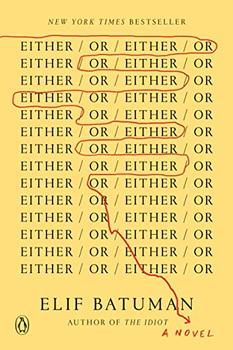
 Book Reviewed by:
Svetlana and I were sitting in her room reading the course catalog. It was a magical book. All human knowledge was in it, hidden in the form of its classification. It was like From the Mixed-Up Files of Mrs. Basil E. Frankweiler, where the answer to whether the statue was really by Michelangelo-the answer that would determine the meaningfulness of everything else that had happened-was right there in the filing cabinets, and the children had only to find it, but first they had to guess what it was filed under.
I thought there was something wrong with the way the departments and majors were organized. Why were the different branches of literature categorized by geography and language, while sciences were categorized by the level of abstraction, or by the size of the object of study? Why wasn't literature classified by word count? Why wasn't science classified by country? Why did religion have its own department, instead of going into philosophy or anthropology? What made something a religion and not a philosophy? Why was the history of non-industrial people in anthropology, and not in history? Why were the most important subjects addressed only indirectly? Why was there no department of love?
I knew, even before I asked her, that Svetlana would defend the system of departments-but how? They were so clearly arbitrary categories that some guy had thought of.
"Well, of course they're arbitrary," Svetlana said, "but it's because they're historical categories, not formal categories." She said the course catalog was a relic of how human knowledge had been split into disciplines since Ancient Greece. You couldn't actually separate the knowledge from the history of how it had been conceived and organized, so that was the most meaningful way to study it: divided into historically determined categories. I was impressed by how smart Svetlana was, but I didn't agree. I thought we should be rewriting the categories and trying to think of a better organization than whichever one we happened to have inherited.
.

 (1).gif)
When a true genius appears in the world, you may know him by this sign...
Click Here to find out who said this, as well as discovering other famous literary quotes!

Can you name the title?
Test your book knowledge with our daily trivia challenge!
Your guide toexceptional books
BookBrowse seeks out and recommends the best in contemporary fiction and nonfiction—books that not only engage and entertain but also deepen our understanding of ourselves and the world around us.