
-
Your next favorite book
is waiting.
Summary | Excerpt | Reviews | Beyond the Book | Readalikes | Genres & Themes | Author Bio
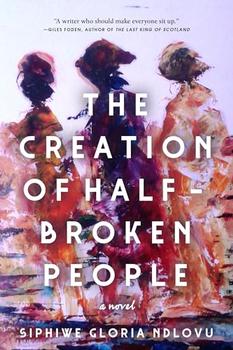
A Novel
by Siphiwe Gloria Ndlovu Book Reviewed by:
John B. Good IX had a name. I had none.
The first time he beat me, I understood why he had done it. He had a very stressful job and what he needed when he came to see me, in the times he deemed it necessary, was peace and quiet and every need met, not a woman who had been waiting for him with longings and expectations of her own. The second time he beat me, I accepted it, and did not even raise my hands to soften the blows. Some things you learn before you meet the man. He died before he could beat me a third time.
I am glad it cannot happen twice, the fever of first love. For it is a fever, and a burden, too, whatever the poets may say. They are not brave, the days when we are twenty-one.
It surprised me, him, and everyone else, when we were still together five years after that initial meeting at the Futures event. By then I had been working at the Good Museum for four years, and John and I seemed to be making our way towards something that, if not lasting, could at least hold together for a while. Eventually, John B. Good IX believed sufficiently in what we had to invite me to meet the rest of the Good Family.
What became an intricate and intimate relationship with the Good Family was more than I could have hoped for. My mother had created and then severed the first link to the family, so that I, like most people, only got to know of the Good Family and their good works through stories and books and through the events I would attend as a Fulatha scholar. I had been fascinated by the Good Family for most of my life because they in turn, for over a century, had been fascinated with the African continent: the place of my birth.
Before its fascination with Africa, the Good Family had been part of the landed gentry of their country for centuries. It may seem surprising that in all those years – generation after generation – there had never been a son named John. That oversight on the part of the family was corrected in 1815 when the first John B. Good was born. This first John did absolutely nothing to distinguish himself, but was directly responsible for all the many John B. Goods who came after him; and because of that, history has chosen to remember him and retroactively christen him John B. Good I.
The second, and probably the most famous, John B. Good, John B. Good II, was born in 1835 and as an adventurer, visited Africa in the latter half of the nineteenth century. A decade or two before his African adventure, while a captain in Her Majesty's navy, he had met a woman in Plymouth, believed himself to be in love with her, allowed things to progress in their natural way, and had then left Plymouth … and the woman. He had kept the woman in his heart and mind until he had met another woman at another port, believed himself to be in love with her, allowed things to progress in their natural way, and so on and so on. The woman in Plymouth, however, had not forgotten him, and when she gave birth to a son nine months after she had allowed things to progress in their natural way with Captain Good, she had made it a point to name the son after his father
This was how John B. Good II, the adventurer, begat a son, John B. Good III, who became a member of the British forces and took part in the Benin Expedition of 1897. The British-forces-son begat a son, John B. Good IV, who became a hunter and came to Africa as a member of Theodore Roosevelt's Smithsonian-Roosevelt African Expedition of 1909–11. The hunter-son begat a son, John B. Good V, who became a missionary and was sent to establish a mission station somewhere along the Zambesi River in the 1920s, but found, once he got there, that he was less interested in saving African souls than he was in saving African artefacts.
The missionary-son begat a son, John B. Good VI, who became an archaeologist and excavated the Ruins of Gedi in East Africa in the 1940s. The archaeologist-son begat a son, John B. Good VII, who became an anthropologist who, fascinated by the oral traditions of Central Africa, wrote many books about them in the 1960s. The anthropologist-son begat a son, John B. Good VIII, who became a historian; although trained as a Marxist whose work was supposed to focus on South Africa, he spent most of his career writing best-selling biographies of his forefathers. The historian-son begat a son, John B. Good IX, who became a worldrenowned photojournalist, and who one day met me and called me an exotic creature. When I met him, the photojournalist-son was yet to beget any children of his own.
Excerpted from The Creation of Half-Broken People by Siphiwe Gloria Ndlovu. Copyright © 2025 by Siphiwe Gloria Ndlovu. Excerpted by permission of House of Anansi Press. All rights reserved. No part of this excerpt may be reproduced or reprinted without permission in writing from the publisher.

 (1).gif)
These are not books, lumps of lifeless paper, but minds alive on the shelves
Click Here to find out who said this, as well as discovering other famous literary quotes!

Can you name the title?
Test your book knowledge with our daily trivia challenge!
Your guide toexceptional books
BookBrowse seeks out and recommends the best in contemporary fiction and nonfiction—books that not only engage and entertain but also deepen our understanding of ourselves and the world around us.