
-
Your next favorite book
is waiting.
Summary | Excerpt | Reviews | Beyond the Book | Readalikes | Genres & Themes | Author Bio
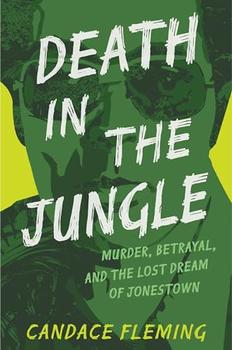
Murder, Betrayal, and the Lost Dream of Jonestown
by Candace Fleming Book Reviewed by:
Chapter One
One Weird Kid
The first time Jim Jones asked followers to play dead was on an autumn night in 1941.
The ten-¬year-¬old urged the other boys to come on.
They hesitated. Jimmy Jones wasn't a friend. Not really. Sure, they hung around with him, but they didn't like him. He was bossy and controlling. And he always got his way.
But there was something magnetic about him, too. Somehow, he coaxed them into doing things they knew they shouldn't.
Take the previous week, for example. They'd been playing in the loft over the Joneses' garage when Jimmy persuaded them to walk out on the rafters. They'd be like tightrope walkers in the circus, he'd said.
His playmates went first, slowly and in single file because the rafters were so narrow. Jimmy sidled out behind them. One of the boys looked down. It was a long way to the floor, at least ten feet. He tried to back off the rafter, but Jimmy wouldn't budge.
"Move back!" the boy yelled.
"I can't move," declared Jimmy. "The Angel of Death is holding me."
For several long moments the boys teetered precariously on the rafters. They begged him to move. All the while Jimmy watched them with "a weird look on his face," recalled one of the boys. Then, finally, he claimed the angel had released him. They all inched their way back to safety.
Afterward, the boys agreed: Jimmy Jones was nuts. They swore never to play with him again.
And yet, just days later, they were sneaking out with him. His gifts of persuasion had once again been impossible to ignore. Beneath a harvest moon they followed their leader across the small town of Lynn, Indiana. No one noticed the little group. In those days most of Lynn's citizens went to bed early.
It didn't take long for the group to reach the warehouse on the edge of town. The boys stopped. What were they doing here? Jimmy sprinted to the warehouse door. It was unlocked. He beckoned the others to follow. They could trust him.
Trust? None of the others trusted Jimmy. Still, one by one, they slipped into the warehouse. Slowly, their eyes adjusted to the darkness, and they saw what was inside: coffins, dozens of them.
Jimmy opened the lid of one and climbed in. He insisted the others do the same. He instructed them to just lie there. That way, they might find out what it was like to be dead. He wiggled into position, arranged his hands across his chest, and closed his eyes.
It was too much for his companions. Yelping with fear, they bolted from the warehouse, leaving Jimmy behind.
He lay there alone, absorbed in morbid revelry. What happened to you after you died? What did it feel like? And how would it feel if your soul was raised from the dead?
The boy didn't find any answers that night. But he kept going back to the coffins.
Despite Jimmy's magnetism, the other boys never returned with him.
* * *
James Warren Jones had few memories of his parents' farm near tiny Crete, Indiana. Born on May 13, 1931, he was just three years old when the Great Depression bankrupted his parents. The financial loss sent his father, a physically disabled and unemployed World War I veteran nicknamed Big Jim, over the edge.
On the day the bank foreclosed, Big Jim beat his fists on the floor. "I've gone as far as I can go!" he cried.
"You go ahead and cry," Jimmy's mother, Lynetta, replied, "but I'll whip this if it's the last thing I ever do."
Moving her family to the slightly larger town of Lynn, just five miles away, she rented a cheap house and found work at the glass factory. She wasn't the only working mother in that sleepy little town. The Depression had forced plenty of women into the role of breadwinner. But she was by far the most unconventional. In those days people in Lynn did little more than earn a living, raise their children, and go to church on both Wednesday nights and Sunday mornings. Since there weren't any African Americans, Catholics, or Jews living within the town limits, there wasn't any reason for the Knights of the Ku Klux Klan to appear with their hoods and fiery crosses. (Around that time 30 percent of all native-¬born white men in Indiana were KKK members.) Alcoholic drinks were not sold within the town limits, and dancing, which many considered immoral, was prohibited at the high school. Crime was rare.
Excerpted from Death in the Jungle by Candace Fleming. Copyright © 2025 by Candace Fleming. Excerpted by permission of Anne Schwartz Books. All rights reserved. No part of this excerpt may be reproduced or reprinted without permission in writing from the publisher.



 (1).gif)
Harvard is the storehouse of knowledge because the freshmen bring so much in and the graduates take so little out.
Click Here to find out who said this, as well as discovering other famous literary quotes!

Can you name the title?
Test your book knowledge with our daily trivia challenge!
Your guide toexceptional books
BookBrowse seeks out and recommends the best in contemporary fiction and nonfiction—books that not only engage and entertain but also deepen our understanding of ourselves and the world around us.