
-
Your next favorite book
is waiting.
Summary | Excerpt | Reviews | Beyond the Book | Readalikes | Genres & Themes | Author Bio
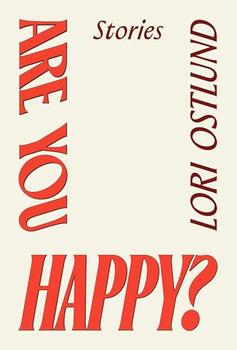
Stories
by Lori Ostlund Book Reviewed by:
Most of us did not really care for "Cardboard Jesus." I pointed out that it seemed unlikely, and Marvin said, "Are we talking character believability?" and I said that I couldn't really put my finger on it but that there wasn't a character worth rooting for in the whole piece. Tabatha snorted and said, "It's not a football game," even though we weren't supposed to talk when our story was being discussed.
"Maybe it's the dialogue," I said finally.
Just the week before, Marvin had explained about dialogue, how it's supposed to sound like a normal conversation except less boring. Our dialogues, it turned out, had too much verisimilitude. "Look," Marvin had said. "Imagine a guy goes into McDonald's and says, 'I'd like a Big Mac and fries,' and then the cashier says, 'Okay, that'll be four dollars and five cents,' and the guy pays and walks out with his burger and fries." He paused. "Typical conversation, right?" And we nodded. "So what's wrong with putting that conversation in a story?" he asked.
Tabatha's hand went up. "Why is everything always about McDonald's?" she said. "I would never have that conversation because I would never go to McDonald's." She looked around the table. "Or Burger King," she added, preempting the possibility of a setting change.
Marvin Helgarson sighed. "Fine," he said. "But my point is that this conversation is only interesting if one of them says something we don't expect, if the cashier says, 'No, sir, you may not have a Big Mac and fries.' Then you have a story."
Tabatha had started to speak, probably planning to point out that the cashier was doing the man a favor, but Marvin held up his hand at her. "Dialogue," he explained, "is all about power shifting back and forth." His pipe had volleyed illustratively through the air.
"What's wrong with my dialogue?" Tabatha asked, looking at me and making her eyes small.
"I don't know," I said. Her dialogue was the opposite of what Marvin had cautioned us about. It didn't have any verisimilitude. "I guess it just feels sort of biblical."
The crazy lady raised her hand and said that there was nothing biblical about the story. She said the story was libelous, and Marvin said, "I think you mean blasphemous," and she said that she knew what she meant and so did God. Thomas said nothing, even though he was a minister, and then Tabatha announced that everyone had missed the point, which was that "Cardboard Jesus" was a "modern-day crucifixion story."
Excerpted from Are You Happy? by Lori Ostlund. Copyright © 2025 by Lori Ostlund. Excerpted by permission of Astra House. All rights reserved. No part of this excerpt may be reproduced or reprinted without permission in writing from the publisher.


 (1).gif)
Finishing second in the Olympics gets you silver. Finishing second in politics gets you oblivion.
Click Here to find out who said this, as well as discovering other famous literary quotes!

Can you name the title?
Test your book knowledge with our daily trivia challenge!
Your guide toexceptional books
BookBrowse seeks out and recommends the best in contemporary fiction and nonfiction—books that not only engage and entertain but also deepen our understanding of ourselves and the world around us.