-
See Our Best Book
Club Books of 2026!
Summary | Excerpt | Reviews | Beyond the Book | Readalikes | Genres & Themes | Author Bio
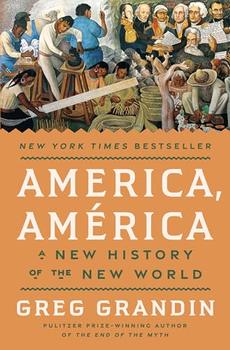
A New History of the New World
by Greg Grandin Book Reviewed by:
Shortly after Las Casas's conversion, a smallpox epidemic swept through Hispaniola, killing, within a few months, nearly a quarter of the island's population. Settlers mounted more expeditions to capture more slaves from other Caribbean islands and from villages along Venezuela's coast. Africans were now being brought in to replace disappearing Taino, to pan rivers, dig mines, herd cows, and cut cane. As the population dwindled, Spanish cruelty increased.
"So many massacres, so many burnings, so many bereavements, and, finally, such an ocean of evil," wrote Las Casas. The priest's denunciations of violence against the New World's darker people perfected a polemical style based not on revelation or appeals to authority but the power of personal witness. More than a century before the French philosopher René Descartes would posit the thinking, self-aware man as the essence of the modern ego, Las Casas gave us the seeing man, mindful not only of his own existence but of the agony of others: "Y yo lo vi"-I saw all this, I saw it with my own eyes.
"All the world knows," Las Casas said.
All the world knew largely because Las Casas had told them. Las Casas's famous account of the Conquest, Brevisima Relación de la Destrucción de las Indias (A Brief History of the Destruction of the Indies), written in 1542 and first published in Seville a decade later, with the word destrucción a play on instrucción. Instruction being what Catholics were supposed to be providing the inhabitants of America. The book was quickly translated into English, French, German, Dutch, and Italian and widely distributed, especially throughout Protestant Europe. John Milton's nephew published it as Tears of the Indians in Cromwellian London, one of at least thirty-seven editions printed in England between the late 1500s and the middle of the 1600s.
Las Casas lived during the middle of one of the most violent periods of human history: a three-century-long crisis that roiled Europe and the Mediterranean world. Famines, pestilence, crusades, and war. Wars that lasted a hundred years, wars between Lutherans and Catholics and between Christians and Muslims, the siege of Constantinople, Mitteleuropa's peasant rebellions, the lowland's revolt against Spain, England's conquest of Ireland. Combined, these upheavals turned "the whole of Europe into a bloodbath." Mass murder of unarmed communities was commonplace. Unbelievers, heretics, and infidels were burned at the stake, and mutilated body parts of the enemy were catapulted into besieged cities.
Still, Las Casas maintained that what the Spanish were doing in the New World was worse.
Las Casas filled page after page with extreme colonial gore. Torture, mutilations, massacres. Spanish conquistadores raped women at will. They broiled captives alive and then fed their corpses to dogs. They chopped off the hands of Indians and then told them to deliver the "letter" (that is, the severed body part) to compatriots hiding in the mountains as a message to surrender or face worse. In Mexico, the Spanish wrapped native priests in straw and then burned them to death. "Boar-hounds" tore children apart. Conquistadores used their swords as spits to roast babies as their mothers watched. They tossed infants into rivers, laughing as they guessed how many times they would bob up for air before drowning.
Excerpted from America, América by Greg Grandin. Copyright © 2025 by Greg Grandin. Excerpted by permission of Penguin Press. All rights reserved. No part of this excerpt may be reproduced or reprinted without permission in writing from the publisher.
The Sister's Curse
by Nicola Solvinic
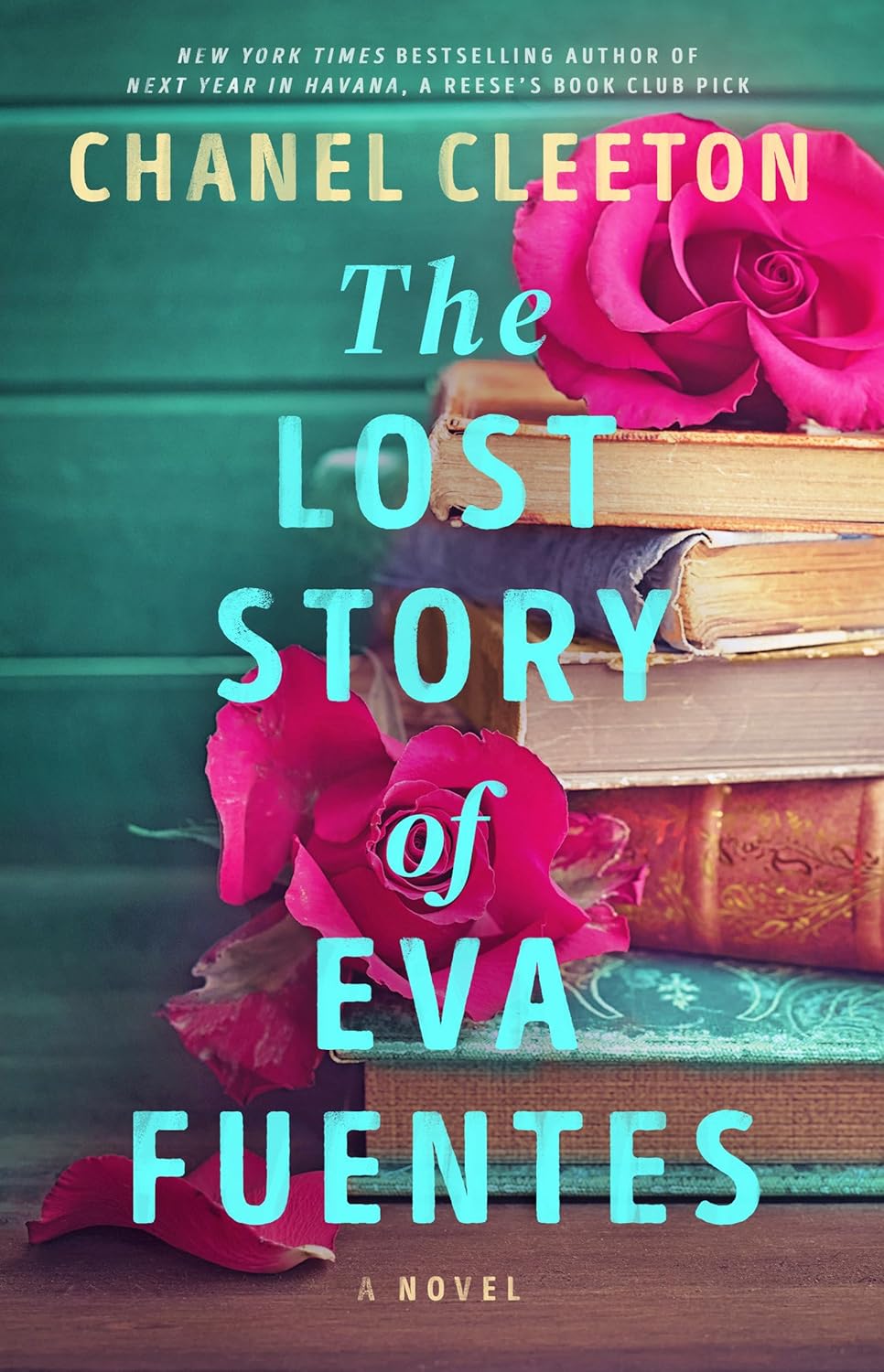
The Lost Story of Eva Fuentes
by Chanel Cleeton
The Vanishing Place
by Zoë Rankin
 (1).gif)
Education is the period during which you are being instructed by somebody you do not know, about something you do ...
Click Here to find out who said this, as well as discovering other famous literary quotes!

Can you name the title?
Test your book knowledge with our daily trivia challenge!
Your guide toexceptional books
BookBrowse seeks out and recommends the best in contemporary fiction and nonfiction—books that not only engage and entertain but also deepen our understanding of ourselves and the world around us.