
-
Your next favorite book
is waiting.
Summary | Excerpt | Reviews | Beyond the Book | Readalikes | Genres & Themes | Author Bio
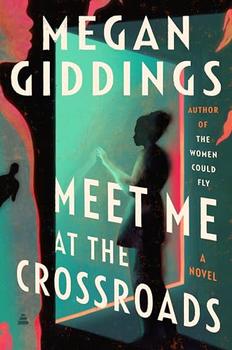
A Novel
by Megan Giddings Book Reviewed by:
1
No person saw the doors appear; that honor was reserved for a polar bear crunching a seal bloody, a murmuration making its clouds in the sky above the earth, a pair of black kites searching out grasshoppers in the soon-to-be kindling grass, a coati who had been asleep in the midday's heat with its paws on its black snout, and a dog preoccupied with finding the rotting carcass it couldn't stop smelling. The animals, not understanding these things were doors, yet understanding they were not of this world, quickly left the area. Later, different people would go on television so intoxicated by the attention they were receiving that they were able to smile wide as they exaggerated and spewed out conflicting details. Some claimed to have heard a great voice coming from the air, encouraging them to announce the arrival. Others saw burning bushes singing loud the end of days. And one man, a farmer from mid-Michigan, was blunt and matter-of-fact in his perfidy. He was fertilizing soybeans, and then there was a door. It would not open. It would not burn. The door itself was a rich blue some days, one time silver, although no one else ever saw it that way, and sometimes, it wasn't even there at all.
In the days that followed the appearance, each country handled things differently. Four of the doors, because they were in not densely populated places, were unknown for years to people outside those countries. When they were found later, it was to some people's great annoyance. Because three had originally been sighted and collectively acknowledged—one in Michigan, one in Australia, one in Germany—they had given the sense that, finally, here it was, the end of days. Things in threes were always a warning. Despite arrests, despite violence, despite calls for common sense and patience, people surged around the doors. Ad hoc towns grew around them, sermons and prayers were held regularly, the surrounding grass and crops were destroyed by the pressure of thousands kneeling and waiting to see what all of this meant.
And for those who did not have faith, there was a swirling of opinions. Aliens! They were always pulling stunts on people, and here was another one, a step further from the flashing lights in the sky and sucking people up in tractor beams. Or maybe, finally, here was proof that we were all living in a vast, sick game of The Sims: See, the user had put the wrong thing in the wrong place, and here was proof that nothing mattered. Life did not make sense because we were pixels and blobs meant to be observed and tormented. Articles and theories and think pieces abounded. Maybe the doors were a trendy artist's conceptual piece. We would find out that each one of these stupid, overdiscussed portals was valued at a million dollars.
Then people learned they could not burn, that bullets bounced off them. They could never get soaked with kerosene or blasted with water, and when knocked on, they sounded like any other door. They did not open for any presidents or prime ministers or kings or queens. They did not open for scientists, not even the ones who spoke gently and dreamed about them. They did not open for the pope or the Dalai Lama or the popular televangelist from Southern California who wrote very dull books that could be summed up as, The only way not to be a sinner was to give him and his church a lot of cash.
One day, a man filled with grief and longing traveled to Australia. His wife had died abruptly (many people were tubing, the inner tubes flipped, some people were lost, it was another horrifying thing buried in the news' miasma). Every day when he was in grief's clasped hands, she, the only she in the entire world for him, was always in the periphery. Church didn't matter any longer. Friends didn't know what to do with the intangibility of no funeral, only a potential memorial service. His father told him the only answer in times like those was to live. The man's wife had always wanted to see the Flinders Ranges (her laugh when she saw birds, her sigh when she saw beauty), so he flew to Australia. At the base of a mountain, he found a blue door and prayed. And after the fourth hour of prayers, the door swung open.
Excerpted from Meet Me at the Crossroads by Megan Giddings. Copyright © 2025 by Megan Giddings. Excerpted by permission of Amistad. All rights reserved. No part of this excerpt may be reproduced or reprinted without permission in writing from the publisher.

 (1).gif)
Outside of a dog, a book is man's best friend. Inside of a dog it's too dark to read.
Click Here to find out who said this, as well as discovering other famous literary quotes!

Can you name the title?
Test your book knowledge with our daily trivia challenge!
Your guide toexceptional books
BookBrowse seeks out and recommends the best in contemporary fiction and nonfiction—books that not only engage and entertain but also deepen our understanding of ourselves and the world around us.