-
Your next favorite book
is waiting.
Summary | Excerpt | Reviews | Readalikes | Genres & Themes | Author Bio
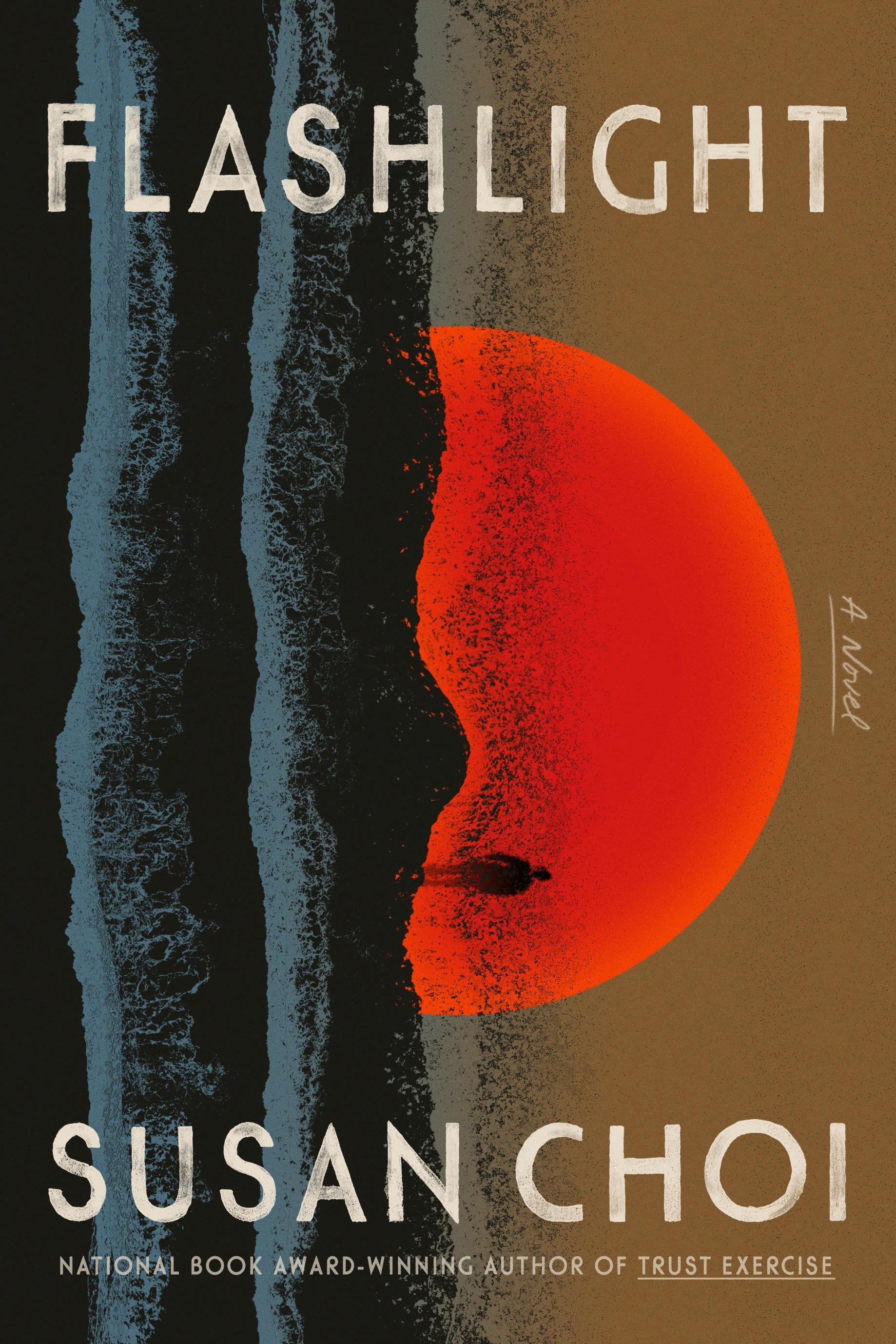
A Novel
by Susan Choi
"So, read it," his mother finally said of the note he held open before her. She made no comment at all about the beauty of his characters or the near-total absence of ink spots, and he felt sharpen into a point the sadness and disappointment that always stole into him once he was home, as if he'd stabbed the bamboo pole into himself. But once he was reading the note, the excitement of its contents renewed in his mind and the pain in his gut was forgotten.
The children continued to glorify their Emperor and their nation, explained the note, by glorifying their classroom, the shared site of their learning, which efforts made the room ever more safe, comfortable, and instructive to themselves and anyone who might visit. The children had accomplished great things on their own!—among other decorative activities, painting banners bearing patriotic slogans as well as images of uniforms and armaments—but some help was needed from the mothers. Each child would be making a padded cushion for his or her desk chair, each cushion to consist of two quilted layers. The two layers would be joined on two sides that met at a corner, and left open at the other two sides. This way, the comfortable seat cushion also doubled as a head cover—Sensei had made hers already, and had shown her students how it opened to fit on her head like a hood. In the beam of his mother's expressionless stare Hiroshi mimed the same actions: snatching up the invisible cushion, pulling apart the two sides and ducking his head in, then hunkering swiftly for safety, the hood anchored by his palms flattened over his ears. Hiroshi ran swiftly in place, there being no space in their home for him to actually run.
"Why?" his mother finally said. "Why wear the cushion on your head?"
Already he had the sense, though he could not have named it, that the glory and the urgency of war were somehow absent from his home. That the manner in which things mattered everywhere else—even that they mattered at all—left off at their threshold. He only vaguely knew—because its ingloriousness did not hold his interest—that his father variously dug holes and trenches, moved rocks and dirt, and otherwise contributed his steadily diminishing force to the inexhaustible demands of new roads. This, in ways both direct and indirect, also was part of the glory and the urgency of war. But even if he had connected his father's lengthy absences and brief, hollow-eyed presences with the war, he would not have further connected the war with that sifting of dirt from which his father stepped, leaving footprints behind, when his mother and the hand broom were done. The war stayed outside. The war failed to include his home, or his home failed to be worthy of the war. But this was what school was for.
As this complex understanding moved through him, his exasperation with his mother gave way to an entirely different feeling of kindliness for her. For the first time he felt consciously how helpless she was without him.
"For the bombing raids," he patiently explained. And then he left her for his after-school life of the streets, at the same time giving no thought to the impossible injunction he had placed on her. Somehow, the squares of quilting appeared on the morning he needed to bring them to school. He was six years old in the spring of 1945. Though worldly for a child of his age, there still were things he didn't know.
Excerpted from Flashlight by Susan Choi. Copyright © 2025 by Susan Choi. Excerpted by permission of Farrar, Straus & Giroux. All rights reserved. No part of this excerpt may be reproduced or reprinted without permission in writing from the publisher.
 (1).gif)
Every good journalist has a novel in him - which is an excellent place for it.
Click Here to find out who said this, as well as discovering other famous literary quotes!

Can you name the title?
Test your book knowledge with our daily trivia challenge!
Your guide toexceptional books
BookBrowse seeks out and recommends the best in contemporary fiction and nonfiction—books that not only engage and entertain but also deepen our understanding of ourselves and the world around us.