-
Your next favorite book
is waiting.
Summary | Excerpt | Reviews | Readalikes | Genres & Themes | Author Bio
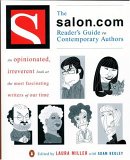

Allison belongs to that Bible-tinged,
Southern-myth-spinning tradition of which Faulkner is the most prominent
bloom; she's probably its earthiest. She no doubt acquired these skills, as
Bone did, at her grandmother's knee, listening to the old woman "start
reeling out story and memory, making no distinction between what she knew was
true and what she had only heard told. The tales she told me in her rough,
drawling whisper were lilting songs, ballads of family, love, and
disappointment. Everything seemed to come back to grief and blood, and
everyone seemed legendary."
See Also: Carolyn Chute strives, like Allison, to capture the lives of
working- and underclass families in Maine. Blanche McCrary Boyd is another
Southern lesbian with a rich sense of humor and a wild streak.
—Laura Miller
Every Novel Is a Lesbian Novel
By Dorothy Allison
When I think of the books that shaped my lesbian imagination, it is frankly
embarrassing. The truth is that my ideas of romance and erotic authority and
lesbian life patterns came out of some truly awful books—when there were any
books that mentioned lesbians at all. I don't mean embarassing and bad in the
sense that they were badly written—though, of course, that is a factor—but
embarassing because I believed, truly and completely, in the fatalistic and
brutal things that were told to me about who I could be as a grown-up lesbian.
I was born to a very poor, violent family where most of my focus was purely on
survival, and my sense of self as a lesbian grew along with my sense of myself
as a raped child, a poor white Southerner, and an embattled female. I was
Violet Leduc's Le Batard much more than I was Le Amazon, that creation of
upper-class Natalie Barney. People tell me that class is no longer the
defining factor it was when I was a girl, but I find that impossible to fully
accept. Class is always a defining factor when you are the child one step down
from everyone else.
At the age of thirteen I was always calculating how to
not kill myself or how not to let myself be killed. That tends to stringently
shape one's imagination. I did not plan to fill up a hope chest and marry some
good old boy and make babies. I did not want to be who the world wanted to
make me. I was a smart, desperate teenage girl trying to figure out how to not
be dismissed out-of-hand for who I was. I wanted to go to college, not become
another waitress or factory worker or laundry person or counter help woman
like all the other women I knew. Everywhere I looked I saw a world that held
people like me in contempt—even without the added detail of me being a
lesbian.
The only "lesbian" books I could find then
were the porn under my stepfather's bed or those gaudy paperbacks from the
drugstore which inevitably ended with one "dyke" going off to marry
while the other threw herself under a car. This did not persuade me to be
straight, but it did prove to me that fiction should be distrusted. No way I
would kill myself for falling in love with my girlfriends. No, I had more
deadly reasons to feel hopeless. To find a way out of the world as I saw it, I
read science fiction. To sustain my rage and hope, I read poetry and
mainstream novels with female heroines. And I read books by Southerners for
ammunition to use against Yankees who would treat me mean. Always I read as a
lesbian.
Everyone says that their first lesbian book was
Radclyffe Hall's wretched Well of Loneliness, but that didn't do it for
me. I knew from a very early age that I was a femme, and while I might fall in
love with Stephen, I did not want to be her. (Well, actually, I couldn't even
imagine falling in love with Stephen—that brooding, bossy, ridiculous
upper-class creature who would never fall in love with someone like me
anyway.) If you limit the list to self-defined lesbian books, then we get down
to just one: Rita Mae Brown's Rubyfruit Jungle. But looking for
self-defined lesbian books was never how I approached the subject. I always
reinterpreted books to give me what I needed. All books were lesbian
books—if they were believable about women at all, and particularly if they
were true to my own experience.
Reproduced with the permission of the publisher, Viking Penguin. No part of this book may be reproduced without written permission from the publisher.
 (1).gif)
It is among the commonplaces of education that we often first cut off the living root and then try to replace its ...
Click Here to find out who said this, as well as discovering other famous literary quotes!

Can you name the title?
Test your book knowledge with our daily trivia challenge!
Your guide toexceptional books
BookBrowse seeks out and recommends the best in contemporary fiction and nonfiction—books that not only engage and entertain but also deepen our understanding of ourselves and the world around us.