
-
Your next favorite book
is waiting.
Summary | Excerpt | Reading Guide | Reviews | Beyond the Book | Read-Alikes | Genres & Themes | Author Bio
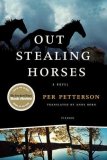
A Novel
by Per Petterson Book Reviewed by:
This article relates to Out Stealing Horses

Norway is one of the three kingdoms in the geographical region known as Scandinavia (map); the others being Denmark and Sweden. Finland, Iceland and the Faroe Islands are sometimes described as Scandinavian because of their close geographical and historic connections with Scandinavia, although technically speaking these countries belong to the wider definition of "Nordic countries", of which Denmark, Sweden and Norway are also a part.
Up until the 9th century AD, Norway consisted of various small kingdoms, which were united for the first time in 872 by King Harald Finehair. His descendents ruled until the late 14th century, at which time the country fell into what Norwegians call "the 400-year-night" triggered by the Black Death (bubonic plague which killed up to two-thirds of Europe's population). During this period, Norway was part of a unified Scandinavia for a century or so, and then was joined with Denmark after Sweden seceded in 1536. In 1814 Denmark-Norway was defeated by Napoleon and the king was forced to cede Norway to the king of Sweden.
The union between Sweden and Norway was peacefully dissolved in 1905 when Sweden recognized Norwegian's independence following several years of political unrest. Parliament offered the throne to Prince Carl of Denmark who accepted it after a referendum confirmed the monarchy and rejected a republican form of government. He came to the throne in 1905 as Haakon VII. During WWI Norway remained neutral while aiding Britain by delivering supplies via their substantial merchant navy (in return Britain supplied Norway with coal).
In 1940, Germany attacked Norway's capital, Oslo. After two months of resistance (longer than any other country invaded by Germany, except the Soviet Union) the Norwegians surrendered and the King and government left Norway to form a government in exile in London. In 1942, national socialist Vidkun Quisling was placed at the head of a puppet government and made "minister president". After the war Quisling was tried and executed. His former home is now a holocaust museum and, thanks to The London Times that coined the expression, quisling has become an eponym for traitor.
Today, Norway enjoys the highest standard of living in the world, based on a United Nations ranking that looks at levels of education and income, combined with expected length of life.
Filed under Places, Cultures & Identities
 This "beyond the book article" relates to Out Stealing Horses. It originally ran in July 2007 and has been updated for the
April 2008 paperback edition.
Go to magazine.
This "beyond the book article" relates to Out Stealing Horses. It originally ran in July 2007 and has been updated for the
April 2008 paperback edition.
Go to magazine.


 (1).gif)
The worst thing about reading new books...
Click Here to find out who said this, as well as discovering other famous literary quotes!

Can you name the title?
Test your book knowledge with our daily trivia challenge!
Your guide toexceptional books
BookBrowse seeks out and recommends the best in contemporary fiction and nonfiction—books that not only engage and entertain but also deepen our understanding of ourselves and the world around us.