The Anti-Updikeans

Summary |  Excerpt |  Reviews |  Beyond the Book |  Read-Alikes |  Genres & Themes |  Author Bio
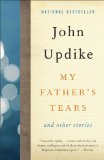
My Father's Tears by John Updike

My Father's Tears

by John Updike
  • BookBrowse Review:
  • Critics' Consensus (9):
  • Readers' Rating (2):
  • First Published:
  • Jun 2, 2009, 304 pages
  • Paperback:
  • May 2010, 336 pages
  • Rate this book

About This Book

The Anti-Updikeans

This article relates to My Father's Tears

Print Review

"I'd like to offer assurances that your reviewer is not one of these spleen-venting, spittle-spattering Updike-haters one encounters among literary readers under 40. The fact is that I am probably classifiable as one of very few actual sub-40 Updike fans."

This quote comes from an essay by David Foster Wallace, the upstart author of the late 90's, published in The New York Observer in 1997. Though Wallace's essay on Updike is not "spleen-venting" it is absolutely scalding and is the sacred document of the Anti-Updike faction on college campuses. It's considered the rallying cry that spurred the literary backlash against The Great White Male. According to Wallace, Updike was the chronicler and the voice of "the most self-absorbed generation since Louis XIV."

Wallace argued that Updike, like Phillip Roth, Norman Mailer, and Fredrick Exley, created a legacy of diminution and joyless self-indulgence. The authors were radically self-absorbed and totally uncritical of their own celebration of self-absorption in their characters and in themselves. Narcissistic, erudite, philandering, self-pitying protagonists who, Wallace claims, were actually stand-ins for the authors, fill the novels of the postwar generation. Never attached to any cause, lover, or clan, the individualism of Updike's characters may have at one time seemed heroic. But today's sub-40's generation have to grapple with a new horror that Updike's magnificent narcissists miss: "the prospect of dying without ever having loved something more than yourself."

However, several literary critics point to Updike's novel, Rabbit is Rich, as a nourishing reality check on the Me Generation and all the maladies of suburban living. Obviously, any novel that accurately describes the excesses of parents while at the same time being lauded by our parents is, of course, suspect. Or as Wallace puts it, the fact that many of our parents revere Mr. Updike makes it's easier to revile what your parents revere.

Filed under Books and Authors

This "beyond the book article" relates to My Father's Tears. It originally ran in July 2009 and has been updated for the May 2010 paperback edition. Go to magazine.
Membership Advantages
  • Reviews
  • "Beyond the Book" articles
  • Free books to read and review (US only)
  • Find books by time period, setting & theme
  • Read-alike suggestions by book and author
  • Book club discussions
  • and much more!
  • Just $60 for 12 months or $20 for 3 months.
  • More about membership!

BookBrowse Book Club

Book Jacket
Broken Country (Reese's Book Club)
by Clare Leslie Hall

Members Recommend

Who Said...

The purpose of life is to be defeated by greater and greater things.

Click Here to find out who said this, as well as discovering other famous literary quotes!

Book
Trivia

  • Book Trivia

    Can you name the title?

    Test your book knowledge with our daily trivia challenge!

Wordplay

Solve this clue:

W the C A the M W P

and be entered to win..

Your guide toexceptional          books

BookBrowse seeks out and recommends the best in contemporary fiction and nonfiction—books that not only engage and entertain but also deepen our understanding of ourselves and the world around us.