
-
Your next favorite book
is waiting.
Summary | Excerpt | Reading Guide | Reviews | Beyond the Book | Read-Alikes | Genres & Themes | Author Bio
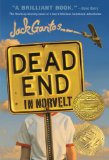
 Book Reviewed by:
This article relates to Dead End in Norvelt

"Our dear little Norvelt was founded by Eleanor Roosevelt, who knew common people like us wanted equality..."
The town of Norvelt, Pennsylvania, one of 99 subsistence homestead communities created during the Depression for unemployed workers, is a character in Jack Gantos's Dead End in Norvelt. According to the Pittsburgh Post-Gazette, the idea behind this residential area "was for each homesteader to become independent of government help, and for each cooperative community to eventually become self-supporting... Each family got a 1.6- to 7-acre plot, a house, a garage, a chicken coop, fruit trees and a grape arbor, as well as a stove, refrigerator and farming tools." Today, a historical marker still in the area describes its history:
Originally called "Westmoreland Homesteads," the town was established April 13, 1934, by the federal government as part of a New Deal homestead project. With approximately 250 homes, it provided housing, work, and a community environment to unemployed workers and their families during the Great Depression. It was renamed "Norvelt" in 1937 in honor of First Lady Eleanor Roosevelt and her interest in the project.

In Gantos's story, Jack's mother - a Norvelt native - cherishes and embodies the real Norvelt's traditions and ideals: she cooks casseroles for the needy, barters peaches, and works in the garment factory that was once the factory co-op. Life for relocated miners and their families was cooperative, not competitive. According to an article in TribLive News, residents built their own homes, then rented them for around $12 a month until they were paid off; by 1946 all 254 renters had purchased their homes.
Norvelt inhabitants built the reservoir, tended chickens, planted crops, and produced grapes on the arbors that came with their homes. They also worked together in a cooperative factory, and a co-op store and community center existed to serve their needs. What was so special about Norvelt was the dignity it afforded its unemployed inhabitants and the opportunity it provided for economic independence: "It was supposed to be a return to the land, where unemployed workers could become self-reliant... These homes gave families the opportunity to start over, to regain their self-confidence."
Visit Norvelt's website to see photographs of the original homesteads, the funeral home, baseball diamond, golf course, and other locations featured in Dead End in Norvelt.
Photo credit: Canadian2006
Filed under Places, Cultures & Identities
 This "beyond the book article" relates to Dead End in Norvelt. It originally ran in November 2011 and has been updated for the
May 2013 paperback edition.
Go to magazine.
This "beyond the book article" relates to Dead End in Norvelt. It originally ran in November 2011 and has been updated for the
May 2013 paperback edition.
Go to magazine.
 (1).gif)
Wisdom is the reward you get for a lifetime of listening when you'd rather have been talking
Click Here to find out who said this, as well as discovering other famous literary quotes!

Can you name the title?
Test your book knowledge with our daily trivia challenge!
Your guide toexceptional books
BookBrowse seeks out and recommends the best in contemporary fiction and nonfiction—books that not only engage and entertain but also deepen our understanding of ourselves and the world around us.