
-
Your next favorite book
is waiting.
Summary | Excerpt | Reviews | Beyond the Book | Read-Alikes | Genres & Themes | Author Bio

 Book Reviewed by:
This article relates to The Invisible Life of Ivan Isaenko

The Invisible Life of Ivan Isaenko deals with the aftermath of Chernobyl and is set in a hospital in Belarus.
While most of us think of Belarus as a part of the now fragmented Soviet Union, the country has a colorful history of being handed back and forth between Poland and Russia for centuries. Belarus was part of Poland (which borders Belarus on the West) until Poland was partitioned after a series of wars towards the end of the 18th century and Belarus became part of Russia. The early twentieth century saw more conflict. Taking advantage of Russia's preoccupation with the First World War, Belarus decided to break away and become independent while still under the protection of German forces.
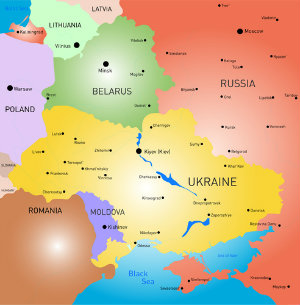 Unfortunately this newly established sovereignty, the Belarusian People's Republic, didn't last too long. With the Allied victory in WWI, Germany was forced to leave Belarus leaving it vulnerable to Russian attack. Russia invaded promptly and wrested the country back into its fold christening the country as the Belarusian Soviet Socialist Republic in 1919. Seizing an opportunity to right old wrongs, Poland in turn attacked and wrested part of Belarus back into its fold, the boundaries established by the Treaty of Riga of 1921.
These arrangements lasted until World War II. When Germany invaded Poland, Russia jumped on the chance to invade Poland in return and take back what it had lost in the 1921 accord. The new borders were confirmed by Poland and the USSR in a treaty after WWII.
Belarus and its southern neighbor, Ukraine, were both part of the USSR when the Chernobyl disaster took place in 1986. Chernobyl is located in the north of Ukraine close to the border of Belarus. About 70% of the fallout from the nuclear power plant explosion ended up in Belarus, contaminating at least a fifth of the agricultural land.
In 1991, the country broke from the USSR even though it continues to maintain close economic ties with Russia. Alexander Lukashenko has been governing the country in what has labeled an authoritarian style since 1994. He has won re-elections ever since, amid allegations about vote-rigging and illegal modifications to the constitution that ensure successfully longer terms for himself.
Map of contemporary Belarus from Depositphotos.com
Filed under Places, Cultures & Identities
 This "beyond the book article" relates to The Invisible Life of Ivan Isaenko. It originally ran in August 2016 and has been updated for the
August 2016 edition.
Go to magazine.
This "beyond the book article" relates to The Invisible Life of Ivan Isaenko. It originally ran in August 2016 and has been updated for the
August 2016 edition.
Go to magazine.

 (1).gif)
A library is a temple unabridged with priceless treasure...
Click Here to find out who said this, as well as discovering other famous literary quotes!

Can you name the title?
Test your book knowledge with our daily trivia challenge!
Your guide toexceptional books
BookBrowse seeks out and recommends the best in contemporary fiction and nonfiction—books that not only engage and entertain but also deepen our understanding of ourselves and the world around us.