-
Your next favorite book
is waiting.
Summary | Excerpt | Reviews | Beyond the Book | Read-Alikes | Genres & Themes | Author Bio

A Novel & Stories
by Torrey Peters Book Reviewed by:
This article relates to Stag Dance

 The titular "novel" from Torrey Peters' book Stag Dance takes place in an illegal logging camp in early 1900s Montana. During a cold and lonely winter, the lumberjacks there hold a dance, with some men designating themselves as women by placing a triangle of fabric between their legs, showing that they wish to be courted by the others. Much of Peters' elaborate tall tale-esque story of fluid gender identity is obviously just that: an inventive fiction that flirts with the supernatural and incorporates elements of early American mythology. But the fabric triangle and the dance are taken from real history, and their existence highlights how much of queer and trans history has been erased from our general knowledge of the American Old West.
In an interview with AnOther, Peters explains, "I learned that at these logging camps, they would have these dances, and the men would either tie a marker on their arms and literally wear a burlap bag as a skirt, or they would do this triangle thing. I was like, if that's what they were doing, if these are the facts that history has given me, why would I not run with this totally rich, just ridiculous, and to me, very human thing they were doing?" This part of Peters' research came from the book Re-Dressing America's Frontier Past by historian Peter Boag, which explores how cross-dressing and flexible attitudes towards gender and sexuality were more pervasive in the Old West than is generally reflected in depictions of the era today. (In the above interview, Peters suggests that her story was meant to take place in 1915, which is slightly after what would technically qualify as the "Old West," but her use of Boag's book implies that facts of this period and its culture informed her fiction.)
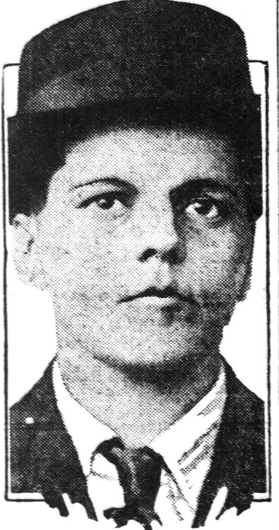
In an article for Atlas Obscura, Sabrina Imbler, author of How Far the Light Reaches, reflects on Boag's research and findings, noting that people we would now recognize as transgender lived both visibly and invisibly on the American frontier. It was no secret, for example, that Harry Allen, known to the public as a charming rogue, was assigned female at birth and dressed as a man; he was portrayed in newspapers as an object of fascination for his gender presentation and criminal exploits. On the other end of the spectrum, lumberjack Sammy Williams, who died in 1908 Montana and could nearly have been a character in Peters' story, was only discovered to have been dressing against his assigned sex by the undertaker.
There are more records of trans men than trans women at the time, likely because the frontier was more hostile to women. Still, trans women lived there according to their true gender too, including a Mrs. Nash, a cook and laundress who spent more than ten years in Montana and married three men during that time, and Alice Baker, a schoolteacher who managed trouble with the police by frequently moving and changing her name.
Peters isn't the only contemporary writer to incorporate Old West trans or queer identities into fiction, nor have such identities been entirely left out of pop culture. C Pam Zhang's How Much of These Hills Is Gold (2020) follows two young siblings in mid-1800s California, one assigned female at birth and presenting as a boy. "The Kid" in Anna North's Outlawed (2021) is a character written without gendered pronouns. The HBO series Deadwood and movie of the same name portray the real-life gunslinger Calamity Jane as a gender nonconforming woman who wears men's clothes and is attracted to women.
The Old West wasn't particularly kinder or more socially accepting than the East of the time, but it offered relative anonymity and less societal scrutiny, allowing for some to live on their own terms and reinvent themselves in a way that may have been impossible elsewhere. Despite the more fantastical and over-the-top elements of Peters' novel, its setting feels like a relatively realistic one, in which traditional notions of masculinity still loom large but gender roles can be made malleable, at least for an evening.
Trans man Henry Allen circa 1900-1922, courtesy of Wikimedia Commons
Filed under People, Eras & Events
 This article relates to Stag Dance.
It first ran in the April 23, 2025
issue of BookBrowse Recommends.
This article relates to Stag Dance.
It first ran in the April 23, 2025
issue of BookBrowse Recommends.
 (1).gif)
If there is anything more dangerous to the life of the mind than having no independent commitment to ideas...
Click Here to find out who said this, as well as discovering other famous literary quotes!

Can you name the title?
Test your book knowledge with our daily trivia challenge!
Your guide toexceptional books
BookBrowse seeks out and recommends the best in contemporary fiction and nonfiction—books that not only engage and entertain but also deepen our understanding of ourselves and the world around us.