-
Your next favorite book
is waiting.
Summary | Excerpt | Reviews | Beyond the Book | Read-Alikes | Genres & Themes | Author Bio
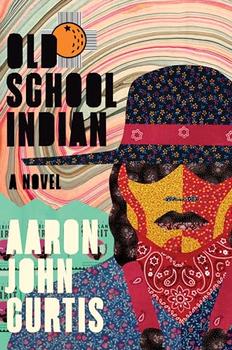
A Novel
by Aaron John Curtis Book Reviewed by:
This article relates to Old School Indian

In the 1960s and 1970s, the term "Native American" was popularized. It became the politically correct way to refer to the hundreds of tribes that make up the Native population in the United States, often replacing "Indian." But many Indigenous people resent the classification of Native American because it was a name given to them by white oppressors without their permission or consent. Because they weren't consulted, it lacks cultural legitimacy.
Paloma Zhaniser is a gender violence policy analyst affiliated with the Winnebago Tribe of Nebraska. When I interviewed her, she was clear that she doesn't use the term Native American, preferring "Indigenous" because of its accuracy: "It is the American part of Native American I object to. It is not accurate. I didn't choose to be identified in that way. I have the right to choose what I want to be called."
In the novel Old School Indian, Mohawk author Aaron John Curtis addresses "Native American" five minutes into the story. Referring to the main character, narrator Dominick Deer Woods explains, "Abe is Mohawk Indian. You could argue Indian is a misnomer and you'd be right. I could argue no one asked us when they decided we should be called Native American, and I'd be right. Somewhere in the eighties, non-rez folks decided 'Indians' were wrong at best and offensive at worst, so they let everyone — including us — know we should be called Native Americans."
Before Natives were contextualized as Native Americans they were often referred to as "American Indians." Non-Natives using "Indian" has its own problematic history. Paloma finds the term "Indian" derogatory, and explained it as "a slur. Calling a Native an 'Indian' is equivalent to calling a black person the n-word." Gabriella Blatt, a former president of the Association of Native Americans at Yale, comments: "I think it's completely unacceptable to use the word 'Indian'...When people use the term in my classes, it makes me feel like an artifact of the past. If you look at it, a lot of the racial slurs against Native Americans are derived from the word 'Indian.'"
When Paloma worked with an older unhoused population, though, she discovered that older Natives often preferred to be called what they have always been called. One Lakota man from Standing Rock told the Native Times in 2015, "If some Indians want to be called Native Americans or Natives, let them be called that, but I was born an Indian and I shall die an Indian."
Paloma is a millennial, and her preferences skew with her age cohort. Those younger than her, in Generation Z, also often use the term Indigenous because of its inclusivity. "Indigenous" refers to all Indigenous peoples, including those from areas outside of what's considered the contiguous United States, while other terms may not. Also, Indigenous clearly draws a line back to the original inhabitants of a land and separates them, as a matter of record, from those who came later.
Dominick Deer Woods is passionate about this one point: "Native American is a bullshit PC phrase no matter who is using it, just a way of saying you don't know any Native people."
More broadly, language and its context shift based on who is using the language. Because packed into language is perception and weaponization. It's not a new concept. A husband can call his wife "sweetheart," but her male boss cannot. Similarly, a Native person can refer to another Native person (or themselves) as "Indian" but someone outside the community cannot. The best rule of thumb is to ask what someone prefers to be called, or, as Blatt suggests, to refer to them as a member of their tribal nation. Natives own their identity and have the right to insist that those outside of their community honor appropriate terms and labels.
Filed under Places, Cultures & Identities
 This article relates to Old School Indian.
It first ran in the May 7, 2025
issue of BookBrowse Recommends.
This article relates to Old School Indian.
It first ran in the May 7, 2025
issue of BookBrowse Recommends.
 (1).gif)
Everywhere I go, I am asked if I think the university stifles writers...
Click Here to find out who said this, as well as discovering other famous literary quotes!

Can you name the title?
Test your book knowledge with our daily trivia challenge!
Your guide toexceptional books
BookBrowse seeks out and recommends the best in contemporary fiction and nonfiction—books that not only engage and entertain but also deepen our understanding of ourselves and the world around us.