
-
Your next favorite book
is waiting.
Summary | Excerpt | Reviews | Beyond the Book | Read-Alikes | Genres & Themes | Author Bio
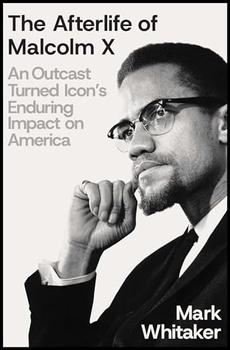
An Outcast Turned Icon's Enduring Impact on America
by Mark Whitaker Book Reviewed by:
This article relates to The Afterlife of Malcolm X

 Malcolm X rose to public prominence as one of the faces of the Nation of Islam, which is a Black nationalist and religious movement and organization. The Nation of Islam was founded in 1930 by Wallace D. Fard Muhammad, although he was soon succeeded by Elijah Muhammad, who grew the small group into an influential nationwide movement—influential enough to be deemed a threat to domestic security by the FBI, who gathered counterintelligence on the group and undertook actions to destabilize it. Muhammad promoted Black self-sufficiency, self-reliance, and separatism—challenging the message of the civil rights movement, which called for integration with whites and peaceful protest.
Malcolm X discovered Elijah Muhammad's teachings while in prison, as did many other incarcerated Black men in the 1950s and 1960s, which is when the movement began to gain popularity. The Nation of Islam's belief system is quite different from mainstream Islam and is really its own separate religion: In his book The Afterlife of Malcolm X, Mark Whitaker writes that the NOI teaches that Black people "were descended from a highly developed African civilization that existed for 666 trillion years before it was destroyed by a white race created in a laboratory experiment by a disaffected Black scientist named 'Yacub' … these white 'devils' had overwhelmed the Black race, forced them into bondage, and brought them to America as slaves. But then in the 1930s, the Islamic God Allah had appeared in Detroit in the human form of a man named Wallace Fard Muhammad."
Fard, then, found Elijah and anointed him as the apostle who would lead Black Americans to salvation. Journalist Peter Goldman, writing about the NOI in the 1960s, said that their teachings consisted of a stew of "orthodox Islamic doctrine, reinterpreted Biblical parables, historical fact and fancy, Puritanical morality, 'buy-black' economics, doomsday prophecy, racism, nationalism and lesser ingredients."
As "outlandish" as the NOI's origin story and belief system may sound, it attracted tens of thousands of followers for understandable reasons. One was that it gave impoverished and imprisoned Black people a concrete explanation for their suffering—the belief that white people were inherently evil creatures engineered to do them harm. Another was that the strict code of conduct—no drinking, smoking, swearing, promiscuity, eating pork, going to night clubs, and more—helped people battle addictions and impose discipline on their lives. Malcolm X's charismatic speeches and calls for Black people to love themselves—which meant seeing white people as the enemy, but which fundamentally came from a place of love, he said—also resonated with people.
The Nation of Islam, at this time, was not the first or only Black separatist movement. Fard drew upon Garveyism, the Black separatist movement led by Marcus Garvey that was popular in the 1920s (indeed, Malcolm X's parents were Garveyites). Garvey called for Black self-determination and the creation of a new Black nation in Africa; he was Pan-African and emphasized the unity between diasporic African Americans in the United States and Blacks in Africa, who were suffering under European colonial rule there. On the other hand, the Nation of Islam focuses on uniting African Americans in the US.
Malcolm X later split with the Nation of Islam, partly because he discovered that Elijah Muhammad had impregnated multiple secretaries who worked for him—women who were, hypocritically, publicly shamed for breaking the rules about unmarried sex. (When Malcolm confronted him about it, Muhammad "insisted that he was fulfilling his divine destiny, comparing himself to biblical patriarchs who had multiple wives," Whitaker writes.) When Malcolm started his new Black nationalist movement, he focused on Pan-Africanism and promoting brotherhood among people of color all over the world.
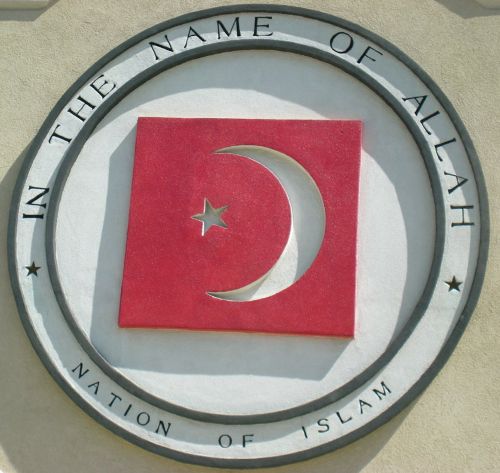
Logo at the Nation of Islam headquarters in Indianapolis
Sarah Stierch (CC BY 4.0), via Wikimedia Commons
Filed under Places, Cultures & Identities
 This article relates to The Afterlife of Malcolm X.
It first ran in the May 21, 2025
issue of BookBrowse Recommends.
This article relates to The Afterlife of Malcolm X.
It first ran in the May 21, 2025
issue of BookBrowse Recommends.



 (1).gif)
Wisdom is the reward you get for a lifetime of listening when you'd rather have been talking
Click Here to find out who said this, as well as discovering other famous literary quotes!

Can you name the title?
Test your book knowledge with our daily trivia challenge!
Your guide toexceptional books
BookBrowse seeks out and recommends the best in contemporary fiction and nonfiction—books that not only engage and entertain but also deepen our understanding of ourselves and the world around us.