-
Your next favorite book
is waiting.
Summary | Excerpt | Reviews | Beyond the Book | Read-Alikes | Genres & Themes | Author Bio
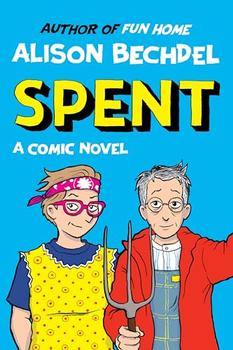
A Comic Novel
by Alison Bechdel Book Reviewed by:
This article relates to Spent

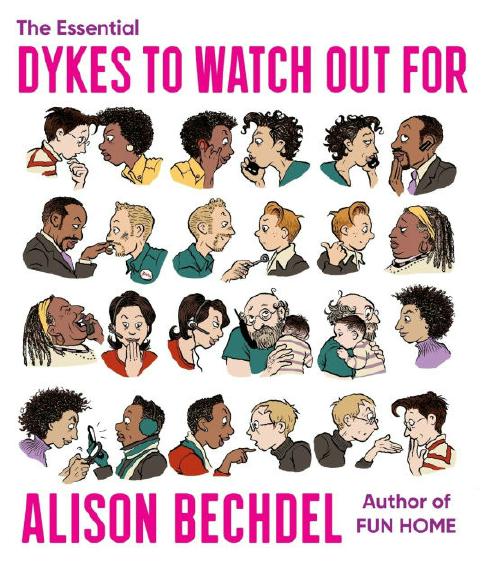 Alison Bechdel's new graphic novel Spent revisits several of the beloved characters that Bechdel made somewhat famous in her long-running comic strip Dykes to Watch Out For. Though it was never published in mainstream publications, the strip was a mainstay in gay and lesbian publications for over 25 years.
Dykes to Watch Out For began in 1986 with a series of one-off comics poking loving fun at life as a lesbian in the 20th century. But it wasn't long before the comic strip began to follow specific characters as they lived their lives, lamented their relationships (or lack thereof), and sought out their own versions of the American dream.
Lovingly referred to by critics as the "greatest lesbian soap opera" and by Bechdel herself as "half op-ed column and half endlessly serialized Victorian novel," DTWOF commented on everything from sex to public education, and never shied away from the harsher realities of living as a queer person in America.
At the center of the narrative sat Mo Testa, a stand-in for Bechdel in looks, if not in temperament. A constant ball of nervous, needy energy, Mo could never seem to find satisfaction in either her relationships or professional life, choosing instead to live in a perpetual state of angst and guilt over not doing enough to fix the world. She was surrounded by a circle of women, many of them minorities who had been underrepresented in comics: Mo found her support network in Sparrow, an Asian American woman who ran a homeless shelter and shared a communal house with Lois, a presumably white sex-positive free spirit; and Ginger, a Black woman fighting for equal footing in the white male-dominated world of academia. Toni and Clarice, a Latinx accountant and a Black lawyer, whose story centered on the struggle for marriage equality and, later, raising their son Raffi, rounded out the group. Love interests and friends moved in and out of a narrative that gave voice to many people who had never seen themselves in work like this before.
Though it had a devoted fanbase within the queer community and women's studies spaces, it was not until the success of Fun Home in 2006 that Dykes to Watch Out For was widely discovered. "The strip is sexy, sometimes in an R-rated way—imagine 'Doonesbury' with regular references to sex toys—and it's political, in a feisty, lefty, Greenpeace meets PETA meets MoveOn.org kind of way," the New York Times wrote in 2008.
DTWOF is also the origin of the well-known cultural litmus test called the Bechdel-Wilson test, known more commonly as the Bechdel test. In an early DTWOF comic, two women are discussing what movie they want to see, and one describes her rule for whether a movie is worth watching: It must 1) feature two female characters who 2) engage in a conversation with each other about 3) anything other than a man. While Bechdel may have created the strip and is usually the one who receives credit for the test, she is quick to point out that it was her friend Liz Wallace who gave her the idea.
Though Bechdel has long retired Mo and her friends—the hiatus began when she started work on what would eventually become her second graphic memoir, Are You My Mother?—the strip lives on through her blog, multiple collections and compendiums, and the fans who still cherish the early work of a truly gifted artist with a charming, insightful, and endlessly funny voice.
Filed under Books and Authors
 This article relates to Spent.
It first ran in the May 21, 2025
issue of BookBrowse Recommends.
This article relates to Spent.
It first ran in the May 21, 2025
issue of BookBrowse Recommends.
 (1).gif)
Not doing more than the average is what keeps the average down.
Click Here to find out who said this, as well as discovering other famous literary quotes!

Can you name the title?
Test your book knowledge with our daily trivia challenge!
Your guide toexceptional books
BookBrowse seeks out and recommends the best in contemporary fiction and nonfiction—books that not only engage and entertain but also deepen our understanding of ourselves and the world around us.