-
Your next favorite book
is waiting.
Summary | Excerpt | Reviews | Beyond the Book | Read-Alikes | Genres & Themes | Author Bio
 Book Reviewed by:
This article relates to Don't Sleep with the Dead

 In 1925, a few months after the publication of The Great Gatsby, F. Scott Fitzgerald received a letter from T.S. Eliot in which the poet—already renowned for The Waste Land—described the novel as "the first step that American fiction has taken since Henry James." Fitzgerald received the praise with enthusiasm, especially since Eliot's was one of the few favorable opinions in that first year of publication, and in those that followed until Fitzgerald's death in 1940.
Although Fitzgerald did not hesitate to call it "the best American novel ever written" in a letter to his publisher, The Great Gatsby enjoyed neither commercial success nor great critical acclaim during his lifetime. Its second printing never sold out.
But by the end of the twentieth century the novel had become one of the pillars of American literature. Once considered secondary to the work of Fitzgerald's contemporaries like Hemingway or Faulkner, Gatsby now occupies a central place in the literary canon. Its sophisticated structure, use of meta-narrative, unreliable narration, symbolism, polished prose, and evocation of the American ideal have made it a favorite among critics and scholars. The backdrop of the 1920s—with its effervescence, fashion, and jazz—alongside unforgettable characters like Gatsby, with his air of mystery; Daisy, with her hypnotic voice; and Nick, with his innocent gaze, have nurtured the popular imagination for generations.
The Great Gatsby has been adapted and reinterpreted in all formats, including theater and film—from the 1974 classic starring Robert Redford and Mia Farrow to the more recent Baz Luhrmann version with Leonardo DiCaprio released in 2013—and even in popular music, with references in lyrics such as Taylor Swift's "Happiness" (2020), which alludes among other motifs to the iconic green light at the end of Daisy's dock.
But where its legacy is felt most is in its original format: the novel. There are dozens of versions, which find not only in Gatsby, but in the rest of the characters, various interesting threads to pull from. This is especially true since the copyright expired in 2021, meaning the work is now in the public domain and thus free for anyone to use, adapt, and publish.
In January of that same year, Michael Farris Smith published Nick, a novel that explores the life of Nick Carraway before the events of the summer of 1922. Numerous writers have imagined what happened before or after the events depicted in the original novel. Some, like Farris, focus on the protagonists; others prefer to give voice to secondary characters. Such is the case in Beautiful Little Fools, where Jill Cantor reframes the story through the women closest to Gatsby—Daisy Buchanan, Jordan Baker, and Catherine McCoy—transforming the classic into a mystery story. Similarly, Claire Anderson Wheeler reimagines the Gatsby world as the site of a murder investigation in The Gatsby Gambit (2025), where Gatsby's younger sister Greta acts as sleuth.
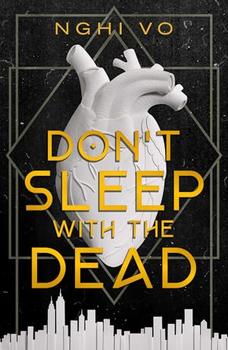
If 2021 sparked a wave of reinterpretations, the novel's centenary in April 2025 has only intensified the publishing interest. Nghi Vo has followed up her 2021 novel based on Gatsby, The Chosen and the Beautiful, with the companion novella Don't Sleep with the Dead. Both take place in a fantastical universe with demons and ghosts. The former is centered around a queer Vietnamese version of Jordan Baker, while the latter, set 20 years later, delves into the emotional and sexual relationship between Nick and Gatsby.
Vo is not alone in reading a homoerotic tension between the two characters. In 2022, Anna-Marie McLemore published Self-Made Boys: A Great Gatsby Remix, where Nick is a 17-year-old Mexican trans boy who falls for a young Gatsby figure. Other authors draw freely from the original dynamics to create new worlds, as in Tell Me My Name (2021), a young adult novel that reimagines Fitzgerald's archetypes in a contemporary setting with the genders flipped, and The Great Mann, which places the story of Gatsby in 1945 within the Black Hollywood neighborhood of Sugar Hill.
A century after its publication, The Great Gatsby continues to reinvent itself, suggesting new readings and inspiring new stories in new genres and configurations. And it will almost certainly keep doing so for many years to come.
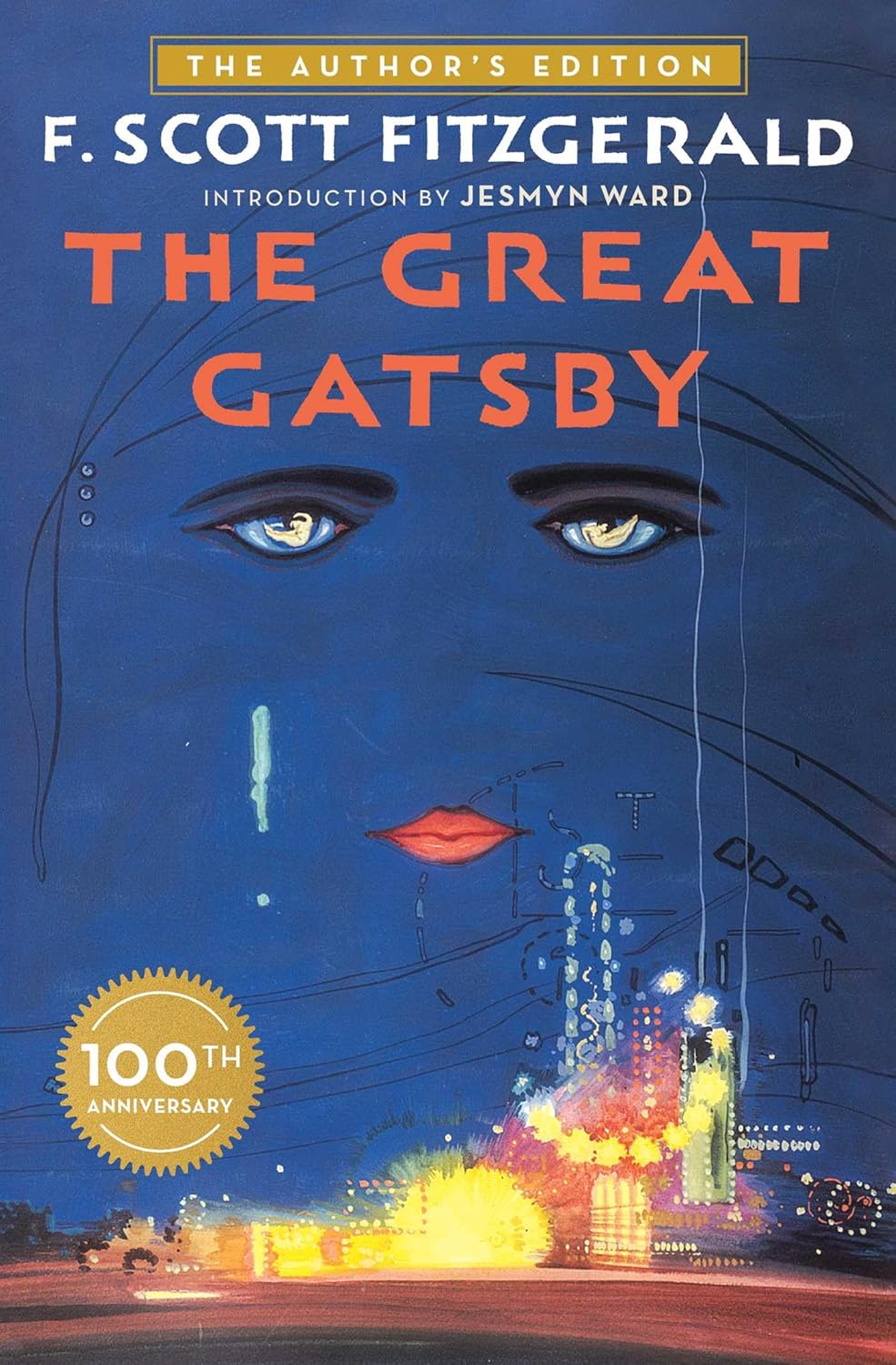
Cover of The Great Gatsby, courtesy of Scribner
Filed under Books and Authors
 This article relates to Don't Sleep with the Dead.
It first ran in the June 4, 2025
issue of BookBrowse Recommends.
This article relates to Don't Sleep with the Dead.
It first ran in the June 4, 2025
issue of BookBrowse Recommends.
 (1).gif)
Don't join the book burners. Don't think you are going to conceal faults by concealing evidence that they ever ...
Click Here to find out who said this, as well as discovering other famous literary quotes!

Can you name the title?
Test your book knowledge with our daily trivia challenge!
Your guide toexceptional books
BookBrowse seeks out and recommends the best in contemporary fiction and nonfiction—books that not only engage and entertain but also deepen our understanding of ourselves and the world around us.