-
Your next favorite book
is waiting.
Summary | Excerpt | Reading Guide | Reviews | Beyond the Book | Read-Alikes | Genres & Themes | Author Bio
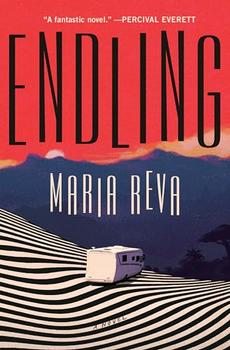
A Novel
by Maria Reva Book Reviewed by:
This article relates to Endling

 In Endling, Maria Reva centers Ukrainian identity, whether her focus is on romance tours or the snail conservation efforts of one of the central "brides" named Yeva. Through Yeva's work, we learn about the topography and life forms that shape Ukraine. One detail that stuck with me was the discussion of chernozem, the rich black soil that nourishes all-important grain crops. I thought this was a beautiful metaphor for the way the land shapes people.
Estimates vary, but it is believed that up to 68% of Ukrainian soil is chernozem. Soil scientist Vasily V. Dokuchaev first identified and named chernozem ("black earth" in Russian) in 1883. It is said to be some of the most fertile soil in the world, and Ukraine contains in its borders a quarter of the global supply.
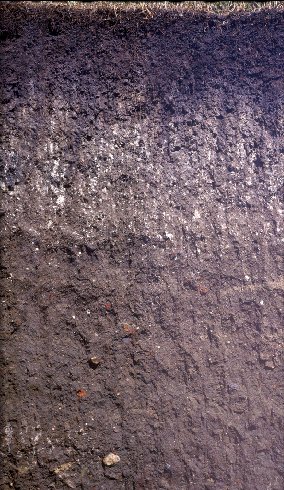
Formed on the Eurasian steppes over 10,000 years, chernozem is characterized by a dark, rich topcoat. Known as the chernic horizon, this layer can be several meters deep in Ukraine. Chock-full of humus (decaying plant matter), chernozem is a uniquely nourishing environment for crops, especially grains. Calcium, magnesium, potassium, ammonia, phosphorus, sulfur, iron, manganese, zinc, and copper content enrich the soil. Meanwhile, the loose, airy structure of chernozem allows roots plenty of space to grow.
Since the Russian invasion, fewer crops are being planted and harvested in Ukraine, owing to unsafe conditions in the fields. Further, the materials of war contaminate the soil and could cause harm for years past a ceasefire. Chemicals and impact craters can fundamentally alter the hydrology of a landscape. Like much of Ukrainian life, the fate of the soil is uncertain and won't be known for some time.
In addition to war, farming practices that are either ill-informed or outright predatory pose a risk to chernozem. Because of human and environmental factors, 500 tons of chernozem is lost annually to erosion. If farmers over-till, the humus decays faster and the soil can become compacted or otherwise structurally unsound. If they use chemical fertilizers, farmers can alter the nutritional makeup of the soil.
But chernozem's natural ability to rebound offers some encouragement. Its high moisture content makes it prone to being compacted, but also to springing back. The large amount of plant matter can help trap contaminants. Experts say that damage from vehicles compacting the soil can be reversed, though it will likely take years.
Ukraine's agricultural yield matters worldwide: the country is a leading exporter of wheat, corn, barley, and oilseeds. To compromise the chernozem that makes all of that possible is to interfere with the world's grain supply and also the livelihood of Ukrainian farmers. The fertile ground of chernozem is a metaphor for national identity but also a literal part of the country's ability to function in global agriculture. As of February 2025, Ukraine had lost $80 billion in agricultural revenue as a result of the Russian invasion.
If you're not convinced that soil can have a major cultural role, look to the Ukrainian table. Bread has long been a huge part of the country's culinary offerings and cultural history—making and eating it are communal activities. Brides and grooms feed each other bread, mourners bake memorial bread for the departed, and guests are welcomed with bread and salt. A Ukrainian proverb states "bread is the head of everything," and that's how Ukrainians live. Going back one step further, one might say that it's the lush soil beneath the grains that is truly the start of everything.
Chernozem soil, courtesy of the USDA
Filed under Nature and the Environment
 This article relates to Endling.
It first ran in the June 18, 2025
issue of BookBrowse Recommends.
This article relates to Endling.
It first ran in the June 18, 2025
issue of BookBrowse Recommends.
 (1).gif)
Be careful about reading health books. You may die of a misprint.
Click Here to find out who said this, as well as discovering other famous literary quotes!

Can you name the title?
Test your book knowledge with our daily trivia challenge!
Your guide toexceptional books
BookBrowse seeks out and recommends the best in contemporary fiction and nonfiction—books that not only engage and entertain but also deepen our understanding of ourselves and the world around us.