Reviews by Marion M. (Mishawaka, IN)

Order Reviews by:
Ginseng Roots: A Memoir
by Craig Thompson
Ginseng Roots : a Memoir (4/22/2025)
Ginseng Roots : a Memoir by Craig Thompson. Pantheon, 2025.

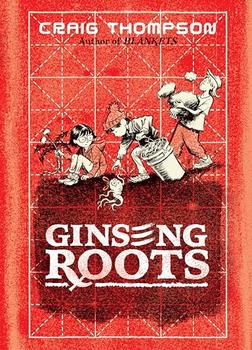
Graphic artist and author Craig Thompson returns to his roots to share his memories of growing up in central Wisconsin. But, he also returns to ginseng roots, a medicinal and aphrodisiac herb cultivated in central Wisconsin, that form so much of his childhood memories. Thompson's memories are intimately entwined with the root. A renewed interest in cultivating ginseng as a lucrative cash crop occurred about the time the Thompson family moved from Traverse City, Michigan. To earn money Thompson, his siblings and mother cultivated the fields (they didn't own the fields, but worked them) each summer from age 10 until 20 when he left home. It was hard, back aching work requiring long hours of stooping over plants surrounded by straw and frequently sprayed with pesticides. Thompson and his brother hated it. Their escape was comic books, and soon the brothers were drawing their own cartoons. Originally these chapters were published in serialized form as comics.

Criag Thompson's graphic artwork is detailed and fine tuned, using colors often associated with comics, red, white, black and orange. Red is the color of the ginseng flower; red is a favorite color in China where much of the U.S. ginseng is consumed. There are intricate drawings of the plant during its four to five years of growth, of the seeds, of the rows of plants and straw, of the awnings and covered gardens, of assorted machinery. The little village of Marathon City comes alive from its entrance bridge across the Rib River to the businesses, groceries, churches, and schools. Red barns, tall silos, gravel roads, woods, and local folks connected with local ginseng business are recognizable as is Wausau, Wisconsin's main street and square. He even picks up on the language of the locals," ya know." A little ginseng root comic character scurries around in and out and up and down the illustrations on many pages reminding the reader that the book is about ginseng root, too, not just Thompson's childhood memories.

Thompson doesn't stop with Wisconsin where he interviews old neighbors and present ginseng growers and dealers to learn contemporary growing practices and business policies. He travels to South Korea and China to study current and traditional ginseng cultivation and use. He learns about the use of herbs and ginseng in Chinese medicine as he tries to find relief from hands that have crippled. On extravagantly designed pages, Chinese dragons and fabled characters appear, connecting Asia and Wisconsin. Intermixed the reader is surreptitiously introduced to Thompson's philosophy and politics and other writings: corporate agriculture, work ethic, global economy, environmentalism, plant based healing, class division, parental relationships and religion.

The result is an adult graphic novel with substantial information about a unique crop that has connected North America to China since the eighteenth century. This reviewer, who is from the same county in Wisconsin and whose father and later cousins grew ginseng, found the work fascinatingly accurate. Readers exploring graphic novels, herbal medicine, and Asian and American culture revolving around ginseng would also find that analysis true.

Daughters of Shandong
by Eve J. Chung
Revolution is not a Dinner Party (Mao) (11/27/2023)
Two thematic strands run through this historical fiction novel partially based on the memories of the author's grandmother. The first theme is the communist revolution led by Mao following World War II which resulted in the defeat of Chiang Kai-shek and the Nationalist Army and the army's "exile" to Taiwan. Hai (aka the author's grandmother), Hai's mother and two sisters are left behind (abandoned) while the landowning males and elders in the Ang family flee first to Qingdao, then to Taiwan. Shortly after the People's Liberation Army seize the Ang home, the Ang females flee with only the items they can carry. The journey is not "a dinner party." Hai is tortured by the communist cadres, the family hides in a chicken coop and walk on bruised feet pushing their belongings in a dilapidated wheelbarrow until they reach Qingdao where they stay with a family member because the Ang males and elders have fled again. For almost two years the mother and daughters live hand to mouth by selling buns and calligraphy letters, folding match boxes and eating gruel provided at the refugee camps. By the time they reach Hong Kong via forged travel permits, Hong Kong is teeming with refugees. With the assistance of Uncle Ji, who has connections in the nationalist military, the girls receive permits to go to Taiwan. It's in Taiwan that the second theme of the novel is very evident, almost to the point of being preachy. That theme is connected to Confucianism and the role of women in that society–girls and women are secondary in the old Chinese society. Grandmother Ang is especially stuck in the past. While she was arrogant and evil when the family lived well in Shandong, she has become even nastier in Taiwan. Hai's mother births another daughter, then finally a son who receives all the privileges of a male in old Chinese society. There is a good deal of family angst between sisters, between daughters and parents, between younger generation and elders. Hai triumphs, passes arduous entry exams, becomes a teacher, marries, has a daughter who excels academically and studies in the U.S. Like many Chineses students, Hai's child is sent back to China to be reared by grandma. While purporting to be a historical fiction novel, the narrative reads like a memoir. The author definitely had a message she wanted to tell about the role or non-role of women in China.
In the Time of Our History
by Susanne Pari
Family Secrets, Family Conflicts (9/20/2022)
Can one be modern and traditional at the same time? The multigenerational Johani family of Iranian immigrants has family members who are trying to adapt and assimilate to their new lives in the United States. The main character Mitti is a thoroughly modern second generation immigrant; her patriarchal immigrant father who is a successful property developer has thoroughly Iranian traditional values, morals, and ethics. Then there are a multitude of other characters who are struggling between modern and traditional, all having secrets. Pari does an excellent job creating and developing interesting characters who we learn about not just through action and conversation but through mental tussles over tradition, modernity, feelings. It's the strong character development and insight into the Iranian mind that make the book an interesting read. The role of women, the role of marriage, the role of sexuality are investigated. Look for conflictions and entanglements. To get additional insight in the Iranian immigrant experience without as much emphasis on implication of sexuality, compare this title with the older Funny in Farsi: a Memoir of Growing up Iranian in American by Firoozeh Dumas (Random, 2003) or Lipstick Jihad : a Memoir of Growing Up Iranian in America and American in Iran by Azadeh Moaveni (Public Affairs, 2005).
The Immortal King Rao: A Novel
by Vauhini Vara
Not an Ordinary Book (4/15/2022)
Ordinarily, I would not read a dystopian book, but this is not an ordinary book. I was attracted to the title because of the technology and India connections. There are actually three tales in one that generally alternate from India to technology to dystopian society. All can be read separately as a stand alone, but read together the result is a complicated thoughtful novel that interweaves assorted societal issues: dalit (untouchable) caste, artificial intelligence, mental Internet, hothouse earth, intertwining of government and industry, social profiling, dissenters and demonstrators. One is left to wonder whether the "new" society and culture is better or worse than the current. By weaving the three yarns together, the result is an intricate story requiring thoughtful reading to keep the many many characters in focus and to understand how one segment provides detail to the other segments. For example, even though King Rao has lived in the United States most of his life, some of his inner thoughts and feelings reflect his Indian heritage. The team of King and Margie and their technology business development in the Seattle area remind me a bit of the rise of Bill Gates and Microsoft. The book is not a page turner nor one that can be skimmed.
On a Night of a Thousand Stars
by Andrea Yaryura Clark
Five Genre in One Title (2/10/2022)
In her debut novel, Andrea Clark has written a love triangle story, a mystery, a suspenseful tale, an adventure, and historical fiction. Chapters alternate between late 1970s and late 1990s and between two generations of the Argentinian Larrea family. The 1970s chapters are narrated by third person; the 1990s by that period's main character, Paloma. Santiago, the main character of the 1970s chapters, is a rich playboy law student during the time Argentina is vacillating between democracy, dictatorship, and progessive ideas. He finds the love of his life in middle-class architecture student Valentina, and they become involved with activists. Fast forward to Santiago in the 1990s. He is now a wealthy Argentinian businessman living in New York with his wife Lila and daughter Paloma. At a party a 1970s friend of Santiago tells Paloma a cryptic message about former life in Argentina. Paloma is curious. What part of her father's life is he not telling her? Paloma begins to investigate while on a family vacation in Argentina. In the 1970s people were disappearing off the streets of cities, towns, and villages in Argentina. A gaucho who still lives on the family estate offers another clue about a "safe house." A stranger seems to be following Paloma. Paloma meets a fellow researcher, and falls in love with him, who is the child of one of the missing Argentinians. What role did Paloma's father play in the 70s; what role did he play in the 90s? Clark has written a fast paced page-turner. She knows Argentina well and intersperses landmarks and streets and buildings along with student life and culture of Buenos Aires in the 70s. At times, however, she strings examples together without making them come alive, evidence of a new writer. The love scenes in both time periods, while gentle and sweet, seem to be addenda. A chapter near the end of the book could be titled "the get even chapter" and seems extraneous. Even so, I recommend On a Night of a Thousand Stars as a complex novel that takes place during the period of Argentina's "dirty war" history that few in the U.S. may know about.
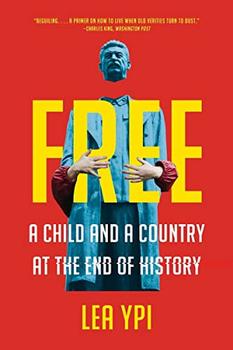
Free: A Child and a Country at the End of History
by Lea Ypi
What is freedom? (11/14/2021)
What is freedom? Could freedom be different depending on where one lives and works and the time in history? Lea Ypi, professor at the London School of Economics, has written a memoir of her life during the period of the downfall of the Stalinist government in Albania, the civil war that ensued, and her leaving the country to study and live abroad. The book is divided into two parts: before December 1990 when the government fell and after, and covers her life from the age of ten or twelve until sixteen or seventeen when she leaves Albania.

She tells much of her story through the experiences of immediate family members, her grandmother, mother and father, as well as her own. The family history and personal biographies play a big role in how each family member sees and understands freedom. Grandmother Nini's family was an aristocratic family; her mother's family were large property owners, her father had his education and job opportunities redirected several times to meet the needs of the government. Lea's childhood outlook was influenced by the "philosophy" teacher at school who taught the Party Line. But life was peaceful and orderly, even the queues for basic supplies were peaceful and orderly.

Then, The Party was overthrown, and life changed. Foreigners showed up to help "establish" the new government in which her father was an MP. There were new rules. People were confused. People fled, including Lea's mother and younger brother, and eventually Lea herself. Whether a teenager would have absorbed all the idiosyncrasies of the political and cultural dynamics of the time is questionable. More than likely Ypi is seeing what happened through her adult perspective and not a teens. Nevertheless, the memoir is an important addition to contemporary writing about Marxism, socialism, communism, liberalism, capitalism…. It is important to carefully read the epilogue to understand how and why Ypi has written this study of "freedom" through the eyes of specific people. It is a lesson for today's young Marxists, socialists, communists, liberals and capitalists, and how and why they hold and/or shouldn't hold their theories. History should not be forgotten.
Beasts of a Little Land: A Novel
by Juhea Kim
Beasts of a Little Land (8/18/2021)
During Korea's colonization by Japan, during the struggle for independence, during World War II, during the time of struggles between the communists and those wanting a free Korea, author Kim intertwines the lives of beggars, courtesans, military personnel and businessmen. Jade, a young girl sold into courtesan training, and JungHo, an orphan beggar from the country, meet, become friends, helpers, and wishful lovers, adversaries, antagonists, but often thinking about and dreaming about each other. Surrounding Jade and JungHo are Jade's fellow courtesans and madame, and JungHo's gang of fellow orphans and thieves. Both main characters develop into enterprising young adults, Jade a widely known actress, and JungHo a trusted protector of a leader of the independence and communist movements.

In many ways the story is a tragedy, few of the characters reach their potential and many have rough broken relationships and lives. The novel begins with hunters (JungHo's dad and Japanese soldiers) of one of the few "beasts"' of the wild, and ends again in the wild. Non-wilderness beasts like poverty, colonization, a feudal type stem were larger problems. The writing is magnificent, especially the descriptions of nature and the use of color words to develop visual pictures. Kim also stays true to the stylized and dignified writing anticipated from Asian writers who are true to their heritage. A well written historical fiction novel stays true to the historical facts that helps the reader learn more than those facts. The reader learns about everyday life, the nitty gritty of daily living, the culture. Kim does that well in Beasts.

The timeframe and Korea/Japan conflict for Beasts of a Little Land is the same as that for Pachinko by Lee (Grand Central Publishing , 2017). While not a read alike, the two compliment each other well. Memoirs of a Geisha by Golden (Vintage Books, 2005) provides a comparison with the work and role of Korean courtesans with the Japanese geisha.
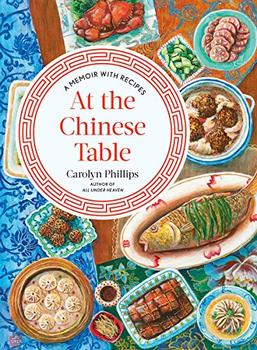
At the Chinese Table: A Memoir with Recipes
by Carolyn Phillips
A Love Affair (6/25/2021)
Author Phillips' love affair with Chinese food is evidenced in a previously published scholarly cookbook that developed the thesis that China has over thirty cuisines. While her previous book was scholarly, in this title she documents her love affair with H.J, her husband and his extended Chinese family. The reader learns about Chinese traditional family culture to which her mother and father-in-law cling and the importance of family trees and ties. And, then there is her love for Chinese cuisine that she learned to appreciate and cook through the palate and eyes of H.J. One might say that their love affair began with the love of food and cooking. Every last bit of an ingredient is used in intriguing and innovative ways. Chinese food is not just the chow mein or stir-fries found in small town USA, but a rich panoply of spices, fruits, vegetables, and proteins that play with our eyes, nose, tongue, touch and even our ears. Each chapter documents another nuance to the ancient art(s) of Chinese cookery that Phillips originally learned while living and studying in Taiwan and then visiting the mainland. Phillips describes haute cuisine comparable to French and Italian as well as everyday food. The book is enhanced with Phillips' own sketches and some of the simpler recipes, two per chapter. As a foodie myself, I will certainly try a few of the recipes, but finding several ingredients may prove challenging in a small town. Non-foodies may find some of the detailed descriptions of food and the preparation process too tedious, but as for this foodie, who reads cookbooks for pleasure, Phillips adds plenty of personal and traditional and historic and geographic information resulting in pleasant reading.
  • Page
  • 1

BookBrowse Book Club

Book Jacket
The Hunter's Daughter
by Nicola Solvinic

Members Recommend

Who Said...

Common sense is genius dressed in its working clothes.

Click Here to find out who said this, as well as discovering other famous literary quotes!

Book
Trivia

  • Book Trivia

    Can you name the title?

    Test your book knowledge with our daily trivia challenge!

Wordplay

Solve this clue:

W the C A the M W P

and be entered to win..

Your guide toexceptional          books

BookBrowse seeks out and recommends the best in contemporary fiction and nonfiction—books that not only engage and entertain but also deepen our understanding of ourselves and the world around us.