(4/22/2025)
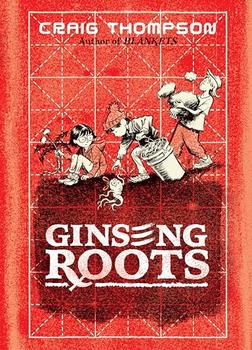
Ginseng Roots : a Memoir by Craig Thompson. Pantheon, 2025.
Graphic artist and author Craig Thompson returns to his roots to share his memories of growing up in central Wisconsin. But, he also returns to ginseng roots, a medicinal and aphrodisiac herb cultivated in central Wisconsin, that form so much of his childhood memories. Thompson's memories are intimately entwined with the root. A renewed interest in cultivating ginseng as a lucrative cash crop occurred about the time the Thompson family moved from Traverse City, Michigan. To earn money Thompson, his siblings and mother cultivated the fields (they didn't own the fields, but worked them) each summer from age 10 until 20 when he left home. It was hard, back aching work requiring long hours of stooping over plants surrounded by straw and frequently sprayed with pesticides. Thompson and his brother hated it. Their escape was comic books, and soon the brothers were drawing their own cartoons. Originally these chapters were published in serialized form as comics.
Criag Thompson's graphic artwork is detailed and fine tuned, using colors often associated with comics, red, white, black and orange. Red is the color of the ginseng flower; red is a favorite color in China where much of the U.S. ginseng is consumed. There are intricate drawings of the plant during its four to five years of growth, of the seeds, of the rows of plants and straw, of the awnings and covered gardens, of assorted machinery. The little village of Marathon City comes alive from its entrance bridge across the Rib River to the businesses, groceries, churches, and schools. Red barns, tall silos, gravel roads, woods, and local folks connected with local ginseng business are recognizable as is Wausau, Wisconsin's main street and square. He even picks up on the language of the locals," ya know." A little ginseng root comic character scurries around in and out and up and down the illustrations on many pages reminding the reader that the book is about ginseng root, too, not just Thompson's childhood memories.
Thompson doesn't stop with Wisconsin where he interviews old neighbors and present ginseng growers and dealers to learn contemporary growing practices and business policies. He travels to South Korea and China to study current and traditional ginseng cultivation and use. He learns about the use of herbs and ginseng in Chinese medicine as he tries to find relief from hands that have crippled. On extravagantly designed pages, Chinese dragons and fabled characters appear, connecting Asia and Wisconsin. Intermixed the reader is surreptitiously introduced to Thompson's philosophy and politics and other writings: corporate agriculture, work ethic, global economy, environmentalism, plant based healing, class division, parental relationships and religion.
The result is an adult graphic novel with substantial information about a unique crop that has connected North America to China since the eighteenth century. This reviewer, who is from the same county in Wisconsin and whose father and later cousins grew ginseng, found the work fascinatingly accurate. Readers exploring graphic novels, herbal medicine, and Asian and American culture revolving around ginseng would also find that analysis true.







 (1).gif)