Reviews by Robin G. (Tallahassee, FL)

If you'd like to be able to easily share your reviews with others, please join BookBrowse.
Order Reviews by:
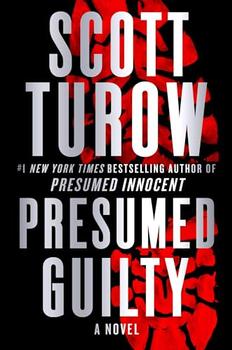
Presumed Guilty: Presumed Innocent #3
by Scott Turow
Courtroom Drama with Heart (5/17/2025)
A retired Judge and former prosecutor's life is upended when his fiancee's son is charged with murder. Rusty Sabich and his fiancee, Bea, took twenty-something Aaron into their home so they could watch him follow the strict rules of his probation. Aaron has other plans and takes off camping with his on-again off-again girlfriend, Mae, to discuss marraige. When Mae's body is found, Aaron quickly becomes "a person of interest" and then the only suspect.

Everyone has been opposed to Aaron and Mae's relationship except the lovers themselves. Mae's family's dislike of Aaron quickly hardens into conviction of his guilt. And, the family has the experience and prosecutorial power to put Aaron in jeopardy. In response, Bea prevails upon Rusty to defend Aaron in court.

While much of the action occurs in the courtroom, the experiences of friends and family are a central theme in the unfolding drama. The reader witnesses some of the pain of the families going through the rigors of a murder trail. Bea and Rusty's relationship is challenged, as is his longtime friendship with Mae's grandfather. Some relationships will never be repaired, and some will see a renaissance.

This is a courtroom drama with heart, exposing the emotions of people caught up in the need to find justice.
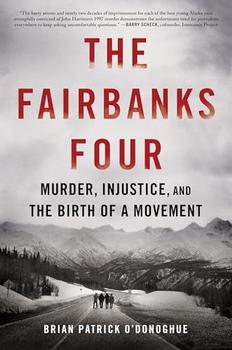
The Fairbanks Four: Murder, Injustice, and the Birth of a Movement
by Brian Patrick O’Donoghue
Evidence of Hope (3/30/2025)
As a journalist, Brian Patrick O'Donoghue knew how to track thin threads of evidence to yield a larger picture of the truth. As a teacher at the University of Alaska Fairbanks (UAF), he ignited in his Investigative Reporting students devotion to pursuing the facts. Together, they helped to bring freedom to four young men convicted of murder.

The investigative trail from arrest to release unfolded over several years and involved an ever-larger cast of characters. The students, who changed every semester, propelled the investigation with their varied skills and interests. The detectives were essential characters. Witnesses and family members led the investigating students to still others who might have information. When O'Donoghue and his students interested the Alaska Innocence Project, the story turned and unfolded like a legal thriller, with many lawyers taking center stage. At times, I was tempted to take notes to keep the characters straight. Yet, in the end, I saw that all the characters, both those who inhibited justice and those who pursued it, deserved to be named.

With all the characters and all the information uncovered, the story still moves along at a good pace. O'Donoghue offers a few unnecessary backstories but keeps the reader engaged with the next morsel of information and then the next right to the end of the book.

Taken as a whole, the book offers three interwoven themes. First, the need for equal justice under the law. This is closely tied to a second theme revolving around prejudice. Local Athabascan people testified to slights and injuries replicating those of Blacks or Mexicans in the lower forty-eight. Finally, it takes power to enforce unequal and prejudiced treatment. The powers vested in elected and appointed officials can be augmented by the forces of fear and prejudice present in almost any community.

"The Fairbanks Four: Murder, Injustice, and the Birth of a Movement" isn't just a book about the power applied for unjust ends. It's also a story infused with hope. It reminds us that wherever injustice is found, there can also be people who will work tirelessly and in concert with others to right the scales of justice again.
We'll Prescribe You a Cat
by Syou Ishida
Cats, Prescriptions and Change (5/27/2024)
Are you a cat lover? Do you think you dislike those sharp-clawed little carnivores? Or, are you agnostic about the whole F. catus family? No matter, for whatever your response to the domesticated cat it is represented in "We'll Prescribe You a Cat," by Syou Ishida.

A variety of hurting humans find their way to the Nakagy? Kokoro Clinic for the Soul at the back of a dark alley in Kyoto. All found their way following the vague recommendation of a friend of a friend of a friend. The clinic, we're told, can only be found by those who truly need it.

Five seekers make a successful journey to the clinic. Each had some imbalance in their life that made seeking out therapy appealing. Shuta Kagawa wanted to quit his job. Koga, in his fifties, had a new boss whose effusively positive attitude grated on his every nerve. Aoba's mother hauled her off to the clinic for psychiatric intervention as her fourth grade daughter was showing signs of depression. Tomoka Takamine despaired because she often drove her employees away with her demanding perfectionism. One year after her beloved cat disappeared, Abino found her way to the Clinic for the Soul, offering a simple reason for the help she sought, "My cat won't come home."

To the great surprise of each person seeking mental health advice, Dr. Nikké prescribes the supplicants a cat. He also assures them that this specific cat will provide powerful assistance with their troubles. For their part, the people take caring for the felines seriously, following the brief instructions offered to them. But, the reader learns the cats aren't like sorcerers waving magic wands of healing. They are just cats, soft and warm, and by turns aloof or loving. The charms of this novel arise in the fact that it is the humans themselves who make the adjustments necessary to transform their circumstances.

The internal and external adjustments of the people are well described. That offers a good outline of the potential humans carry to adapt to circumstances and improve their lives. Responsibility, appreciation, loyalty and love accompany self-reflection to enlarge the souls of those who respond fully to their prescriptions.

While there is no mystery around the revolutions Shuta, Koga, Aoba, Tomoka, and Amino experience, the Nakagy? Kokoro Clinic for the Soul is shrouded in a number of unknowns. Who is the mysterious and ever affable Dr. Nikké? Who is his stunning and coldly distant nurse, Chitose? Why does the Clinic for the Soul exist? As the story unfolds the answers arise slowly still leaving room for a bit of puzzlement to persist at the end.

Many will enjoy this hopeful novel that brings cats and humans together in collaborations which improve the lives of all.

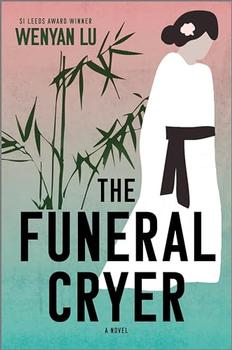
The Funeral Cryer: A Novel
by Wenyan Lu
An Appeal Beyond Sadness (2/14/2024)
This is the story of a woman whose unhappiness sprawls across the page like a blanket. The income she earns as a funeral cryer, as well as the modest pleasure of a job well done, is offset by the loss of friends who withdraw from her because she is tainted by death.

At home, her life with “the husband” is completely unfulfilling. He is dismissive and often verbally abusive. As an additional insult, he refuses to find a job preferring to spend his days playing mah-jongg with his friends.

Her sadness is not relieved by “the daughter” who lives in Shanghai or even occasional interactions with her mother. “Life is so unexciting.” she muses.

A growing relationship with “the barber” who styles her hair before funerals brings her opportunities to wonder about other possibilities. Considering the thirsty bamboo shoots she hopes to harvest after a good rain, she thinks “Then I realized I was the same as the bamboo shoots: I didn’t know what I would like to have, but when I had it, I would know.”

The evolution of the plot shows that she did know what she wanted even though it was as difficult to predict as the rains for which the bamboo shoots waited.

The author chose to introduce most of the characters by their jobs or roles: the husband, the butcher, or the barber. This creates a distance between the reader and the characters which makes it difficult to empathize with them. Nor does an important named character, Hotpot, the butcher’s widow, elicit sympathy from the reader, as she is suspected of having an affair with “the husband.”

The funeral cryer’s life is largely bleak. It’s sometimes difficult to develop an affinity for the characters. Yet, the book might appeal to readers who want to learn about cultures and experiences very different from their own.
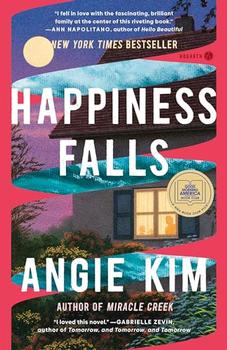
Happiness Falls: A Novel
by Angie Kim
The Key to Happiness (12/30/2023)
The book not only seeks to unravel the mystery of a missing father but offers reflections on happiness, musings on the assumptions we all make, and parses out decision making processes. While that might seem like too much for one novel to bear, Angie Kim handles it all ably. The author’s note is a great resource, be sure to read it.
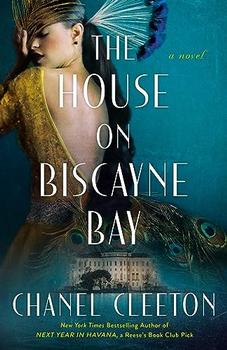
The House on Biscayne Bay
by Chanel Cleeton
Not compelling (12/23/2023)
Many of the characters in this novel were not particularly sympathetic, with this reader finding Carmen Acosta the one exception. The motivation for each character's actions were eventually explained but were not accompanied by full character development.

The stories of two murders, occurring in two time periods, were told in alternating chapters. This construction impeded the build up of dramatic tension, and made what would unfold in the next chapter less intriguing.

Though both the title and the Gothic genre suggest the house should be a more imposing feature in these stories, it was treated as a background character. A major feature in the house's construction was introduced late in the novel and seemed to exist only to foster the final resolution.

It was easy to breeze through the book to the conclusion, but it wasn't a compelling read.
River Sing Me Home
by Eleanor Shearer
Freedom, Peace and Love (10/7/2022)
This novel is about seeking, and sometimes finding that which is sought. It highlights the courage that leads humans to reach toward freedom and peace from the midst of dire circumstances. Rachel's love for her children leads her on a perilous journey to be reunited with them. These three themes made the characters come alive, and the novel intriguing.
  • Page
  • 1

BookBrowse Book Club

Book Jacket
Broken Country (Reese's Book Club)
by Clare Leslie Hall

Members Recommend

Who Said...

Censorship, like charity, should begin at home: but unlike charity, it should end there.

Click Here to find out who said this, as well as discovering other famous literary quotes!

Book
Trivia

  • Book Trivia

    Can you name the title?

    Test your book knowledge with our daily trivia challenge!

Wordplay

Solve this clue:

W the C A the M W P

and be entered to win..

Your guide toexceptional          books

BookBrowse seeks out and recommends the best in contemporary fiction and nonfiction—books that not only engage and entertain but also deepen our understanding of ourselves and the world around us.