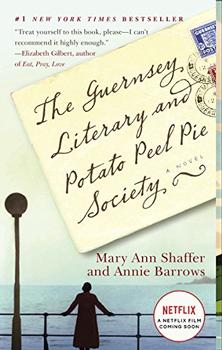
The Guernsey Literary and Potato Peel Pie Society
by Mary Ann Shaffer, Annie Barrows
Interesting History, Unsatisfactory Ending (7/27/2008)
First of all, I sat up till 2 in the morning reading and finishing this book. The story it tells about the inhabitants of Guernsey (one of the UK Channel Islands) during WWII is fascinating. The first-person/letter-writing format carries the story along in a way that straight narrative might not have.
However, at some point the book becomes a romance novel, which sort of trivializes the history contained in the first part. There are two stories here - the one about the island inhabitants during German occupation (title of the book), and the one about the main character (recipient of all the letters), which deteriorates into a silly romance at the end.
Three quarters of the book held my riveted attention, and I appreciated the addition of humor. The last quarter disappointed me terribly. The ending was happy, but the story it tells is inane.
I recommend the first part for its historical perspective. I cannot recommend the last part.
How Doctors Think
by Jerome Groopman
How to Help Your Doctor Help You (5/7/2008)
This is not a quick how-to book, but a well-written explanation of how a doctor’s medical training and experience can lead him or her to a specific diagnosis or treatment. It is an absorbing book that kept me up past my bedtime because I couldn’t put it down. Dr. Groopman cites incidents from real life, calling on his own experience and that of physicians who are well-known in their fields to illustrate both successes and failures. We learn about the thinking that led to correct or incorrect diagnoses. In this way Groopman builds a case for the questions that we need to ask when we seek a diagnosis or treatment. The book has helped me to understand how my own doctor might think and why, and how I can better help him to help me. In the end, Groopman explains tactful questions that we need to ask in order to help our doctors find answers. I wrote a list of these questions to keep in my wallet. The author shows the reader how to become a “partner” in his or her own healthcare and how to assist in the treatment of family members. I highly recommend this book.



 (1).gif)