Book Club Discussion Questions
Please be aware that this discussion guide will contain spoilers!
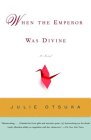
The introduction, discussion questions, author biography, and suggested reading list that follow are designed to enhance your group's reading of Julia Otsuka's
When the Emperor Was Divine. We hope they will provide fruitful ways of thinking and talking about a book that brilliantly explores the experience of Japanese Americans during World War II.
Julia Otsuka's quietly disturbing novel opens with a woman reading a sign in a post office window. It is Berkeley, California, the spring of 1942. Pearl Harbor has been attacked, the war is on, and though the precise message on the sign is not revealed, its impact on the woman who reads it is immediate and profound. It is, in many ways she cannot yet foresee, a sign of things to come. She readies herself and her two young children for a journey that will take them to the high desert plains of Utah and into a world that will shatter their illusions forever. They travel by train and gradually the reader discovers that all on board are Japanese American, that the shades must be pulled down at night so as not to invite rock-throwing, and that their destination is an internment camp where they will be imprisoned "for their own safety" until the war is over. With stark clarity and an unflinching gaze, Otsuka explores the inner lives of her main characters–the mother, daughter, and son–as they struggle to understand their fate and long for the father who they have not seen since he was whisked away, in slippers and handcuffs, on the evening of Pearl Harbor.
Moving between dreams, memories, and sharply emblematic moments,
When the Emperor Was Divine reveals the dark underside of a moment in American history that, until now, has been left largely unexplored in American fiction.
- When the Emperor Was Divine gives readers an intimate view of the fate of Japanese Americans during World War II. In what ways does the novel deepen our existing knowledge of this historical period? What does it give readers that a straightforward historical investigation cannot?
- Why does Otsuka choose to reveal the family's reason for moving–and the father's arrest–so indirectly and so gradually? What is the effect when the reason becomes apparent?
- Otsuka skillfully places subtle but significant details in her narrative. When the mother goes to Lundy's hardware store, she notices a "dark stain" on the register "that would not go away." The dog she has to kill is called "White Dog." Her daughter's favorite song on the radio is "Don't Fence Me In." How do these details, and others like them, point to larger meanings in the novel?
📖
Get the full reading guide
Join BookBrowse free to unlock all 15 discussion questions, author background, themes, and more for When The Emperor was Divine.
Join free — it takes 30 seconds
Already a member? Log in →
- How does the author develop themes of identity and belonging throughout the narrative?
- What role does the setting play in shaping the characters' decisions and relationships?
- Discuss how the ending reframes the events of the story. Were you surprised?
Unless otherwise stated, this discussion guide is reprinted with the permission of Anchor Books.
Any page references refer to a USA edition of the book, usually the trade paperback version, and may vary in other editions.


 (1).gif)