Book Club Discussion Questions
Please be aware that this discussion guide will contain spoilers!
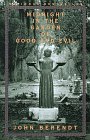
The questions, discussion topics, and author biography that follow are intended to enhance your group's reading of John Berendt's
Midnight in the Garden of Good and Evil. We hope that they will provide you with new ways of looking at--and talking about--a book that Edmund White has called "the best nonfiction novel since In Cold Blood." Like Truman Capote's masterpiece,
Midnight in the Garden of Good and Evil is the true story of a murder. It is also the portrait of a Southern city in all its charm and eccentricity and a comedy of manners that has pointed things to say about sex and gender, truth and rumor, and superstition and belief.
The victim is Danny Hansford, a small-time hustler who, early on a Saturday morning in May 1981, was shot dead by his sometime employer Jim Williams in the latter's exquisitely restored house in Savannah, Georgia. As Berendt reconstructs Danny's death--and follows Williams's staggering four murder trials--he also presents us with a lovingly detailed social anthropology of Savannah, whose past is full of murders that have been covered up and cheerfully gossiped about for decades afterwards. The author keeps a discreet distance from his protagonists. His true object is to see how a crime engages the collective imagination of a city that is "as remote as Pitcairn Island" [p. 36] and as decadent as Sodom, and whose citizens are so deliriously selfÐ absorbed that it takes a murder to shake them out of their usual preoccupations.
If Hansford and Williams occupy the foreground of
Midnight in the Garden of Good and Evil, the background figures of Berendt's canvas sometimes eclipse them in interest and sheer perversity: a fading belle who packs a pistol in her décolletage; a charming, pianoÐplaying con man who moves like a hermit crab from one empty showplace house to the next, accompanied by his highÐliving entourage and pursued closely by his creditors; a moneyed dowager who conducts business from a cruising Mercedes limousine; a sour alcoholic inventor who claims to own a vial of poison so powerful that it could kill off the entire city; a voodoo priestess in purple shades; and a foul-mouthed black drag queen who passes so convincingly for a woman that she is able to extort abortion money from the parents of her white boyfriend. And Berendt himself becomes one of the book's characters, an ingenuous expatriate Yankee who, in the process of making himself at home in Savannah, manages to go everywhere, meet everyone, and ferret out every morsel of the city's delicious gossip--except, perhaps, the truth behind Danny Hansford's death.
For discussion
- Midnight in the Garden of Good and Evil begins with a portrait of Jim Williams, the man around whom the book's "plot" revolves. Yet the author sweeps Williams offstage after one chapter and we do not encounter him again until the end of Chapter 11, when we learn that he shot Danny Hansford. What does Berendt accomplish by doing this? Is Midnight truly Williams's story, and if not, who is its real protagonist?
- Do you come away from this book believing that Williams is guilty of murder? How does the evidence that surfaces during his trials reinforce or contradict the impression that Berendt conveys elsewhere in the book? How do Williams's friends view him? Is it possible to believe in Williams's guilt yet still feel sympathy for him? Where else does the author elicit sympathy for characters who are morally flawed and perhaps genuinely evil?
- In short order it becomes clear that Savannah is full of mysterious characters, from the man with the invisible dog to the salesman who makes up his left eye with purple eyeshadow while leaving the other unadorned for the benefit of his boss. How much do we end up knowing about the people in this book? Is it Berendt's intention to reveal his characters or to draw our attention to their eccentricities, the inconsistencies in the selves that they present to the world? How different would these characters be if they lived in a city like New York or Los Angeles?
📖
Get the full reading guide
Join BookBrowse free to unlock all 16 discussion questions, author background, themes, and more for Midnight in the Garden of Good and Evil.
Join free — it takes 30 seconds
Already a member? Log in →
- How does the author develop themes of identity and belonging throughout the narrative?
- What role does the setting play in shaping the characters' decisions and relationships?
- Discuss how the ending reframes the events of the story. Were you surprised?
Unless otherwise stated, this discussion guide is reprinted with the permission of Vintage.
Any page references refer to a USA edition of the book, usually the trade paperback version, and may vary in other editions.

 (1).gif)