Book Club Discussion Questions
Please be aware that this discussion guide will contain spoilers!
About This Book
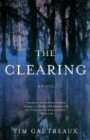
The
Clearing
is set deep in the Louisiana swamp in 1923, in the isolated
town of Nimbus, a place hard to get to and even harder to get out of
alive. Nimbus is a raw place, filled with snakes, alligators,
hard-fighting mill workers, and bountiful cypress trees. There is no
church, no school, no civilizing influence of any kind. The saloon, run
by the cousin of a Sicilian mobster from Chicago, is the only public
institution, and it regularly erupts in drunken, murderous fights. Only
brute force—in the shape of lawman Byron Aldridge—maintains a precarious
order in the town. Byron is back from WWI, where the killing he both
witnessed and committed has forever changed him. Once the heir apparent
to his father’s timber empire, he has fled from his family in
Pennsylvania into this remote region, where his life consists of
breaking up brawls and listening to sentimental music on his Victrola.
Byron’s father decides to send someone down to bring him back into the
fold, and when younger brother Randolph arrives in the swamps, he finds
himself drawn into a world unlike anything he has ever encountered.
Randolph soon discovers that his own morality, his own sure sense of
right and wrong, is badly shaken by his brother’s actions. Is it
justifiable to use violence to stop violence? Is it always a sin to take
another life, even when doing so might save others? These are the moral
questions most powerfully dramatized in
The Clearing
. For when
Randolph decides to shut down the saloon on Sundays, the most violent
day of the week, the owners down river in Tiger Island begin a cycle of
brutality and revenge that threatens to engulf Randolph and Byron, their
wives, their workers, and even an innocent child.
In writing that is vividly alive to both the rich physical texture of
place and to the most enduring human questions,
The Clearing
is a
tour de force of the moral imagination.
Discussion Questions
- How can
the title The Clearing
be interpreted? What does it refer to,
literally? What symbolic meanings might it have? Does the novel follow a
course from confusion to clarity?
- As Randolph moves down the river
towards Nimbus, he has "the sense that the boat was rocking away from
more than just a mud bank, the paddle wheel slapping down the tarry
water on a voyage beyond the things he knew" [p. 23]. In what ways is
Randolph taken beyond his familiar world? How is his life in Nimbus
different from the life he has led in Pennsylvania? What does he
discover, about himself, his brother, and life itself, on his journey?
- Randolph considers the dangerous environment of the mill and
wonders if "the many-fanged geography rubbed off on people, made them
primal, predatory. Had it changed him?" [p. 256]. Has the uncivilized
swampland itself made those who live in it more violent? Has it changed
Randolph? How?
📖
Get the full reading guide
Join BookBrowse free to unlock all 14 discussion questions, author background, themes, and more for The Clearing.
Join free — it takes 30 seconds
Already a member? Log in →
- How does the author develop themes of identity and belonging throughout the narrative?
- What role does the setting play in shaping the characters' decisions and relationships?
- Discuss how the ending reframes the events of the story. Were you surprised?
Unless otherwise stated, this discussion guide is reprinted with the permission of Vintage.
Any page references refer to a USA edition of the book, usually the trade paperback version, and may vary in other editions.


 (1).gif)