Book Club Discussion Questions
Please be aware that this discussion guide will contain spoilers!
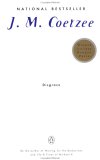
- The novel begins by telling us that "For a man his age, fifty-two,
divorced, he has, to his mind, solved the problem of sex rather well."
What can you infer about David Lurie's character from this sentence? In what
ways is it significant, particularly in relation to the events that follow,
that he views sex as a "problem" and that his "solution"
depends upon a prostitute?
- Lurie describes sexual intercourse with the prostitute Soraya as being
like the copulation of snakes, "lengthy, absorbed, but rather
abstract, rather dry, even at its hottest." When he decides to
seduce his student, Melanie, they are passing through the college gardens.
After their affair has been discovered Melanie's father says that he never
thought he was sending his daughter into "a nest of vipers."
Lurie has also written a book about Faust and Mephistopheles and explicates
for his class a poem by Byron about the fallen angel, Lucifer, whom Lurie
describes as being "condemned to solitude." What do you
think Coetzee is trying to suggest through this confluence of details? How
clearly does Lurie himself understand his behavior? How does his reading of
the Byron poem prefigure his own fate?
- When Lurie shows up unexpectedly at Melanie's flat, "she is too
surprised to resist the intruder who thrusts himself upon her."
Later, he tells himself that it was "not rape, not quite that, but
undesired nevertheless, undesired to the core." How do you view
what happens in this scene? Is it rape?
📖
Get the full reading guide
Join BookBrowse free to unlock all 14 discussion questions, author background, themes, and more for Disgrace.
Join free — it takes 30 seconds
Already a member? Log in →
- How does the author develop themes of identity and belonging throughout the narrative?
- What role does the setting play in shaping the characters' decisions and relationships?
- Discuss how the ending reframes the events of the story. Were you surprised?
Unless otherwise stated, this discussion guide is reprinted with the permission of Penguin.
Any page references refer to a USA edition of the book, usually the trade paperback version, and may vary in other editions.