Book Club Discussion Questions
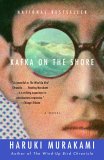
For supplemental discussion material see our Beyond the Book article, and our BookBrowse Review of Kafka on The Shore.
Please be aware that this discussion guide will contain spoilers!
The introduction, discussion questions, suggestions for further reading,
and author biography that follow are designed to enliven your group's
discussion of
Kafka on the Shore, the magical new novel by the
internationally acclaimed author of
The Wind-Up Bird Chronicle,
Haruki Murakami. Part bildungsroman, part metaphysical thriller, part
meditation on the elusive nature of time,
Kafka on the Shore
displays all the talents that have made Haruki Murakami one of the most
beloved novelists in the world today.
About This Book
Kafka on
the Shore is structured around the alternating stories of Kafka
Tamura, a fifteen-year-old boy who runs away from home to escape an
awful oedipal prophecy, and Nakata, an aging and illiterate simpleton
who has never completely recovered from a wartime affliction. Kafka's
journey brings him to a small private library in the provincial town of
Takamatsu and to a mountain hideaway where the ordinary laws of time no
longer apply. But, like Oedipus, the more Kafka tries to avoid his fate,
the closer he comes to fulfilling it. Nakata also sets forth on a
quest—for an enigmatic "entrance stone," the significance of which he
does not understand. These narratives push relentlessly forward like
trains running on parallel tracks. We know the tracks will converge at
some point, but not knowing when, or where, or how creates the suspense
that makes the novel so compelling and drives it to its astonishing
conclusion. Along the way
Kafka on the Shore investigates and
sometimes challenges our conceptions of time, fate, chance, love, and
the very nature of human reality. The novel offers up a rich array of
extraordinary characters and outrageous happenings: fish falling from
the sky, conversations between man and cat, a supernatural Colonel
Sanders's, ghostly but deeply sensual lovers, a philosophical prostitute,
World War II soldiers untouched by time, and much else both strange and
wonderful. But more than metaphysical fun is at stake in
Kafka on the
Shore. There is a vicious murder to be solved, complex and possibly
incestuous relationships to be untangled, and the very nature of reality
itself hangs in the balance.
Intellectually ambitious, emotionally intense, and beautifully written,
Kafka on the Shore bristles with Murakami's unique brand of
imaginative brio. Readers will find themselves simultaneously wanting to
turn the pages faster and faster to find out what happens and to slow
down to savor the depth and beauty of Murakami's prose.
Reader's Guide
- The
first character to speak in Kafka on the Shore is the "boy named
Crow" [p. 3]. Who is he? What part of Kafka Tamura's psyche does he
represent?
- "Kafka," we later learn, means "crow" in Czech. What relationship
is Murakami trying to suggest between Franz Kafka, Kafka Tamura, the boy
named Crow, and actual crows? At what significant moments do crows
appear in the novel? What symbolic value do they have?
- When Kafka meets Sakura on the bus, they agree that "even chance
meetings . . . are the results of karma" and that "things in life are
fated by our previous lives. That even in the smallest events there's no
such thing as coincidence" [p. 33]. What role does fate, or meaningful
coincidence, play in the novel? Is it karma that determines Kafka's
destiny?
📖
Get the full reading guide
Join BookBrowse free to unlock all 14 discussion questions, author background, themes, and more for Kafka on The Shore.
Join free — it takes 30 seconds
Already a member? Log in →
- How does the author develop themes of identity and belonging throughout the narrative?
- What role does the setting play in shaping the characters' decisions and relationships?
- Discuss how the ending reframes the events of the story. Were you surprised?
Unless otherwise stated, this discussion guide is reprinted with the permission of Vintage.
Any page references refer to a USA edition of the book, usually the trade paperback version, and may vary in other editions.

 Book Reviewed by:
 (1).gif)