Book Club Discussion Questions
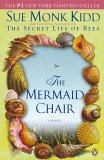
For supplemental discussion material see our Beyond the Book article, and our BookBrowse Review of The Mermaid Chair.
Please be aware that this discussion guide will contain spoilers!
About This BookIn her remarkable follow-up to the widely acclaimed
The
Secret Life of Bees, Sue Monk Kidd tells a beautiful and haunting story
centered around forty-two-year-old Jessie Sullivan, a woman in quiet crisis
whose return home to the island of a mermaid saint becomes a pilgrimage to
self-awakening. In this powerful exploration of mid-life marriage and the
intersection of the spiritual and the erotic in the feminine soul, Kidd
illustrates the sacredness of belonging to oneself and the healing mercy of love
and forgiveness.
Jessie’s journey begins in the winter of 1988 when she receives
an early-morning call from her mother Nelle’s close friend Kat. Nelle has
inexplicably and deliberately severed her own finger and Kat is calling to ask
Jessie to return home to Egret Island, South Carolina, to care for her.
Though Jessie has been somewhat estranged from her mother for
the last five years, she departs immediately—realizing that despite the
disturbing circumstances awaiting her, she feels relief in leaving and having
some time away from her husband, Hugh, a psychiatrist. Jessie loves Hugh, but
twenty years into their picture-perfect marriage, with their only child away at
college, she has begun to feel a groundswell of restlessness or, as she puts it,
"the feeling of time passing, of being postponed, pent up." Understanding
herself primarily through her relationship to her husband and to her daughter,
she is baffled by her discontent, by her sudden resistance to creating her small
"art boxes" that have been her only tenuous link to the passion she once had to
be an artist. She has lost "the little river of sparks" that runs through life,
but mostly she has lost her deep connection to herself.
Once on Egret Island, Jessie finds herself ill equipped to
handle her mother’s continuing erratic behavior, much less to comprehend what
lies behind her enigmatic act of self-violence. She senses that it’s related to
her father’s death—a death that is still surrounded by unanswered questions
thirty years later. As she tries to piece together Nelle’s tormented past,
Jessie reconnects with the two women who, along with her mother, once formed an
inseparable female trio, bound together by rituals and secrets only they shared.
When Jessie finally discovers the truth about Nelle and her father’s death, it
unlocks a dark, painful secret. Its revelation, however, will begin to heal the
relationships in both women’s lives.
Near Nelle’s home is a Benedictine monastery that houses a
mysterious and beautiful chair carved with mermaids and dedicated to Saint
Senara, who, legend says, was a mermaid before her conversion. The abbey and the
chair have always been special to Jessie. There, she meets Whit, a junior monk
who sought refuge at the monastery after suffering a devastating loss. Only
months away from taking his final vows, he isn’t completely certain whether he
has come to the abbey in search of God or in search of immunity from life.
Jessie’s powerful attraction to Whit awakens an immense sexual
and spiritual longing inside her, as well as a pulsing new sense of aliveness.
Amid the seductive salt marshes and tidal creeks of the island, she abandons
herself to the long-buried passions of her body and the yearnings of her
creative spirit and embarks upon a descent into her own uncharted and shadowy
depths in search of a place inside herself that is truly her own. Torn between
the force of her desire and her enduring marriage, Jessie grapples with
excruciating choices, ultimately creating a "marriage" with herself.
In this novel Kidd takes on the darker, more complex elements of
the psyche and human relationships—spiritual emptiness, infidelity, death,
mental illness and euthanasia—with a steady gaze and compassion not often found
in modern fiction. Above all,
The Mermaid Chair is a book that embraces
the sensual pull of the mermaid and the divine pull of the saint, the commitment
to oneself and the commitment to a relationship—and their ability to thrive
simultaneously in every woman’s soul. Kidd’s candid and redemptive portrayal of
a woman lost in the "smallest spaces" of her life ultimately becomes both an
affirmation of ordinary married love and the sacredness of always saving a part
of your soul for yourself.
Discussion Questions
- How does a woman like Jessie become "molded to the smallest space
possible"? What signs might appear in her life? What did Jessie mean when she
said part of the problem was her chronic inability to astonish herself?
- Jessie comes to believe that an essential problem in her marriage is not
that she and Hugh have grown apart, but that they have grown "too much
together." What do you think she means by that? How important is it for Jessie
to find her "solitude of being"? How does a woman balance apartness and
togetherness in a relationship?
- How would you describe Nelle before and after her husband’s death? What is
your interpretation of the mysterious factors that led her to cut off her
finger? What do her fingers symbolize? How does the myth of Sedna—the Inuit
mermaid whose severed fingers became the first sea creatures—shed light on
Nelle’s state of mind?
📖
Get the full reading guide
Join BookBrowse free to unlock all 15 discussion questions, author background, themes, and more for The Mermaid Chair.
Join free — it takes 30 seconds
Already a member? Log in →
- How does the author develop themes of identity and belonging throughout the narrative?
- What role does the setting play in shaping the characters' decisions and relationships?
- Discuss how the ending reframes the events of the story. Were you surprised?
Unless otherwise stated, this discussion guide is reprinted with the permission of Penguin.
Any page references refer to a USA edition of the book, usually the trade paperback version, and may vary in other editions.



 (1).gif)