Book Club Discussion Questions
For supplemental discussion material see our Beyond the Book article, and our BookBrowse Review of Yellow.
Please be aware that this discussion guide will contain spoilers!
No unnecessary anecdotes.
No questions.
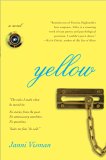
Stella, the narrator and heroine of Janni Visman's new novel
Yellow,
is an obsessive-compulsive shut-in. She lives in a compartmentalized,
controlled environment of her own design in which everything she needs—from
work to lovers to makeup—comes to her. Within this framework of rules and
repetition, Stella has achieved a kind of psychological security. But when
Ivan, her lover, violates the agreement of their affair with a revelation
about his past, Stella's hermetic existence breaks wide open.
Visman embraces the issues of identity, sexuality, power, and trust with
unrelenting honesty and masterful control. A taut 192 pages, the book is an
exploration of one woman's psychological unraveling—or, in what amounts to
the same thing, one woman's progress from paranoia to freedom. The truth, as
the author so cleverly demonstrates, is often more complicated than it first
appears. In the same manner that Stella has reduced her life to what is
elemental, so has Visman pared her prose to its essence, writing with a
haunting simplicity that perfectly matches her subject. Despite its
pithiness, this is a novel that lives in its details; every moment of
Yellow
is infused with a cinematic beauty and carefully moderated
tension that build, in combination, to a thrilling resolution.
As Stella follows one trail of secrets and lies, she leaves behind
another for the reader to follow in turn, labyrinth of family, neighbors,
lovers, and strangers—characters whose roles and loyalties shift from day to
day. Stella steers readers through her convoluted psychological landscape,
presenting life as she lives it. As a guide, she is both stern and fragile,
possibly unreliable and possibly at risk. Together, reader and narrator
discover the scope of Stella's situation, inspiring each to retrace their
steps through the novel, reexamining what and who they thought they knew.
Readers of Visman's previous book,
Sex Education, expect style,
intelligence, and candor, and
Yellow does not disappoint. She boldly
examines the most intimate and difficult aspects of life—the sexual politics
and power plays that lie at the heart of relationships, the creation and
maintenance of identity within a shifting landscape of lovers and
acquaintances, the common yearning for stability, and the lengths to which a
woman will go to stave off her darkest fears.
Discussion Questions
- Discuss the significance of the yellow gas in terms of the context in
which it appears throughout the novel (What events precede its appearance?
How does Stella react?) and what it symbolizes.
- The narrator is the guide through the events of a novel, but when
presented with a guide who is paranoid, deceptive, or otherwise ill, one's
approach to the story is altered. What are some other famously unreliable
narrators? What connections can you draw between their stories and Yellow?
- How does Stella's psychological condition affect your sympathy toward
her? Do you separate yourself from her presentation of the story and
examine it according to your own instincts? At what point and why?
📖
Get the full reading guide
Join BookBrowse free to unlock all 10 discussion questions, author background, themes, and more for Yellow.
Join free — it takes 30 seconds
Already a member? Log in →
- How does the author develop themes of identity and belonging throughout the narrative?
- What role does the setting play in shaping the characters' decisions and relationships?
- Discuss how the ending reframes the events of the story. Were you surprised?
Unless otherwise stated, this discussion guide is reprinted with the permission of Plume.
Any page references refer to a USA edition of the book, usually the trade paperback version, and may vary in other editions.


 (1).gif)