Book Club Discussion Questions
For supplemental discussion material see our Beyond the Book article, and our BookBrowse Review of 1491.
Please be aware that this discussion guide will contain spoilers!
About This Guide
The introduction, discussion questions, suggested reading list, and author
biography that follow are intended to enhance your group’s conversation about
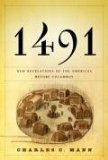
1491, Charles Mann’s compelling and wide-ranging look at the variety,
density, and sophistication of the cultures in the Western Hemisphere before the
arrival of Columbus.
About This Book
1491 is a groundbreaking study that radically alters our understanding
of the Americas before the arrival of the Europeans in 1492, and a necessary
book for understanding the long, remarkable story of the indigenous peoples of
the Western Hemisphere.
Traditionally, Americans have been taught that the ancestors of the people who
inhabited the Western Hemisphere at the time of Columbus’s landing crossed the
Bering Strait thirteen thousand years ago, existed mainly in small, nomadic
bands, and lived so lightly on the land that the Americas were, for all
practical purposes, still a vast wilderness. But in fact, in 1491 there may well
have been more people living in the Americas than in Europe, many of them in
urban complexes bigger and more sophisticated than London or Paris. Older, too:
Indian cities were thriving before the Egyptians built the great
pyramids. Native people of the Americas developed ways of breeding corn and
using the land that were far ahead of other civilizations. In the Amazon,
Indians learned how to farm the rain forest without destroying it–a process
scientists are studying today in the hope of reviving the practice.
1491
is full of new knowledge about the pre-Columbian Americas that will utterly
change readers’ visions of the past.
Reading Guide
- Mann begins the
book with a question about our moral responsibility to the earth’s environment:
Do we have an obligation, as some green activists believe, to restore
environmental conditions to the state in which they were before human
intervention [p. 5]? What does the story of the Beni tell us about what "before
human intervention" might mean?
- What scientists have learned about the early Americas gives the lie to
what Charles C. Mann, and most of us, learned in high school: "that Indians came
to the Americas across the Bering Strait about thirteen thousand years ago, that
they lived for the most part in small, isolated groups, and that they had so
little impact on their environment that even after millennia of habitation the
continents remained mostly wilderness" [p. 4]. What is the effect of learning
that most of what we have assumed about the past is "wrong in almost every
aspect" [p. 4]?
- There are many scholarly disagreements about the research described in
1491. If our knowledge of the past is based on the findings of
scholars, what happens to the past when scholars don’t agree? How convincing is
anthropologist Dean R. Snow’s statement, "you can make the meager evidence from
the ethnohistorical record tell you anything you want" [p. 5]? Are certain
scholars introduced here more believable than others? Why or why not?
- How does the author develop themes of identity and belonging throughout the narrative?
- What role does the setting play in shaping the characters' decisions and relationships?
- Discuss how the ending reframes the events of the story. Were you surprised?
Unless otherwise stated, this discussion guide is reprinted with the permission of Vintage.
Any page references refer to a USA edition of the book, usually the trade paperback version, and may vary in other editions.

 Book Reviewed by:


 (1).gif)