Book Club Discussion Questions
Please be aware that this discussion guide will contain spoilers!
The questions, discussion topics, and author biography that follow are
intended to enhance your group's reading of
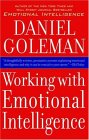
Working with Emotional
Intelligence. We hope they will enrich your understanding of the follow-up
work to Dr. Goleman's groundbreaking international bestseller,
Emotional
Intelligence.
Working with Emotional Intelligence further expands Dr. Goleman's
theories of how emotional intelligence is more important than IQ, specifically
in relation to today's fluid work environment. Drawing on numerous tests and
studies, as well as countless personal histories, he draws an electrifying
argument in support of working with emotional intelligence.
Not only do star performers excel as individuals, but they are the ones who are
best able to maximize a team's potential, through their use of such emotional
competencies as building bonds, collaboration, and creating group synergy in
pursuit of collective goals. The good news is, we can all learn from these star
performers. Unlike IQ, emotional intelligence can be developed; we can train
ourselves out of bad habits and into good ones, we can heighten our emotional
sensitivity to others, and we can expand on our own self-awareness.
Working with Emotional Intelligence is a must read for anyone interested
in maximizing their potential. The book sets down the guidelines for effective
emotional competence training, and points the way for employers and employees
alike to better themselves and their organizations in the face of these
increasingly unstable times.
FOR DISCUSSION
- Working with Emotional Intelligence argues that the business
environment has changed radically since the 1970's, producing new
challenges, and hence, a demand for new talents. "Data tracking the
talents of star performers over several decades reveal that two abilities
that mattered relatively little for success in the 1970's have become
crucially important in the 1990's: team building and adapting to change. And
entirely new capabilities have begun to appear as traits for star
performers, notably change catalyst and leveraging diversity." Do you
agree? Have you noticed this trend in your own field? How do these changes
manifest themselves in the job market?
-
Why do you think businesses and colleges continue to ignore emotional
intelligence when assessing an applicant's strengths, and focus almost
exclusively on measures of IQ? Is there a way of accurately gauging
emotional intelligence? Do you think there should be widespread use of
emotional intelligence testing? How might such tests be standardized?
-
Goleman draws a distinction between "good stress" and "bad
stress," arguing that they result in different biological responses;
producing adrenaline and cortisol, respectively. What are the challenges
that you find invigorating, versus those that overwhelm, or paralyze you? Do
you believe it's possible to transform your biological response to these
challenges through a heightened emotional intelligence? What are some steps
you might take to increase your desired emotional competencies?
📖
Get the full reading guide
Join BookBrowse free to unlock all 13 discussion questions, author background, themes, and more for Working With Emotional Intelligence.
Join free — it takes 30 seconds
Already a member? Log in →
- How does the author develop themes of identity and belonging throughout the narrative?
- What role does the setting play in shaping the characters' decisions and relationships?
- Discuss how the ending reframes the events of the story. Were you surprised?
Unless otherwise stated, this discussion guide is reprinted with the permission of Bantam Books.
Any page references refer to a USA edition of the book, usually the trade paperback version, and may vary in other editions.




 (1).gif)