Book Club Discussion Questions
For supplemental discussion material see our Beyond the Book article, A Short History of Biafra and Nigeria and our BookBrowse Review of Half of a Yellow Sun.
Please be aware that this discussion guide will contain spoilers!
About This Guide
The questions, discussion topics, and suggestions for further reading that
follow are intended to enhance your group's conversation about
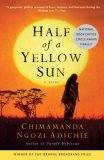
Half of a
Yellow Sun, a richly imagined story of the disastrous war between Nigeria
and Biafra, largely forgotten in the West, which won the 2007 Orange Prize in
Britain and was a finalist for the National Book Critics Circle Award.
About This Book
Half of a Yellow Sun returns to a critical moment in the modern history
of Nigeria, a time shortly after gaining their independence from Britain when,
following a massacre of their people, the Igbo tribes of the southeast seceded
and established The Republic of Biafra. Three years of civil war followed as
Biafra was slowly strangled into submission by violence and famine. Over a
million people died, including Chimamanda Ngozi Adichie's two grandfathers.
With astonishing empathy and the effortless grace of a natural storyteller,
Adichie weaves together the lives of three characters swept up in the turbulence
of the war. Thirteen-year-old Ugwu is employed as a houseboy for Odenigbo, a
pan-Africanist university professor full of revolutionary zeal. His beautiful
girlfriend Olanna is the London-educated daughter of a tribal chief turned
businessman, who has abandoned her life of privilege in Lagos for the charisma
of her new lover. And Richard Churchill is a shy but handsome English writer in
love with Olanna's cool, sardonic, and less beautiful twin sister Kainene. As
Nigerian troops advance and the characters must flee from murderous armies,
their ideals are severely tested, as are their loyalties to one another.
Epic, ambitious, and triumphantly realized,
Half of a Yellow Sun is a
remarkable novel about moral responsibility, the end of colonialism, ethnic
allegiances, class and race–and the ways in which love can complicate them all. Adichie
brilliantly evokes the promise and the devastating disappointments that marked
this time and place, bringing us one of the most powerful, dramatic, and
intensely emotional pictures of modern Africa that we have ever had.
Reader's Guide
- Ugwu is only thirteen when he begins working as a houseboy for Odenigbo,
but he is one of the most intelligent and observant characters in the novel.
How well does Ugwu manage the transition from village life to the
intellectual and privileged world of his employers? How does his presence
throughout affect the reader's experience of the story?
- About her attraction to Odenigbo, Olanna thinks, "The intensity had not
abated after two years, nor had her awe at his self-assured eccentricities
and his fierce moralities" [p. 36]. What is attractive about Odenigbo? How
does Adichie poke fun at certain aspects of his character? How does the war
change him?
- Adichie touches very lightly on a connection between the Holocaust and
the Biafran situation [p. 62]; why does she not stress this parallel more
strongly? Why are the Igbo massacred by the Hausa? What tribal resentments
and rivalries are expressed in the Nigerian-Biafran war? In what ways does
the novel make clear that these rivalries have been intensified by British
interference?
📖
Get the full reading guide
Join BookBrowse free to unlock all 17 discussion questions, author background, themes, and more for Half of a Yellow Sun.
Join free — it takes 30 seconds
Already a member? Log in →
- How does the author develop themes of identity and belonging throughout the narrative?
- What role does the setting play in shaping the characters' decisions and relationships?
- Discuss how the ending reframes the events of the story. Were you surprised?
Unless otherwise stated, this discussion guide is reprinted with the permission of Anchor Books.
Any page references refer to a USA edition of the book, usually the trade paperback version, and may vary in other editions.

 Book Reviewed by:

 (1).gif)