Book Club Discussion Questions
Please be aware that this discussion guide will contain spoilers!
Introduction
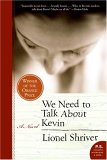
In a series of compelling and introspective letters to her estranged husband, Franklin, Eva Khatchadourian dissects her married life and her mothering of her son Kevin and daughter Celia in the aftermath of Kevin's Columbine-like school slaying of seven classmates, a cafeteria worker, and a teacher.
Worried that her son's murderousness might have resulted from her deficits as a mother, Eva probes the most intimate and shocking aspects of her inner life, her marriage and her resentment of motherhood. This literary page-turner tackles the sensitive proposition that mothers can be unmoved by -- and even dislike -- their own children. Eva struggles with her lack of ready emotion when Kevin is first placed in her arms and with the subsequently hellish years of parenting a boy who both refuses to speak until the age of 3 and be potty trained until the age of 6, and who seems to enjoy nothing but the taunting of his mother. Having dramatically scaled back on her satisfying and profitable career, Eva becomes a stay-at-home mom who discovers that her son, while seemingly slow, is whip-smart and vindictive -- and cunning enough to play for his father with disastrous results.
We Need To Talk About Kevin is a searing and complex look at the reasons couples decide to have children, the parent-child relationship, marriage, and the limits of love and loyalty.
Questions for Discussion
- Non-maternal, ambivalent mothers are one of the last taboos -- and Eva is a prime example. Were her motives for having a baby entirely selfish? And if so, how much can that have factored into the outcome of an abnormally difficult baby and apathetic child? In contrast to Kevin, Celia was loving, needy and sweet -- and her mother's favorite, if not her father's. By the very end of the novel, has Eva's love for Kevin, or at least her primitive loyalty to him, finally become unconditional? How does this fit in with the feminist ideal of motherhood?
- Is Eva's view of Kevin colored by her ambivalence about motherhood in general, or perhaps by hindsight knowledge of his eventual violence? Is Eva responsible for creating a child she sees as a monster, or was he a monster all along?
- Eva's tone changes throughout the course of her letter-writing. She is in turns angry, frustrated and mystified. Could you describe Eva as a loving mother -- in deed if not in thought? Was Kevin overly indulged by a parenting style that let him potty train and learn at his own pace?
📖
Get the full reading guide
Join BookBrowse free to unlock all 11 discussion questions, author background, themes, and more for We Need to Talk About Kevin.
Join free — it takes 30 seconds
Already a member? Log in →
- How does the author develop themes of identity and belonging throughout the narrative?
- What role does the setting play in shaping the characters' decisions and relationships?
- Discuss how the ending reframes the events of the story. Were you surprised?
Unless otherwise stated, this discussion guide is reprinted with the permission of Harper Perennial.
Any page references refer to a USA edition of the book, usually the trade paperback version, and may vary in other editions.


 (1).gif)