Book Club Discussion Questions
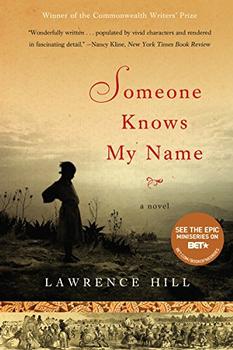
For supplemental discussion material see our Beyond the Book article, and our BookBrowse Review of Someone Knows My Name.
Please be aware that this discussion guide will contain spoilers!
Lawrence Hill on Someone Knows My
Name
Years before I began writing
Someone Knows My Name, I came across two
startling discoveries in a scholarly work. I read that thousands of African
Americans fled slavery to serve the British, who promised to liberate them in
return for service during the American Revolution. When the British lost the
war, they sent those African Americans who could show that they had served the
British for at least one year to Canada. Three thousand names were entered into
a 150-page military ledger known as the "Book of Negroes," and, in the last half
of 1783, the former slaves set sail to Nova Scotia.
Ten years later, many of these same former slaves were so disgruntled with the
hardships they encountered in Canada—slavery, indentured servitude, anti-black
race riots, and segregation—that in 1792 they accepted an offer from the British
government and sailed to Africa in a flotilla of fifteen ships, to form the
colony of Freetown in Sierra Leone. This was the first back-to-Africa exodus in
the history of the Americas, and it turns out that a number of the adults swept
up in this migration had actually been born in Africa.
As I began to write
Someone Knows My Name, I imagined the life of an old
woman on one of those vessels carrying liberated African Americans from Halifax
to Freetown. What would she look like? Where had she been born in Africa? How
had she been stolen into slavery, where had she lived in South Carolina, and how
on earth did she find herself, in late life, sailing back to Africa from Canada?
Someone Knows My Name is my attempt to give this fascinating but
little-known story a human face. I gave the protagonist, Aminata Diallo, my
eldest daughter's middle name. It is the story of a heroic woman in the
eighteenth century, and I felt that the best way to lift her off the page was to
love her like I love my own daughter. And indeed I loved Aminata from the moment
I first started imagining her face, hearing her voice, seeing the way she walked
with a platter balanced on her head.
My daughter, Geneviève Aminata Hill, was eleven years old when I started to
write this story. The same age as my character when she is kidnapped by slave
traders. What if this had happened to my own child? Aminata, the character, grew
up under my tutelage. She learned to walk and then to read and to navigate her
way in the world, and now this fictional creation of mine is all grown up and
gone from the house. She belongs to the world of readers now, and I hope she
will be well loved.
Discussion Questions
-
What is the significance of the title Someone Knows
My Name?
-
What is your opinion about Hill's suggestion that
Aminata's very youthfulness at the time of her abduction enables her
emotional survival, even as some of the adults in her world show signs of
crumbling?
-
The section of the book set in the sea islands of South
Carolina depicts eighteenth-century indigo plantations where African
American slaves and overseers are left largely to their own devices during
the "sick season"—a good half of the year. To what degree does this cultural
and social isolation allow for an interesting development and interaction of
African American characters in the novel?
📖
Get the full reading guide
Join BookBrowse free to unlock all 12 discussion questions, author background, themes, and more for Someone Knows My Name.
Join free — it takes 30 seconds
Already a member? Log in →
- How does the author develop themes of identity and belonging throughout the narrative?
- What role does the setting play in shaping the characters' decisions and relationships?
- Discuss how the ending reframes the events of the story. Were you surprised?
Unless otherwise stated, this discussion guide is reprinted with the permission of W.W. Norton & Company.
Any page references refer to a USA edition of the book, usually the trade paperback version, and may vary in other editions.

 Book Reviewed by:


 (1).gif)