Book Club Discussion Questions
For supplemental discussion material see our Beyond the Book article, The Tiananmen Square Protests and our BookBrowse Review of A Free Life.
Please be aware that this discussion guide will contain spoilers!
About This Book
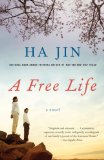
Nan Wu is a Chinese graduate student in political science at Brandeis University
when the Tiananmen Square massacre changes everything for him. Because of his
activity with a prodemocracy group, it is now impossible for him to return to
China to take up the academic career he had been working toward. His wife,
Pingping, is already with him in Boston; their six-year-old son, Taotao, who has
been living with his grandparents in Jinan, is finally able to join them. Nan
has not seen his son for four years, and Taotao doesn't remember his father.
Reunited now in exile, they must all begin a new life.
Nan soon decides that political science, the field of study assigned to him by
the Chinese government, does not interest him-at heart, he wants to write
poetry. He is haunted as well by thoughts of Beina, the woman who broke his
heart in China. He knows he doesn't truly love Pingping, but the economic
survival of his family takes priority over all his private desires. He quits
graduate school, and he and Pingping move to Atlanta, where they buy a small
Chinese restaurant in a shopping mall. Slowly Nan develops his cooking skills
and the restaurant thrives, but he is troubled by his continuing dissatisfaction
with life. His poet friend Dick meanwhile, takes an academic job at Emory, and
through him Nan learns what it means to survive as a poet in America—to win
grants, to be published by a respectable press, to be invited to speak, and to
read from one's work. His daily work at the restaurant keeps him drained and
uninspired. But the larger problem is that he must decide whether to write in
Chinese or in English—he is caught between two languages, and each expresses a
world of alienation for Nan.
In a narrative style that reflects the slow accretion of daily experience with
the texture of events both large and small, Ha Jin masterfully and movingly
presents the struggle—fraught with difficulty, anxiety, and exhaustion—of an
immigrant family building a life in America.
Reader's Guide
- From the beginning, the novel presents a structure of very short chapters.
Why might Ha Jin have chosen this means of organizing his story, and what is its
effect? In what ways does the pace of the novel reflect the rhythms of daily
life?
- What is likable about Nan's character, and what is less so? Do his
continuing infatuation with Beina, his lack of love for Pingping [pp. 23,
57–60], and his emotional distance from his son affect your opinion of him, and
if so, how?
- The use of language is an important focus of A Free Life. Ha
Jin writes Nan's mistakes and mispronunciations into the dialogue when Nan is
speaking in English; when characters speak in Chinese their speech appears in
italics. What is the effect of the occasional misuse or noncolloquial use of a
word or phrase in English, as when Nan says, for instance, that Sam is
"bibulous" [p. 260], that a poet is "well endowed" [p. 305], or when he says in
a job interview that he and his co-workers "all got laid together" [p. 25]?
📖
Get the full reading guide
Join BookBrowse free to unlock all 14 discussion questions, author background, themes, and more for A Free Life.
Join free — it takes 30 seconds
Already a member? Log in →
- How does the author develop themes of identity and belonging throughout the narrative?
- What role does the setting play in shaping the characters' decisions and relationships?
- Discuss how the ending reframes the events of the story. Were you surprised?
Unless otherwise stated, this discussion guide is reprinted with the permission of Vintage.
Any page references refer to a USA edition of the book, usually the trade paperback version, and may vary in other editions.

 Book Reviewed by:
 (1).gif)