Book Club Discussion Questions
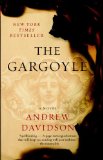
For supplemental discussion material see our Beyond the Book article, and our BookBrowse Review of The Gargoyle.
Please be aware that this discussion guide will contain spoilers!
ABOUT THIS GUIDE
Whether you read
The Gargoyle with a book group or as a solo experience, this is a novel rich with topics for further exploration. Incorporating legends and locales drawn from a medieval monastery, Viking raiders, Victorian England, feudal Japan, Italian literary masterpieces, and other imaginative threads, Andrew Davidson weaves copious history into this singular love story. This guide is designed to illuminate many of those details, yielding facts behind the fiction while raising questions for contemplation or discussion. An interview with the author is included as well, revealing surprising aspects of the story behind
The Gargoyle. We hope this supplement will enhance your enjoyment of Davidson’s captivating saga.
Decoding The Gargoyle
The following notes and questions showcase prominent topics in
The Gargoyle. One feature spans the entire book: Two acrostics are formed across the novel’s thirty-three chapters. When read in order, the first letter of every chapter spells out ALL THINGS IN A SINGLE BOOK BOUND BY LOVE, derived from Dante’s
Paradiso, Canto XXXIII: “I saw within Its depths how It conceives / all things in a single volume bound by Love / of which the universe is the scattered leaves.” The last letter of every chapter spells out DIE LIEBE IST STARK WIE DER TOD, MARIANNE, meaning “Love is as strong as death, Marianne,” from the sermon by Meister Eckhart quoted in the epigraph.
Reader's Guide
- Dante’s Inferno
First published in 1314, this epic poem is the first “song” in Dante Alighieri’s three-part Divine Comedy; subsequent canticles describe Purgatory and Paradise. In The Inferno, Virgil guides Dante through the underworld, comprising nine concentric circles that represent varying degrees of condemnation, from the unbaptized in Limbo to traitorous Satan at the center.
Dante begins his tour of hell on Good Friday, 1300, the suggested day and year of Marianne’s birth. The day of Christ’s crucifixion, Good Friday makes additional appearances in The Gargoyle: It is Sister Christina’s birthday and the day of the narrator’s car accident.
Like Dante, The Gargoyle’s narrator begins his journey in the woods, at the age of thirty-five. Contemplation of suicide occurs in early passages of The Inferno as well as The Gargoyle.
For Discussion: In The Inferno, condemned souls receive punishments that correspond to their sins. The Gargoyle’s narrator loses his ability to consummate sex, but he retains his ability to feel intense desire. What other forms of hell does he suffer? What do Dante’s images signify to Marianne? What sort of tailor-made suffering might Dante have invented for you? What do a society’s beliefs regarding the afterlife say about that society’s values in general?
- The Medieval Church
The founding of the Dominican monastery Engelthal occurred as described in The Gargoyle. In its strictest definition, “monastery” can refer to a religious retreat for both women and men, though Engelthal nuns did not preach as friars did. The nuns’ predecessors, the beguines, were also sometimes seen as a threat to ecclesiastical authority. The women who worked in the renowned Engelthal scriptorium in the fourteenth century are said to have produced more extant texts than any other religious house of their era.
At the time of Father Sunder’s death in 1328, he and Brother Heinrich had lived together for thirty-eight years. Father Sunder was said to have had very special status, and was called a “pope in heaven” with the Power of the Keys, effectively granting him the authority to forgive any sin at any time.
Heinrich Seuse’s extreme, self-inflicted physical suffering captures a medieval Christian approach to the opposition between body and spirit, and to the desire for God and man to achieve a metaphysical union. Meister Eckhart, who explored similar questions, was declared a heretic under trial by Pope John XXII.
The Three Masters are derived from Heinrich Seuse’s attempts to control his tongue. He called on three spiritual masters, Father Dominic, St. Arsenius, and St. Bernard, and would not speak without receiving their permission in a vision.
Marianne’s assertion in Chapter Five that “God is a circle whose center is everywhere and whose circumference is nowhere” was commonly invoked by medieval theologians.
Continually persecuted by religious and political entities, the Jews of medieval Germany lived in two worlds: one of segregated self-governance and Talmudic codes, and one of utter dependence on the whims of papal authority.
For Discussion: How does medieval Catholicism compare to the other forms of faith–religious or otherwise–captured in the novel? In what ways does contemporary society still struggle with the tandem between body and soul? Was it easier for you to relate to Marianne’s mysticism or to the narrator’s atheism?
Gargoyles
The legend describing the creation of the first gargoyle, recounted in Chapter Three, is just one of many versions. Andrew Davidson invented the battle scene between Romanus and La Gargouille; it does not appear in published legends.
The concept of using a sculpture depicting an animal’s mouth to divert water from buildings dates well before medieval Europe. Ancient Egyptian and Greek architecture is rife with apparatuses that would qualify as “gargoyles.”
As Marianne says in Chapter Twenty, medieval gargoyles were indeed sometimes painted bright colors. Oranges, reds, and greens were popular, and some gargoyles were gilded. They were made from a variety of materials, including limestone, marble, lead, or metal, and they usually weighed several hundred pounds.
Scholars debate the intended message behind medieval gargoyles. Perhaps they were meant to ward off evil spirits, or to depict evil forces. Early Gothic examples easily convey a moral lesson, while later ones can frequently be interpreted as comical.
For Discussion: In Chapter Five, Marianne describes herself as “a vessel that water is poured into and splashes out of, a flowing circle between God and the gargoyles and me.” In Chapter Sixteen, the narrator realizes that Marianne “loved [the gargoyles] out of the stone.” What mandate is she fulfilling in both of these descriptions? What makes Marianne’s mandate relevant to the modern world? What traits does the narrator share with medieval gargoyles?
- Legendary Lovers
The author incorporated the four Greek classical elements of the physical world when writing Marianne’s legends: Sei lived as a glassblower (Air) and died by being buried alive (Earth). Victoria lived as a farmwoman (Earth) and died by drowning (Water). Sigurðr lived as a Viking (Water) and died in a burning longhouse (Fire). Francesco lived as an ironworker (Fire) and died by breathing in the Plague (Air).
Brandeis and his fellow mercenaries served during a tumultuous time for the Holy Roman Empire. Between 1314 and 1347, Louis the Bavarian served as Duke of Bavaria, the German king, and the Holy Roman Emperor, meeting with constant resistance from the papacy (including excommunication).
Marianne’s fairy tales are Davidson’s inventions. Though the novel’s depictions of Engelthal incorporate many figures from true history, none of the incarnations of Marianne and the narrator are based on such characters.
Marianne’s copy of The Inferno was found among the possessions of the archer Niccolò, later revealed to be the father of metalworker Francesco.
Sei is stung by the Asian giant hornet, the world’s largest wasp (and among the deadliest).
Sigurðr’s “fine boat grave” refers to a highly honorary burial style used in the Vendel era and by the Anglo-Saxons, the Merovingians, the Vikings, and occasionally the Ancient Egyptians. This form of burial was thought to enable passage to Valhalla. In Norse mythology, the paradise of Valhalla is the great hall where war heroes greet the afterlife. The less fortunate are relegated to a cold, dismal kingdom of death ruled by the goddess Hel.
Tom’s ill-fated voyage is alluded to in the story of Sigurðr and Einarr, when Bragi stumbles off his sleeping bench during the fire while the floor seems “to lurch like a boat deck during a storm.”
In Chapter Seven, Marianne tells the narrator that he must do nothing for her in order to prove his love. This foreshadows her final scene on the beach in the novel’s closing passages.
For Discussion: Throughout each liaison, how do the novel’s lovers honor their fate? In each case, who or what is the greatest threat to their happiness? Do you agree with Meister Eckhart’s descriptions of love and death in the novel’s epigraph? Which of Marianne’s tales was the most memorable for you?<
📖
Get the full reading guide
Join BookBrowse free to unlock all 17 discussion questions, author background, themes, and more for The Gargoyle.
Join free — it takes 30 seconds
Already a member? Log in →
- How does the author develop themes of identity and belonging throughout the narrative?
- What role does the setting play in shaping the characters' decisions and relationships?
- Discuss how the ending reframes the events of the story. Were you surprised?
Unless otherwise stated, this discussion guide is reprinted with the permission of Anchor Books.
Any page references refer to a USA edition of the book, usually the trade paperback version, and may vary in other editions.

 Book Reviewed by:


 (1).gif)