Book Club Discussion Questions
For supplemental discussion material see our Beyond the Book article, Quilting As Hobby and Metaphor and our BookBrowse Review of Home.
Please be aware that this discussion guide will contain spoilers!
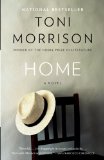
The introduction, discussion questions, and suggested further reading that follow are designed to enliven your group's discussion of Nobel Laureate Toni Morrison's searing new novel,
Home.
About This Book
Frank Money and his sister Cee are profoundly lost, divided from each other and from themselves as they search for direction and hope in 1950s America. Frank joined the army to escape his too-small world, leaving behind his cherished and fragile sister. When he returns to the United States after the war, he is haunted by memories of his childhood and the horrors he witnessed abroad; it is only when he hears that Cee is in danger that his life regains the sense of purpose he had lost.
As the novel begins, Frank finds himself in a mental institution, where he has been drugged and strapped to a bed. He has no idea how or why he got there, only that he must escape. After he frees himself, he takes refuge with a minister who helps him begin his journey back to Georgia, where he has been summoned to help save his gravely ill sister.
Cee had taken a job "assisting" Dr. Beauregard Scott, an unrepentant Confederate. In fact, she has become the subject of his experiments in eugenics, which have made her infertile and endangered her life.
As Frank travels back to Georgia, we learn about his story and his history: the terrors of combat in Korea and the traumas of a childhood in the Deep South. Cee and Frank grew up in the small town of Lotus, where they were raised in the house of their coldhearted grandmother, Lenore. As a black man in Georgia, Frank endured daily injustices, and he and Cee are shattered by buried secrets and horrible visions of racial violence.
Home follows the classic structure of the hero's journey. Frank, a modern Odysseus, leaves home, undergoes horrific trials that test his moral strength, and then returns home a chastened and changed man. He is filled with regrets about friends he could not save on the battlefield, but when he learns that Cee is endangered he is given the chance to rescue his sister.
Home is not only about one man finding his manhood and his home. It is also about the healing power of women—of Miss Ethel Fordham and her friends in Lotus, who nurse Cee back to health and nurture her in her time of need. Fierce, unflinching, deeply compassionate—and rooted in traditional healing practices—their methods are sharply contrasted with the self-serving, aggressive techniques of a patriarchal medical industry.
In
Home, Morrison vividly evokes—through the trials of a brother and sister—the particular brand of racism that prevailed just before the end of Jim Crow and the beginning of the Civil Rights Movement. In dramatizing the abuses of the medical system, the devastating effects of war on those who fight it, and the meaning of both leaving and coming home, she holds a mirror up to our own time as well.
Questions
- Why has Toni Morrison chosen Home for her title? In what ways is the novel about both leaving home and coming home? What does home mean for Frank, for Cee, for Lenore, for Lily?
- The race of the characters is not specified in the novel. How does Morrison make clear which characters are black and which are white? Why might she have chosen not to identify characters explicitly by their race?
- What is the effect of alternating between Frank's first-person (italicized) narration and the third-person omniscient narration through which most of the story is told? What is the implied relationship between Frank and the narrator?
- How does the author develop themes of identity and belonging throughout the narrative?
- What role does the setting play in shaping the characters' decisions and relationships?
- Discuss how the ending reframes the events of the story. Were you surprised?
Unless otherwise stated, this discussion guide is reprinted with the permission of Vintage.
Any page references refer to a USA edition of the book, usually the trade paperback version, and may vary in other editions.

 Book Reviewed by:
 (1).gif)